
























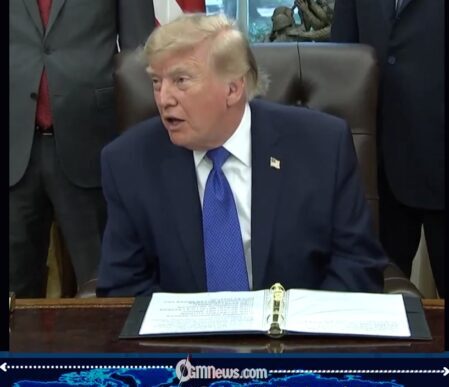
President Donald Trump, serving a second term as the current U.S. president, has issued a stark warning to Cuba, urging the island nation to negotiate an agreement with Washington or face the complete withdrawal of U.S.-linked economic support. In a forceful statement shared on his social media platform, Truth Social, Trump declared that Cuba would no longer receive oil or financial assistance, framing the warning as both an ultimatum and an opportunity for renewed dialogue.
The remarks underscore a renewed hardline posture toward Havana, reviving long-standing tensions between the two countries and placing Cuba’s fragile economy under fresh international scrutiny. Trump’s message signals a possible shift toward stricter enforcement of U.S. policy tools, while leaving open the possibility of engagement if Cuba responds promptly.
A Direct Warning from the White House
President Trump’s message was unequivocal in tone and content. Writing on Truth Social, he stated that there would be “no more oil or money going to Cuba—zero,” while strongly advising Cuban authorities to make a deal with the United States “before it is too late.” The language reflected a sense of urgency and finality, consistent with Trump’s assertive communication style.
White House aides have not immediately clarified whether the statement represents a formal policy change or a warning ahead of possible executive actions. However, analysts note that such public declarations often precede concrete steps, including sanctions tightening or diplomatic pressure through allied nations.
Economic Pressure as a Policy Tool
Economic leverage has long been a central component of U.S. policy toward Cuba. Restrictions on trade, energy access, and financial flows have historically been used to influence Havana’s political and economic decisions. Trump’s warning suggests a renewed willingness to apply these measures more aggressively.
Cuba’s economy remains heavily strained by inflation, shortages of fuel and basic goods, and limited access to foreign currency. Any further disruption to oil supplies or financial inflows could exacerbate these challenges, raising concerns among international observers about the humanitarian and economic impact on ordinary Cubans.
Implications for U.S.–Cuba Relations
Relations between Washington and Havana have oscillated over the decades, alternating between cautious engagement and strict confrontation. Trump’s latest comments indicate a return to a pressure-first approach, prioritizing concessions from Cuba before any easing of restrictions.
Diplomatic experts argue that while pressure can compel negotiations, it can also harden positions if not paired with clear incentives. Whether Cuba will interpret the message as an opening for talks or as a provocation remains uncertain.
Regional and International Reactions
Trump’s warning is likely to resonate beyond Cuba, particularly in Latin America and among U.S. allies with economic ties to the island. Some regional governments may view the statement as an assertion of U.S. influence, while others could criticize it as unilateral and destabilizing.
International energy markets and partners involved in supplying fuel to Cuba may also reassess their exposure, especially if Washington follows up with secondary sanctions or stricter enforcement mechanisms.
Domestic Political Context in the United States
Within the United States, Cuba policy continues to carry political weight, particularly among Cuban-American communities. Trump’s firm stance aligns with segments of his political base that favor a tougher approach toward Havana and see economic pressure as a necessary tool.
At the same time, critics argue that decades of sanctions have failed to produce meaningful political change in Cuba, calling instead for engagement-focused strategies. The administration’s next steps will determine whether this latest warning translates into actionable policy.
What Comes Next
For now, Trump’s message leaves the door open to negotiations, albeit under strict conditions. The emphasis on urgency suggests that Washington expects a response from Havana in the near term.
Whether Cuba chooses dialogue or resistance will shape the next chapter of U.S.–Cuba relations, with significant economic and diplomatic consequences for both sides.

[…] […]