
























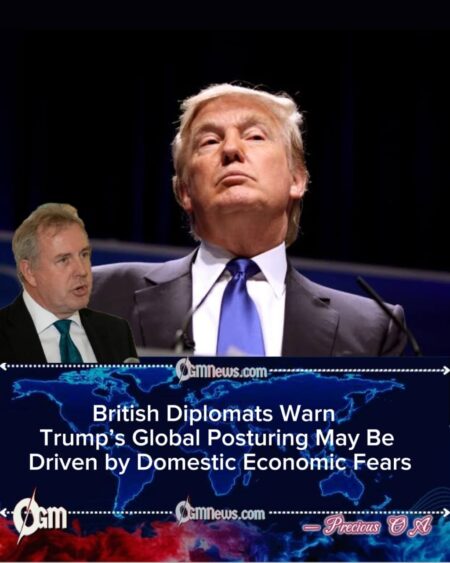
British Diplomats say growing concern over the trajectory of the U.S. economy is increasingly shaping political calculations inside Washington as the country approaches a pivotal mid-term election cycle. According to officials familiar with transatlantic discussions, senior British foreign service figures believe economic undercurrents are becoming an unspoken driver of recent White House messaging and international posturing.
British Diplomats indicate that persistent inflation in food, housing, and energy markets has complicated efforts by U.S. policymakers to present a confident domestic narrative. While headline job numbers remain relatively strong, many households continue to report declining purchasing power, which diplomats believe has heightened sensitivity among undecided voters.
Economic analysts in London note that American consumer confidence surveys show widening gaps between official economic indicators and lived experiences. This divergence, diplomats argue, creates a political environment in which administrations are more vulnerable to sudden opinion shifts.
British Diplomats and Electoral Strategy
British Diplomats have circulated internal assessments suggesting that political leaders under economic pressure often elevate foreign policy themes in public discourse as a way of reframing voter attention. The reports note that international crises tend to dominate news cycles more consistently than domestic fiscal debates.
British Diplomats further observe that recent U.S. political rhetoric has increasingly focused on global threats, security partnerships, and adversarial relationships. The timing of this messaging, according to diplomatic analysts, coincides closely with heightened public scrutiny of inflation and affordability.
Several European policy researchers argue that such narrative shifts are not uncommon in democratic systems facing economic headwinds. They point to historical precedents in which governments emphasized external challenges during periods of domestic economic discomfort.
Signals from Transatlantic Channels
British Diplomats say communications between London and Washington have reflected subtle changes in tone regarding economic discussions. While formal briefings continue to highlight positive growth figures, private exchanges reportedly acknowledge deeper concern about long-term cost-of-living pressures.
Trade specialists in the United Kingdom have noted slower consumer spending trends in several American regions. These indicators, though not yet alarming, suggest a potential softening that could influence electoral behavior in swing states.
Political consultants working with multinational firms have echoed these concerns, stating that economic uncertainty often drives voters toward protest ballots or reduced turnout, outcomes that could complicate mid-term strategies.
Shifting Media and Public Attention
Media monitoring groups in Europe have documented a steady rise in U.S. coverage focused on international security matters. British Diplomats argue that this pattern aligns with internal political calculations rather than purely strategic necessity.
News cycles increasingly highlight diplomatic summits, military readiness, and international alliances, while in-depth economic policy coverage has received comparatively less prominence. Observers suggest this could gradually reframe public priorities ahead of election season.
Communications scholars note that sustained exposure to global security narratives can significantly influence voter perception of leadership strength, often overshadowing economic dissatisfaction in the short term.
Domestic Pressures Behind Global Messaging
British Diplomats believe internal polling conducted by U.S. political strategists has identified economic dissatisfaction as one of the administration’s most sensitive vulnerabilities. According to officials briefed on the findings, cost-of-living concerns rank above healthcare and education among undecided voters.
At the same time, domestic political messaging increasingly emphasizes themes of national strength, sovereignty, and global leadership. Analysts say these messages resonate emotionally and are often easier to communicate than complex fiscal policy reforms.
Public opinion experts argue that this approach can stabilize approval ratings temporarily but may not resolve underlying economic anxieties, which can resurface sharply closer to election day.
Implications for the Mid-Term Landscape
British Diplomats caution that the effectiveness of foreign-policy-driven messaging depends heavily on economic stability over the coming months. Any further increases in consumer prices or housing costs could weaken the ability of global narratives to divert voter attention.
They also warn that sustained economic stress may lead to increased political volatility, particularly in suburban districts that have historically swung between parties. These districts are viewed as decisive battlegrounds for control of Congress.
Election forecasters in Europe conclude that while international developments may influence headlines, the final outcome of the mid-term elections is likely to be determined by how American households ultimately feel about their personal financial security.

[…] […]