



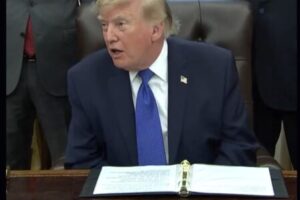



















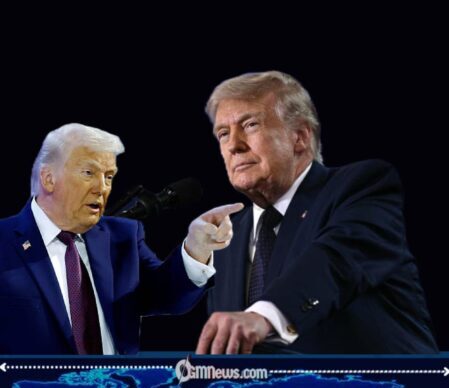
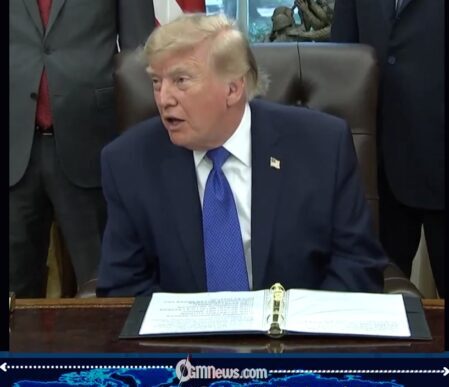
President Donald Trump, currently serving his second term as U.S. president, has again drawn national attention after endorsing a disputed claim that a woman killed during an Immigration and Customs Enforcement (ICE) operation in Minneapolis was connected to a so-called “leftwing network” of paid agitators. Speaking at the White House on Friday, the president echoed remarks previously made by Vice-President JD Vance, despite the absence of verified evidence supporting the allegation.
The comments followed public scrutiny of the fatal shooting of Renee Good, a 37-year-old woman killed by an ICE agent during an enforcement action earlier in the week. Video footage of the incident, widely circulated online, has intensified debate over the conduct of federal agents, the role of public protest, and the administration’s broader immigration strategy.
Trump Administration Endorsement of Vice-Presidential Claims
At a press interaction prompted by a question from a Fox News correspondent, President Trump expressed support for Vice-President Vance’s assertion that Good was part of an organized effort to provoke federal authorities. Trump described his vice-president as “generally very accurate” and suggested that events surrounding the shooting bore signs of coordinated agitation.
The president Trump focused on audio captured in video recordings of the incident, claiming that repeated shouts of “shame” directed at ICE agents indicated the presence of a “professional troublemaker.” According to Trump, such behavior could not be spontaneous and instead suggested paid involvement aimed at undermining law enforcement operations.
Video Evidence and Competing Interpretations
Multiple videos recorded by witnesses show the moments before and after the shooting, including voices shouting “shame” as agents attempted to remove Good from her vehicle and later as they left the scene. It remains unclear whether the individual shouting was the person filming or another bystander nearby.
Civil rights advocates and independent observers argue that the recordings reflect a natural reaction to a violent and distressing event. They note that spontaneous verbal protest is common during police or federal enforcement actions, particularly when lethal force is used, and does not in itself indicate organized or paid activity.
Repetition of a Familiar Narrative
President Trump’s remarks align with a pattern in which he has previously suggested that opposition to his administration’s immigration policies is driven by paid operatives rather than community concern. In recent months, he has repeatedly argued that protests against mass deportations and ICE raids are orchestrated efforts designed to incite confrontation.
Critics counter that this framing dismisses the experiences of local residents who witness enforcement actions affecting neighbors and family members. They point to numerous documented cases across the country where bystanders have reacted emotionally to immigration raids without any evidence of coordination or compensation.
Public Reaction and Media Coverage
The president Trump also criticized television coverage of the incident, stating that the loud screams captured on video made it difficult for him to watch the footage. He suggested that news outlets had lowered the audio volume because the reaction was “so loud and so crazy and just not normal.”
Media organizations and journalists have defended their coverage, emphasizing that the audio reflects the raw conditions under which the footage was recorded. They argue that such details are essential for accurately portraying the circumstances of the shooting and the public response to it.
Law Enforcement, Protest, and Policy Implications
Concluding his remarks, President Trump reaffirmed his administration’s commitment to protecting ICE agents, border patrol officers, and law enforcement personnel more broadly. He stated that federal authorities would continue to carry out immigration enforcement despite criticism and public demonstrations.
The incident has reignited debate over the balance between enforcement and accountability, as well as the boundaries of lawful protest. As investigations into the shooting continue, the conflicting interpretations of video evidence and presidential rhetoric are likely to remain central to discussions about immigration policy and civil liberties in the United States.
Casinoabc999? Good Site. The interface is sleek, and there is a lot of stuff to...