





























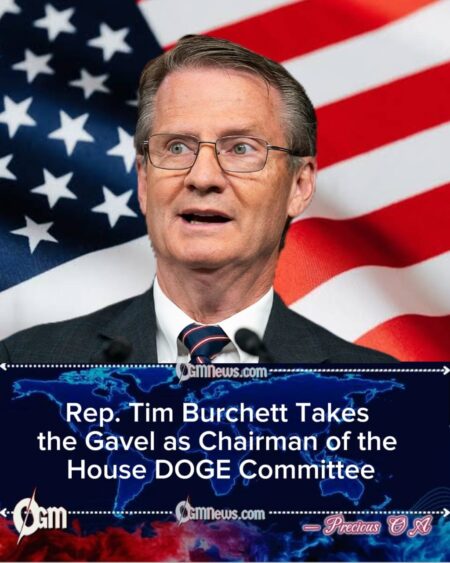
Rep. Tim Burchett was formally selected this week as the new Chairman of the House DOGE Committee, marking a significant leadership shift inside one of Congress’s most closely watched oversight bodies. The appointment immediately drew national attention because of the committee’s expanding role in federal accountability, budget transparency, and regulatory reform. Lawmakers from both parties acknowledged that the choice signals a new phase of aggressive inquiry and public-facing hearings.
The House DOGE Committee, originally created to focus on government efficiency and waste reduction, has evolved into a powerful platform capable of shaping public narratives around spending, compliance, and administrative conduct. Burchett’s elevation places him at the center of major policy debates expected to define the coming legislative cycle.
Observers note that the announcement arrives at a moment when public trust in federal institutions remains fragile, and when both parties are seeking to present themselves as stewards of fiscal responsibility. The committee’s next actions under its new chair will likely influence not only legislative priorities but also the broader political climate.
The Road to the Chairmanship
Rep. Tim Burchett has spent years positioning himself as an outspoken advocate for transparency, regularly criticizing what he has described as bloated federal structures and unaccountable agencies. His voting record and public statements have consistently emphasized limits on government growth and the need for direct oversight.
Colleagues within his caucus say his selection reflects internal confidence in his willingness to pursue difficult inquiries without hesitation. Several senior members described him as persistent, unfiltered, and prepared to take political risks in the name of accountability.
Beyond Capitol Hill, Burchett has cultivated a national following through media appearances and town hall meetings, often highlighting what he considers structural failures within federal bureaucracies. That public profile may now amplify the committee’s reach under his leadership.
Committee Mandate and Expanded Authority
The House DOGE Committee has quietly grown into one of the most consequential investigative arms of Congress. Its authority includes the ability to subpoena documents, summon agency heads, and issue formal recommendations that influence appropriations and legislative reform.
Rep. Tim Burchett has indicated in previous remarks that he views the committee not simply as an advisory panel, but as an enforcement-oriented body capable of driving real change. Supporters argue that this interpretation could result in more public hearings and deeper probes into agency operations.
Legal experts caution that the committee’s powers, while significant, still depend on coordination with House leadership and other oversight bodies. However, the visibility of the chairman often shapes which investigations gain momentum and which quietly stall.
Rep. Tim Burchett and the Oversight Agenda
Rep. Tim Burchett has already signaled that his chairmanship will prioritize transparency, efficiency audits, and performance accountability across multiple federal departments. Early briefings suggest that initial inquiries may focus on procurement processes, administrative compliance, and contract oversight.
Staffers familiar with the transition say that new reporting mechanisms are being developed to streamline how agencies are called to testify. This could result in faster scheduling of hearings and more rapid public disclosure of findings.
Burchett’s leadership style, described by allies as direct and uncompromising, may bring a more confrontational tone to proceedings. Critics, however, caution that intensity must be balanced with procedural rigor to avoid politicization.
Supporters Celebrate the Selection
Supporters of the appointment argue that Burchett’s elevation represents a turning point in congressional oversight. Rep. Tim Burchett has been praised by advocacy groups who believe his leadership will finally produce measurable reductions in wasteful spending.
Several fiscal watchdog organizations released statements welcoming the decision, calling it a “renewed opportunity for reform.” They highlighted Burchett’s history of introducing legislation aimed at limiting administrative expansion.
Grassroots groups also applauded the move, seeing the new chairman as a figure who speaks plainly about federal inefficiencies and resonates with voters skeptical of institutional power.
Critics Raise Concerns
Not everyone is enthusiastic about the appointment. Rep. Tim Burchett has faced criticism in the past for using strong rhetoric, which opponents worry could polarize committee proceedings. Some lawmakers have called for assurances that hearings will remain fact-driven and bipartisan.
Ethics specialists emphasize that committee leadership carries significant responsibility, particularly when issuing public findings that can affect agency reputations and employee morale. They stress the importance of maintaining procedural neutrality and evidentiary standards.
Nonetheless, even critics acknowledge that Burchett’s selection is likely to result in a more active committee, potentially increasing public scrutiny of federal operations.
Public Expectations Rise
Rep. Tim Burchett now faces heightened expectations from constituents who view his appointment as an opportunity to reshape how Congress polices federal agencies. Early indicators suggest that citizen groups plan to submit more formal complaints and oversight requests to the committee.
Media analysts predict an increase in nationally televised hearings, which could elevate the committee’s influence beyond Capitol Hill. Such visibility may also place additional pressure on agencies to demonstrate compliance and operational efficiency.
This expanded attention could redefine the committee’s public image, transforming it into one of the most visible accountability forums in Congress.
What Comes Next
Rep. Tim Burchett is expected to formally outline his strategic priorities in the coming weeks, including a preliminary schedule of hearings and investigative themes. Congressional staff are already preparing briefing materials related to procurement transparency and administrative audits.
Behind the scenes, coordination is underway between the committee and appropriations subcommittees, signaling that oversight findings could directly inform future funding decisions.
Whether viewed as a reformer or a disruptor, Burchett’s chairmanship marks a consequential shift. The House DOGE Committee now stands positioned to play a more aggressive role in shaping how federal institutions are evaluated, challenged, and potentially restructured in the months ahead.


Casinoabc999? Good Site. The interface is sleek, and there is a lot of stuff to...