

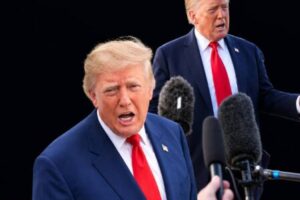


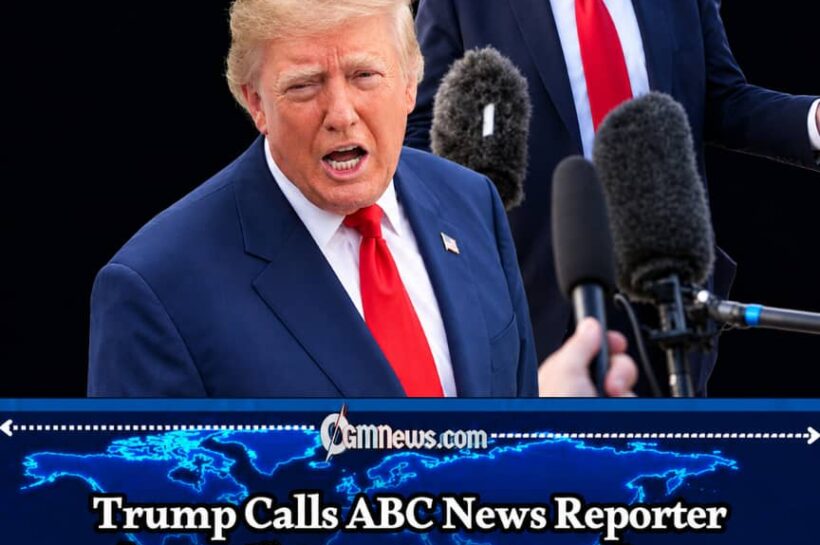



President Donald Trump on Thursday issued a blunt warning to Iran’s ruling authorities as large-scale pro-democracy protests spread across multiple cities, signaling a renewed wave of public dissent against the country’s leadership. The demonstrations, described by observers as widespread and persistent, have drawn international attention amid concerns over political repression, economic hardship, and civil liberties in the Islamic Republic.
Speaking as the protests intensified, President Trump—currently serving a second term as U.S. president—framed his remarks as a message to Iran’s leaders rather than a direct intervention. His comments underscored Washington’s close monitoring of the unfolding situation and highlighted the broader geopolitical implications of sustained unrest in one of the Middle East’s most strategically significant countries.
Rising Protests Across Iranian Cities
Reports from inside Iran indicate that demonstrations have erupted in several major urban centers, with protesters calling for political reform, greater personal freedoms, and improved economic conditions. While the exact scale of the protests is difficult to verify due to restrictions on independent media, videos circulating online suggest sustained gatherings rather than isolated incidents.
The protests appear to reflect long-standing frustrations among segments of the population, particularly young people and urban residents. Rising living costs, unemployment, and dissatisfaction with governance have frequently served as catalysts for unrest in recent years, and analysts say the current wave fits into that broader pattern.
Iranian authorities have not released comprehensive official figures but have acknowledged “public disturbances” in some areas. Security forces have reportedly increased their presence in key locations as the demonstrations continue.
President Trump’s Warning and Its Tone
President Trump’s warning to Iran’s ruling regime was direct but measured, emphasizing accountability and the power of popular movements. Without outlining specific policy actions, he signaled that the United States was paying close attention to how Iranian authorities respond to their citizens’ demands.
Administration officials later clarified that the president’s remarks were intended to support democratic principles rather than provoke escalation. The White House stopped short of announcing new sanctions or diplomatic measures, suggesting that Washington is, for now, adopting a watchful stance.
Political analysts note that Trump’s language reflects a familiar approach in his foreign policy: strong rhetorical signals combined with strategic ambiguity about next steps.
International Reactions and Diplomatic Implications
Reactions from the international community have been cautious. Several Western governments have expressed concern about reports of crackdowns on protesters, while urging restraint from all sides. Human rights organizations have called for the protection of demonstrators and greater transparency from Iranian authorities.
Diplomatically, the protests complicate an already tense relationship between Tehran and Washington. Any escalation, analysts warn, could affect regional stability, energy markets, and ongoing discussions involving Iran’s nuclear program and regional security role.
For now, foreign governments appear focused on monitoring developments rather than taking immediate collective action.
Iran’s Domestic Challenges in Focus
The latest unrest has once again brought Iran’s internal challenges into sharp relief. Economic pressures, exacerbated by years of sanctions and structural inefficiencies, have strained household incomes. At the same time, demands for social and political reform have grown louder, particularly among younger generations.
Experts on Iranian politics note that protest movements often arise from a combination of economic grievances and calls for political change. While not all demonstrations lead to systemic reform, repeated episodes of unrest suggest unresolved underlying tensions.
How the Iranian leadership chooses to respond—through dialogue, reform, or repression—may shape the country’s political trajectory in the months ahead.
What Comes Next
As protests continue, attention will likely focus on both Tehran’s response and Washington’s next moves.
President Trump’s warning places the United States firmly in the international conversation surrounding the unrest, even as officials emphasize restraint.
Much will depend on whether demonstrations sustain momentum and whether Iranian authorities seek to ease tensions or tighten control. For the moment, the situation remains fluid, with regional and global implications that extend well beyond Iran’s borders.

The weekly tournaments here keep me coming back because the prize pools are surprisingly generous....