




























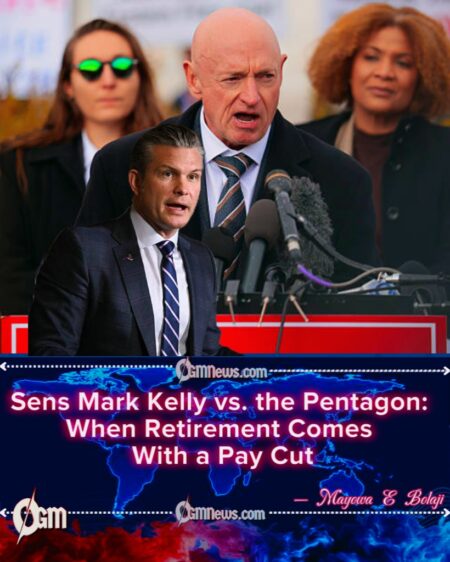
Sen. Mark Kelly on Tuesday issued a sharp rebuke of Secretary of War Pete Hegseth’s decision to downgrade the senator’s military retirement rank and associated pay, calling the move unjustified and pledging to challenge it “with every tool that we have.” The dispute has ignited a rare public clash between a sitting U.S. senator and the Pentagon over a personnel determination that carries both financial and symbolic weight.
Kelly, a decorated veteran with a long record of military service, framed the downgrade as an administrative overreach with broader implications for how the armed forces treat retirees who later enter public life. The Pentagon, for its part, has indicated that the decision followed a review process, setting the stage for a protracted legal and political contest.
Background to the Dispute
At the center of the controversy is a Pentagon review that resulted in a reduction of Kelly’s recognized retirement rank, a change that also lowers his pension benefits. According to aides familiar with the matter, the review assessed service records and post-retirement activities under existing military regulations.
Kelly’s office disputes the basis of that assessment, arguing that his record meets all criteria for the rank previously granted.
Supporters say the downgrade contradicts longstanding precedent and risks politicizing what has traditionally been a nonpartisan process governing veterans’ benefits.
Kelly’s Response and Legal Strategy
In a statement released Tuesday, Kelly vowed to contest the decision through formal appeals, congressional oversight mechanisms, and, if necessary, the courts.
He emphasized that his challenge is not only personal but also intended to protect other service members from what he described as arbitrary revisions to earned benefits.
Legal advisers to the senator are reportedly examining administrative law options, including whether the Pentagon adhered to due process requirements. Kelly has also signaled openness to bipartisan support, framing the issue as one of fairness to veterans rather than partisan conflict.
The Pentagon’s Position
Officials at the Department of War have defended the review process, noting that retirement rank determinations can be revisited if new information or interpretations of regulations emerge.
While declining to discuss individual personnel matters in detail, the department has said the decision followed established procedures.
Secretary Pete Hegseth has not commented publicly beyond confirming that the review was conducted under his authority. Pentagon sources stress that the department’s focus remains on uniform application of rules, regardless of a retiree’s subsequent public role.
Political and Institutional Implications
The clash raises questions about the intersection of military administration and politics, particularly when retired officers later serve in elected office. Analysts note that while rare, such disputes can reverberate across Capitol Hill, prompting scrutiny of Pentagon policies and oversight hearings.
For lawmakers, the case could test boundaries between executive authority and congressional oversight. Veterans’ advocacy groups are also watching closely, concerned that the outcome may set a precedent affecting retirement benefits beyond this single case.
What Comes Next
Kelly’s challenge is expected to unfold over months, beginning with internal appeals and potentially expanding to legislative inquiries. Any court action would likely focus on whether the Pentagon’s decision met procedural standards and respected prior determinations.
Until then, the downgrade remains in effect, though Kelly has pledged to continue pressing the issue publicly. The resolution will not only determine his own retirement status but may also clarify how the military handles similar cases in the future.


[…] […]