







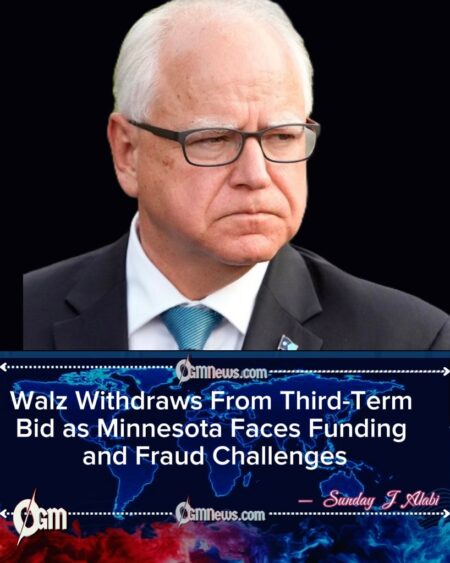
Minnesota Governor Tim Walz announced on Monday that he will not seek re-election, ending a campaign he launched only four months earlier for an unprecedented third term. The decision comes against the backdrop of intensifying scrutiny over fraud in state-administered social safety net programmes and a widening political dispute with the Trump administration, which has recently frozen certain federal childcare funds for the state.
Walz said the choice to withdraw from the race was driven by a desire to prioritize governing over campaigning during a difficult period for Minnesota. The announcement places fresh uncertainty over the state’s upcoming gubernatorial election, even as it underscores broader national debates about public accountability, immigration enforcement, and federal-state relations under President Donald Trump, the current U.S. president serving a second term.
Decision to Withdraw: Choosing Governance Over Campaigning
In a statement, Walz said he concluded that continuing a re-election campaign would distract from the immediate responsibilities of his office. After consultations with his family and political team, he determined that his focus should remain on addressing the challenges confronting the state rather than defending his political future.
Walz framed the decision as a matter of stewardship, arguing that the demands of crisis management require undivided attention. “Every minute I spend defending my own political interests would be a minute I can’t spend defending the people of Minnesota,” he said, signaling a clear intention to concentrate on policy execution and administrative reforms during the remainder of his term.
Fraud Investigations and State Programmes Under Scrutiny
The governor has faced sustained criticism over fraud involving Minnesota’s social safety net programmes. Prosecutors have alleged that fraudulent activity within Medicaid alone cost the state approximately $9 billion, raising questions about oversight and internal controls across multiple agencies.
In separate cases linked to Covid-19 relief programmes, dozens of individuals have been charged with felonies for allegedly stealing hundreds of millions of dollars. Federal prosecutors have reported that 59 people have been convicted so far. Walz has acknowledged the seriousness of the issue while maintaining that his administration is taking corrective steps to prevent future abuse.
Federal Funding Freeze and Political Fallout
Tensions escalated in late December when the Trump administration announced it would withhold federal childcare funding from Minnesota. The move followed allegations by a conservative YouTuber that several childcare centres run by Somali immigrants were receiving public funds without providing services.
State officials strongly disputed the claims, and a review of public records by opitanglobamedia news , found no evidence of fraud at the centres. The review did, however, identify regulatory citations related to safety, cleanliness, equipment, and staff training. The funding freeze has intensified political divisions, with Walz accusing federal authorities of exploiting the situation for political gain.
Immigration, Community Tensions, and National Attention
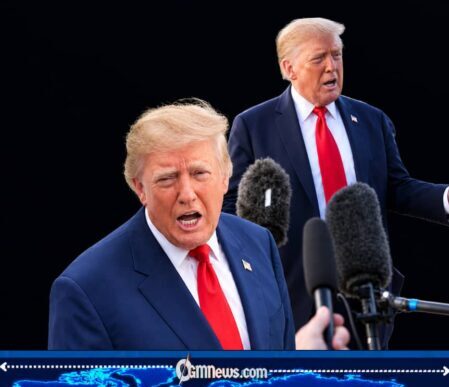
Minnesota, which is home to the largest Somali immigrant population in the United States, has drawn heightened national attention amid expanded immigration enforcement under President Trump. The president has stated publicly that he does not want Somali immigrants in the country, placing the state at the center of a broader national debate.
Walz argued that the crisis has been used to inflame social divisions, warning against rhetoric that targets immigrant communities. He accused Trump and Republican allies of “playing politics” and seeking to “poison our people against each other,” while asserting that Minnesota’s diversity remains central to its social and economic fabric.
Political Landscape After Walz’s Exit
With Walz stepping aside, the Democratic Party has yet to identify a clear successor in the race for governor. Democrats have held every statewide office in Minnesota since 2006, but the absence of an incumbent candidate introduces new uncertainty into the electoral calculus.
On the Republican side, the field is already crowded. Candidates include MyPillow founder and chief executive Mike Lindell, a prominent Trump ally, and Minnesota House Speaker Lisa Demuth. The evolving race is expected to test party strategies and voter sentiment in a state that has leaned Democratic statewide for nearly two decades.
Walz’s Background and Public Service Record
Before entering politics, Walz served as a member of the Army National Guard and worked as a teacher, experiences he has frequently cited as shaping his approach to public service. His tenure as governor has included a focus on education, healthcare access, and social welfare, alongside navigating unprecedented challenges such as the Covid-19 pandemic.
While his decision not to seek re-election closes one chapter of his political career, Walz has indicated that his immediate priority remains governing. As Minnesota continues to confront fraud investigations and federal funding disputes, his administration’s actions in the coming months are likely to shape both public perception and the state’s political future.

The weekly tournaments here keep me coming back because the prize pools are surprisingly generous....