

























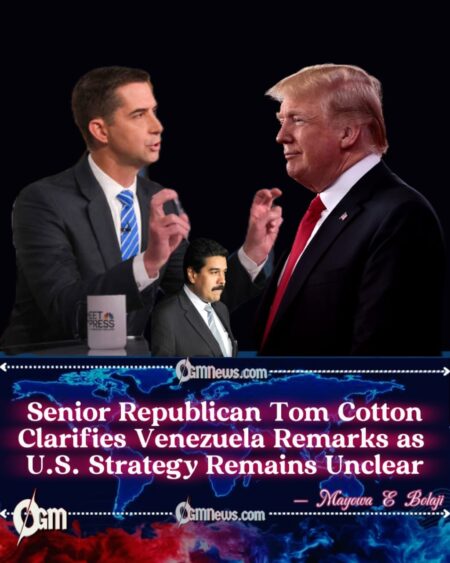
Senior Republican Senator Tom Cotton has begun to temper earlier remarks suggesting the United States could directly administer Venezuela, amid growing indications that no concrete plan exists within the Trump administration to govern the South American nation. The shift in tone comes as policy analysts, lawmakers, and international observers seek clarity on Washington’s intentions toward Venezuela under President Donald Trump, who is currently serving his second term as U.S. president.
Cotton’s recalibration reflects broader uncertainty within U.S. foreign policy circles, where strong rhetoric has not yet translated into a defined strategic framework. While pressure on Venezuela’s leadership remains a consistent theme, questions persist over what role—if any—the United States envisions for itself beyond diplomatic and economic leverage.
Initial Remarks and Their Political Impact
Senator Cotton’s earlier comments, which appeared to suggest a scenario in which the United States might assume administrative control over Venezuela, quickly drew attention both domestically and internationally. Critics argued that such statements evoked historical sensitivities in Latin America and risked inflaming regional tensions.
Within Washington, the remarks also prompted concern among lawmakers who favor a more cautious approach to U.S. engagement abroad. Some Republicans privately acknowledged that the language went beyond established policy positions, creating the impression of intentions that had not been formally discussed or approved.
Clarification and Walk-Back by Tom Cotton
In subsequent interviews and public statements, Cotton has sought to clarify his position, emphasizing that his comments were speculative rather than indicative of an official policy proposal. He stressed that any U.S. involvement in Venezuela would be guided by congressional oversight and international norms.
This walk-back appears aimed at aligning his rhetoric more closely with the administration’s current stance, which prioritizes pressure through sanctions and diplomacy rather than direct governance. The clarification has helped ease immediate political backlash but has not fully resolved questions about long-term strategy.
Tom Cotton: Trump Administration’s Position Remains Unclear
Despite the adjustment in tone from Tom Cotton, the Trump administration has not articulated a detailed plan regarding Venezuela’s future governance. Officials have reiterated support for democratic processes and humanitarian assistance, but have stopped short of outlining actionable steps beyond existing measures.
Policy experts note that this lack of specificity leaves room for mixed messaging. While President Trump’s second-term foreign policy emphasizes strength and deterrence, the absence of a clear roadmap on Venezuela has fueled speculation about internal divisions or unresolved debates within the administration.
Domestic and International Reactions
Reactions to the episode have varied. Democratic lawmakers have criticized the initial comments as reckless, arguing they undermine U.S. credibility and complicate diplomatic efforts. Some Republicans, meanwhile, have urged greater discipline in public messaging on sensitive foreign policy matters.
Internationally, Latin American governments and analysts have responded cautiously, underscoring the importance of sovereignty and regional cooperation. Several allies have called for the United States to work multilaterally rather than signal unilateral actions that could destabilize the region.
Implications for U.S. Foreign Policy
The episode highlights the challenges facing U.S. foreign policy communication under the current administration. Strong rhetoric can project resolve, but without accompanying policy detail, it risks creating confusion among allies and adversaries alike.
As pressure on Venezuela continues, observers say clarity will be essential. Whether the Trump administration chooses to articulate a more defined approach or maintain strategic ambiguity will shape both regional dynamics and domestic political debate in the months ahead.
[…] […]