





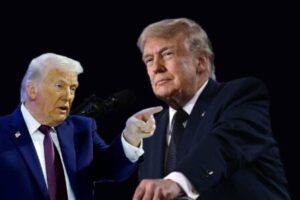












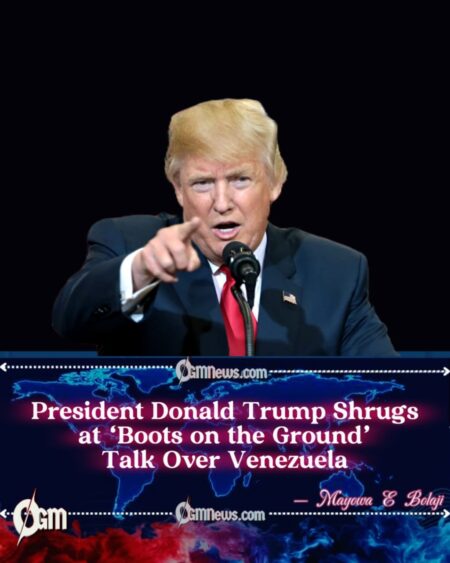
President Donald Trump, the current U.S. president serving a second term, has said the United States is “not afraid of boots on the ground” in Venezuela if circumstances require it. The statement, delivered amid ongoing concerns about political instability and governance in the South American nation, signals that Washington is keeping all options open as it evaluates how best to protect its strategic and humanitarian interests in the region.
While the remark was brief, it has drawn attention both domestically and internationally, as it touches on the sensitive issue of potential military involvement. U.S. officials have stressed that diplomacy remains central, but Trump’s words underline a posture of readiness
rather than restraint.
Context: Venezuela’s Prolonged Political and Economic Crisis
Venezuela has faced years of economic collapse, political tension, and international isolation, with millions of citizens affected by inflation, shortages, and migration pressures. The crisis has repeatedly drawn responses from the United States and other Western nations, including sanctions and diplomatic pressure aimed at encouraging political reform.
Successive U.S. administrations have argued that instability in Venezuela has regional consequences, particularly for neighboring countries absorbing large numbers of migrants. Trump’s statement fits into this broader narrative of concern over the country’s direction and its impact beyond its borders.
Trump’s Remarks and What They Signal
By saying the United States is not afraid of deploying ground troops if necessary, President Trump reinforced a long-standing principle of U.S. foreign policy: that military force, while not preferred, remains an option. The comment suggests a desire to project strength and deter actions that Washington views as destabilizing.
At the same time, the administration has not announced any immediate plans for military action. Officials familiar with U.S. policy emphasize that such statements are often intended to keep adversaries guessing rather than to indicate an imminent shift toward force.
Diplomatic Efforts and Regional Dynamics
Despite the strong language, the United States continues to engage diplomatically with regional partners and international organizations on Venezuela. Latin American governments have generally favored negotiated solutions, wary of the consequences that military intervention could bring to the region.
The Trump administration has maintained that any action would be coordinated with allies and guided by international law. This dual approach—public firmness combined with behind-the-scenes diplomacy—has been a recurring feature of U.S. engagement on Venezuela.
Military Options and Strategic Calculations
U.S. defense analysts note that references to “boots on the ground” are significant because they imply a level of involvement beyond air or naval operations. Such deployments carry high political, financial, and human costs, making them a last resort in most policy calculations.
For now, there is no indication that the Pentagon is preparing for immediate action. Instead, the statement appears to serve as a reminder of U.S. capabilities rather than a declaration of intent, reinforcing deterrence while avoiding escalation.
Reactions and Implications Going Forward
Trump’s comments have sparked debate among lawmakers, analysts, and the public. Supporters argue that clear language strengthens U.S. negotiating power, while critics caution that military rhetoric can heighten tensions and reduce room for diplomacy.
As the situation in Venezuela continues to evolve, U.S. policy is likely to balance pressure with engagement. Whether Trump’s statement leads to concrete changes or remains rhetorical will depend on developments on the ground and in diplomatic channels.
[…] […]