

















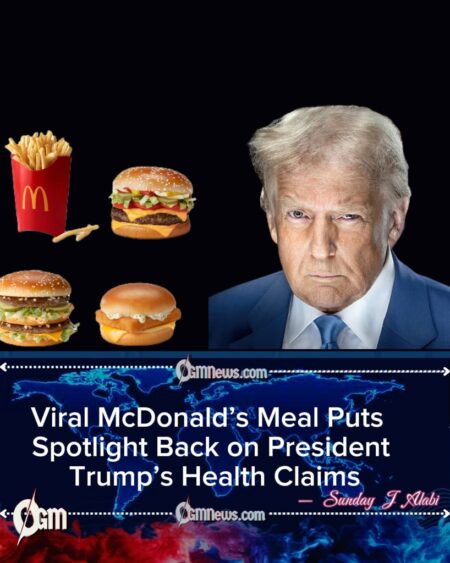
President Donald Trump’s long-standing fondness for McDonald’s has again become a focal point of national conversation after details of his preferred fast-food order resurfaced and went viral online. The renewed attention followed a recent interview in which the President Trump, now serving a second term, firmly dismissed concerns about his health and ageing, insisting that he remains in robust condition despite persistent scrutiny.
At 79, Trump is the oldest individual to assume the U.S. presidency, and questions surrounding his stamina and medical fitness have accompanied much of his current term. The viral discussion of his calorie-heavy McDonald’s meals has intensified that debate, blending political symbolism, public health concerns, and the dynamics of social media commentary.
President Trump:Fast-Food Order That Captured Public Attention
The McDonald’s order at the center of the discussion is substantial even by fast-food standards. According to reporting originally attributed to Republican National Committee Chairman Joe Gruters, the President Trump’s typical meal includes French fries, a Quarter Pounder, a Big Mac, and a Filet-O-Fish. Together, the items total approximately 1,960 calories, close to a full day’s recommended intake for an average adult.
The nutritional profile of the meal has drawn particular attention. The order contains roughly 225 milligrams of cholesterol—about three-quarters of the daily guideline. When a chocolate milkshake is added, as Trump has often done in the past, the total calorie count exceeds 2,700, surpassing the recommended daily allowance by a wide margin.
While such indulgences are not uncommon in American dietary culture, their association with the sitting President has elevated the conversation beyond personal preference, prompting broader discussions about health, leadership, and public example.
Health Claims and Medical Management
In an interview with The Wall Street Journal published on Thursday, President Trump reiterated that his health is “perfect,” expressing frustration with ongoing speculation. He acknowledged that he takes rosuvastatin, a statin medication, along with ezetimibe to help manage his cholesterol levels, as confirmed by his physician, Navy Captain Sean Barbabella.
Trump also addressed visible bruising on his right hand, which has frequently appeared covered with makeup or a bandage. He attributed the marks to daily aspirin use, taken at a relatively high dose of 325 milligrams to thin his blood. The standard preventative dose for cardiovascular events is typically much lower, at 81 milligrams, a discrepancy that has fueled further questions.
According to the President Trump, minor injuries and medication effects explain the bruising, and he emphasized that his medical regimen is designed to prevent more serious complications.
Medical Tests and Shifting Explanations
Questions about Trump’s health have also focused on imaging tests he received in October. Initially, the President Trump told reporters that he had undergone an MRI scan, though he said at the time that he did not know what was analyzed. He later revised that account in his interview with the Journal, stating that the procedure was a CT scan, which is faster and less intensive than an MRI.
Captain Barbabella confirmed that a CT scan was performed to definitively rule out cardiovascular issues. While the clarification addressed some uncertainty, the differing explanations contributed to perceptions of inconsistency in the administration’s communication about the President’s health.
Such discrepancies, though not uncommon in high-profile political environments, have reinforced public curiosity and skepticism, particularly given the President’s age and the visibility of his physical condition.
Public Appearances and Fatigue Allegations
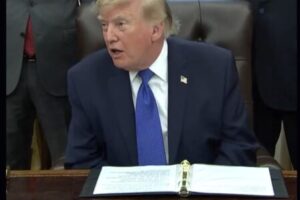
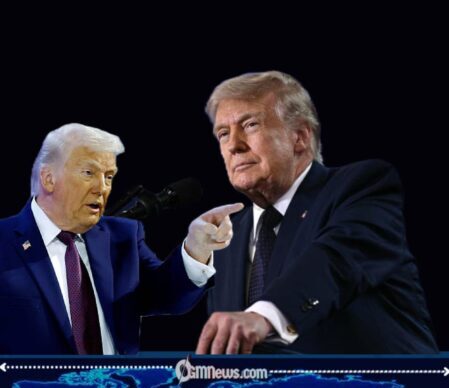
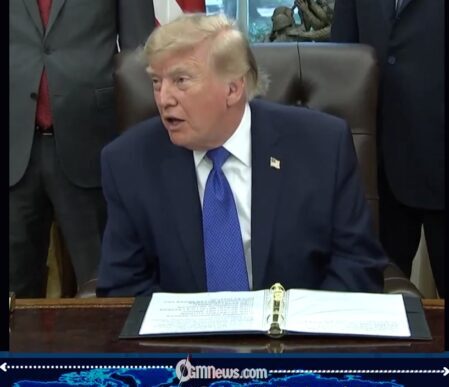
Another recurring issue has been instances in which President Trump appeared to struggle to keep his eyes open during meetings, including a televised Oval Office session with health representatives in November. Critics have pointed to these moments as evidence of fatigue, a politically sensitive subject given Trump’s frequent portrayal of his predecessor, Joe Biden, as “sleepy.”
Trump has firmly rejected the interpretation that he falls asleep in public. He explained that what appears to be dozing is merely brief relaxation or blinking caught at an inopportune moment by photographers. “I’ll just close. It’s very relaxing to me,” he told the Journal, adding that still images can be misleading.
The President Trump has also noted that he has “never been a big sleeper,” framing his behavior as consistent with long-standing personal habits rather than a sign of declining stamina.
A Long-Documented Taste for Fast Food
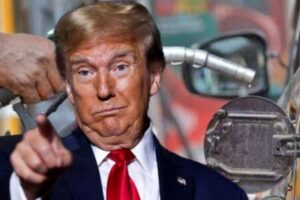
Trump’s affection for McDonald’s and other fast-food chains is well established. During the 2024 presidential campaign, he famously staged a stop behind a McDonald’s fry station, reinforcing an image of familiarity with everyday American culture. His aides have previously described fast food as a staple of his routine.
In Let Trump Be Trump, a 2017 book by former aides David Bossie and Corey Lewandowski, the authors recalled the President Trump ordering “two Big Macs, two Filet-O-Fish and a chocolate malted.” They described life aboard Trump Force One as revolving around “four major food groups: McDonald’s, Kentucky Fried Chicken, pizza and Diet Coke.”
These anecdotes have contributed to a public persona that blends indulgence with defiance of conventional health advice, a combination that continues to resonate with supporters and critics alike.
Social Media Reaction and Broader Context
The resurfaced reporting on Trump’s McDonald’s order quickly spread across X, where it prompted a mix of humor, criticism, and harsh commentary about the President’s health. Some posts were overtly mocking, while others questioned how such dietary habits align with claims of peak fitness.
The debate is unfolding against a broader historical backdrop. Joe Biden left office a year ago at 82, holding the record as the oldest president in U.S. history. Trump is set to surpass that mark during his current term, ensuring that age and health will remain central themes in public discourse.
For now, the President continues to push back against scrutiny, maintaining that his physical condition is strong and that much of the attention is exaggerated or politically motivated.
Casinoabc999? Good Site. The interface is sleek, and there is a lot of stuff to...