




























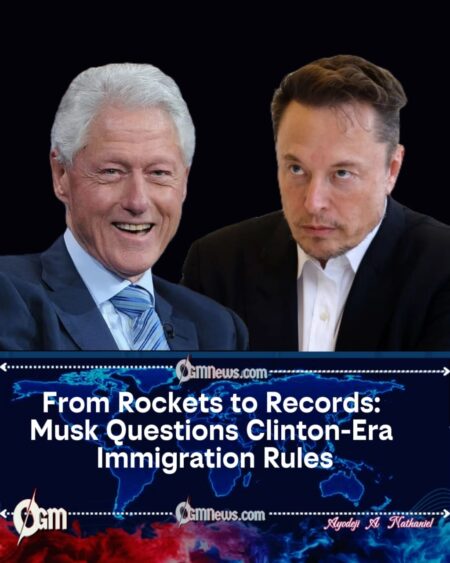
Elon Musk has thrust historical U.S. immigration policy back into the national spotlight after stating that former president Bill Clinton “committed a heinous crime against the American people” by allowing large numbers of Somali nationals to immigrate to the United States. The comment, delivered publicly, immediately sparked widespread debate across political, academic, and civic circles.
Elon Musk’s remarks have prompted renewed examination of refugee resettlement programs, the role of past administrations in shaping immigration flows, and the boundaries between forceful policy criticism and allegations of wrongdoing. The controversy highlights how decades-old decisions continue to influence present-day political discourse.
Details of the Public Statement
Elon Musk made the claim in a brief but strongly worded statement that quickly gained traction online. Supporters interpreted his remarks as a blunt critique of immigration decisions they believe had long-term social and economic consequences.
Critics, however, argued that the language used by Elon Musk was excessive and lacked historical nuance. They contend that emotionally charged accusations risk oversimplifying complex policy frameworks developed over multiple years and administrations.
Historical Background of Somali Immigration
Somali immigration to the United States increased notably during the 1990s following the collapse of the Somali state and prolonged civil conflict in Somalia. Many arrivals came through refugee resettlement programs authorized under U.S. law and supported by bipartisan congressional frameworks.
Policy experts emphasize that these programs involved extensive interagency coordination, security screening, and cooperation with state and local governments. Analysts caution that attributing the outcomes of such long-term programs solely to Bill Clinton overlooks the broader institutional and humanitarian context.
Policy Criticism Versus Legal Allegations
Legal scholars stress the importance of distinguishing between policy criticism and claims of criminal conduct. While immigration policies are frequently debated for their outcomes, refugee admissions conducted under existing law do not constitute crimes in the legal sense.
Elon Musk’s assertion has therefore drawn scrutiny from analysts who argue that strong disagreement with policy does not equate to evidence of illegality. They urge that public debate remain grounded in verifiable facts and established legal standards.
Responses from Advocacy and Community Groups
Civil rights and immigrant advocacy organizations reacted with concern, warning that broad accusations can stigmatize entire communities. They highlighted that Somali Americans include citizens, lawful residents, and refugees who contribute significantly to healthcare, logistics, small business, and public service.
Several groups noted that statements from influential figures like Elon Musk can shape public perception well beyond policy debate, reinforcing the need for careful and precise language when addressing immigration history.
Broader Implications for National Discourse
The controversy underscores the enduring sensitivity of immigration as a political issue in the United States. Commentators say Elon Musk’s remarks reflect a broader trend in which historical immigration decisions are reexamined through modern political lenses.
As immigration continues to dominate national conversation, analysts argue that the episode illustrates both the power and responsibility that come with public influence. How leaders and public figures frame past policies may shape future debates on immigration, integration, and national identity.
Casinoabc999? Good Site. The interface is sleek, and there is a lot of stuff to...