



























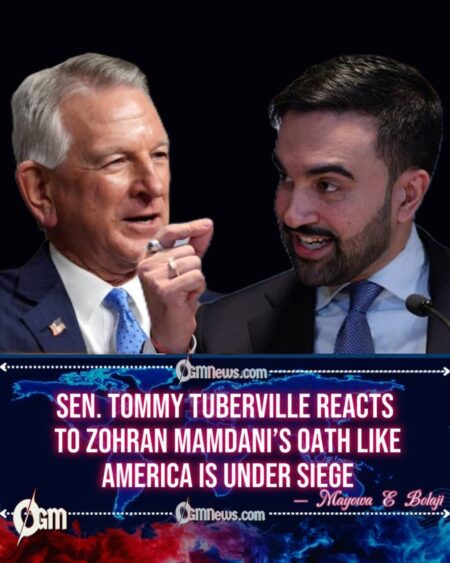
Sen. Tommy Tuberville ignited a national debate on religion and political rhetoric after criticizing New York lawmaker Zohran Mamdani’s use of the Quran during a swearing-in ceremony, saying the episode showed that the “enemy is inside the gates.” The Alabama Republican’s remarks, delivered during a public media appearance, immediately drew attention for their implications about faith, identity, and national values.
Sen. Tommy Tuberville framed his comments as a warning rather than a personal attack, arguing that symbols in public life can reflect deeper ideological shifts. His language, however, has prompted scrutiny from across the political spectrum, with supporters praising his bluntness and critics warning of the broader social consequences.
Sen. Tommy Tuberville: Framing the Controversy
Sen. Tommy Tuberville said Mamdani’s choice of a religious text other than the Bible represented what he views as an internal cultural challenge facing the country.
He did not cite specific policies or actions by Mamdani but emphasized symbolism as a key concern.
Sen. Tommy has previously used similar framing in discussions about immigration, education, and national identity, often warning that American traditions are under threat. This latest remark fits within that pattern, reinforcing his reputation for outspoken and polarizing commentary.
Sen. Tommy Tuberville: Ceremony and Office Clarified
Sen. Tommy Tuberville referred to the event as a mayoral swearing-in, though Zohran Mamdani is a New York State Assembly member, not the mayor of New York City. City officials have clarified that mayoral inaugurations follow separate, established municipal procedures.
Sen. Tommy’s comments nonetheless brought renewed attention to Mamdani, who has publicly identified as Muslim and has said his faith is a personal matter. Under U.S. law, elected officials are permitted to swear oaths using any religious text or none at all.
Sen. Tommy Tuberville: Constitutional Questions Raised
Sen. Tommy’s remarks have prompted renewed discussion of the Constitution’s prohibition of religious tests for public office. Legal experts note that the First Amendment protects both the free exercise of religion and the separation of church and state.
Sen. Tommy has not disputed the legality of Mamdani’s actions, but critics argue that his rhetoric risks undermining constitutional norms by framing lawful religious expression as a national threat.
Sen. Tommy Tuberville: Political and Public Reactions
Sen. Tommy Tuberville drew swift responses from Democratic leaders and civil rights organizations, many of whom condemned the language as divisive and potentially stigmatizing to Muslim Americans. Several called for a more measured tone in national discourse.
Sen. Tommy also received backing from some conservative voices who said he was expressing concerns shared by many voters. Others within his party urged caution, emphasizing the importance of separating policy disagreements from religious identity.
Sen. Tommy: Broader Implications
Sen. Tommys comments highlight how symbolic acts in public office can become flashpoints in an increasingly polarized political environment. Analysts note that such controversies often overshadow substantive policy debates.
Sen. Tommy has signaled no intention to retract his remarks, suggesting the issue will continue to resonate in discussions about religion, representation, and national unity. As the debate unfolds, it underscores the enduring tension between free expression and responsible political rhetoric in American democracy.

[…] […]