
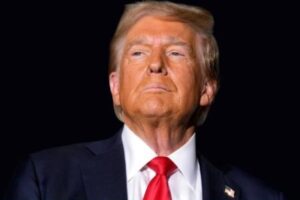



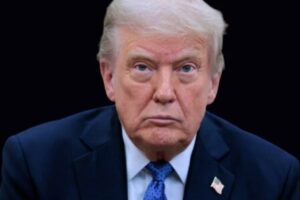



















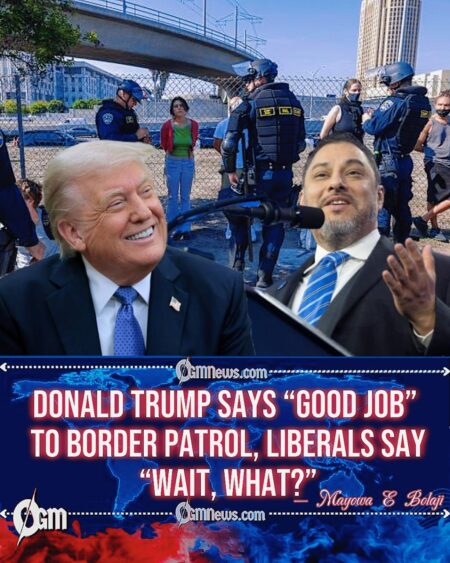
President Donald Trump has publicly commended National Border Patrol Council President Paul Perez and numerous Hispanic members of U.S. border enforcement agencies, following criticism directed at them by the mayor of Los Angeles and other political figures. The president’s remarks underscored his administration’s position that federal immigration officers should be supported, not condemned, for carrying out their lawful duties.
Speaking on the matter, President Trump emphasized that the officers in question were professionals acting within the scope of their responsibilities, and he framed the controversy as part of a broader national debate over immigration enforcement, public safety, and political accountability.
Presidential Response to Public Criticism
President Trump addressed the issue after reports emerged that several Border Patrol and federal immigration officers—many of them Hispanic—had been publicly criticized by local leaders in Los Angeles for their role in recent enforcement operations. The president described the criticism as unfair and demoralizing to frontline officers tasked with upholding federal law.
According to President Trump, targeting officers based on political disagreements over immigration policy risks undermining morale within agencies that play a central role in national security. He stressed that disagreements over policy should be directed at lawmakers and administrators, not at officers executing existing laws.
Praise for Paul Perez and Union Leadership
Central to the president’s remarks was his praise for Paul Perez, president of the National Border Patrol Council, whom he described as a consistent and credible advocate for rank-and-file agents. President Trump noted that union leadership has an important role in representing officers who often work in difficult and high-risk environments.
The president highlighted Perez’s background and leadership as emblematic of the diversity within federal law enforcement agencies. He argued that such diversity contradicts claims that immigration enforcement is driven by prejudice rather than by statutory responsibility.
Hispanic Agents and the Enforcement Debate
President Trump placed particular emphasis on the fact that many of the officers criticized are themselves Hispanic, stating that this reality complicates narratives that portray border enforcement as targeting specific ethnic groups. He said these agents reflect the communities they serve and bring cultural and linguistic knowledge that strengthens enforcement efforts.
The administration maintains that acknowledging the contributions of Hispanic agents is essential to a balanced discussion on immigration. Supporters of the officers argue that criticism aimed at them overlooks their personal backgrounds and professional commitments.
Los Angeles Officials and Policy Disagreements
The controversy has drawn attention to long-standing tensions between federal immigration authorities and leaders in so-called “sanctuary” jurisdictions such as Los Angeles. Local officials have argued that federal enforcement actions can strain community relations, while federal authorities insist they are necessary to uphold the law.
President Trump responded by reiterating that immigration enforcement is a federal responsibility and that local opposition does not negate federal authority. He urged local leaders to engage in constructive dialogue rather than public condemnation of individual officers.
Law Enforcement Morale and Public Trust
Beyond the immediate dispute, the president framed the issue as one of morale within federal law enforcement. He warned that persistent public criticism of officers could discourage recruitment and retention, particularly at a time when border agencies face staffing and operational challenges.
The administration argues that public trust is best maintained when officers are judged fairly and when political leaders avoid rhetoric that could be interpreted as blaming frontline personnel for broader policy disagreements.
Broader Implications for Immigration Policy
President Trump’s defense of the Border Patrol agents aligns with his administration’s broader immigration agenda during his second term, which prioritizes border security alongside calls for legislative reform. The president stated that meaningful change should come through Congress rather than through public disputes that place officers at the center of political conflict.
As the national conversation on immigration continues, the episode highlights the complex intersection of policy, politics, and the individuals responsible for enforcing federal law. For the administration, the message remains clear: officers carrying out their duties deserve institutional support, regardless of the political climate surrounding immigration enforcement.

[…] […]