





























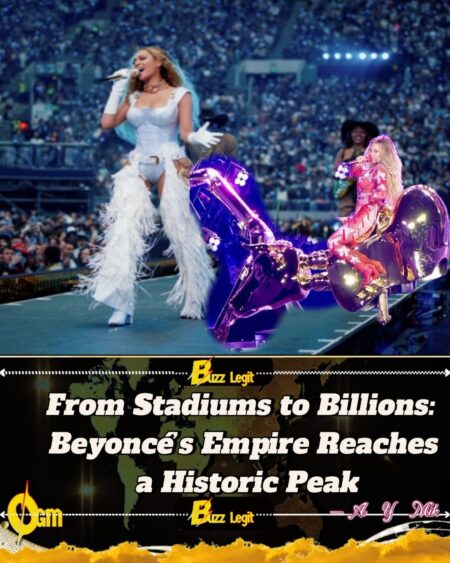
Beyoncé Knowles-Carter has officially entered the ranks of the world’s billionaires, cementing her status not only as a cultural icon but also as one of the most financially successful musicians in history. The milestone follows the extraordinary success of her 2025 Cowboy Carter world tour, now recognized as the highest-grossing concert tour of the year, and the sustained profitability of a music empire she has spent more than two decades carefully building.
At 44, Beyoncé becomes just the fifth musician to cross the billion-dollar threshold, joining an elite group that includes Jay-Z, Taylor Swift, Bruce Springsteen, and Rihanna. Her ascent underscores a broader shift in the global music industry, where ownership, touring scale, and brand control increasingly define long-term wealth.
A Record-Breaking Tour and Creative Reinvention
The financial catalyst behind Beyoncé’s billionaire status is the Cowboy Carter tour, a stadium-filling global production that combined musical ambition with theatrical spectacle. Spanning major cities across North America and Europe, the tour reportedly generated hundreds of millions of dollars in ticket sales, in addition to substantial merchandise revenue. Its success marked the most lucrative country-leaning tour ever mounted by a pop artist.
Beyond its commercial results, the tour symbolized a major artistic reinvention. Following the nearly $600 million-grossing Renaissance World Tour in 2023, Beyoncé pivoted in 2024 toward country music, releasing Cowboy Carter to both critical attention and strong sales. High-profile moments, including a Christmas NFL halftime performance, helped broaden the album’s reach and reinforced her ability to move fluidly across genres without losing mainstream appeal.
The live show itself reflected Beyoncé’s reputation for scale and precision. Nearly three hours long, it featured elaborate staging elements, including a flying car, a golden mechanical bull, and advanced robotics incorporated into the performance. Appearances by her husband Jay-Z, her children, and former Destiny’s Child members added personal and nostalgic dimensions to the production, further boosting audience demand.
Building Wealth Through Ownership and Strategy
While touring remains the most visible driver of Beyoncé’s earnings, the foundation of her wealth lies in ownership and long-term business strategy. In 2010, she founded Parkwood Entertainment, giving her direct control over her music, tours, films, and documentaries. This structure allowed her to retain a larger share of revenue than artists operating under traditional label arrangements.
Music catalog ownership continues to generate consistent income, supplemented by lucrative performance fees and brand partnerships. In recent years, Beyoncé has expanded into consumer ventures, including a hair-care line, a whiskey label, and fashion collaborations. Although these businesses contribute to her overall valuation, industry analysts note that touring and music rights remain the core pillars of her fortune.
Her rise to billionaire status also reflects a changing industry landscape in which top artists function as vertically integrated enterprises. Beyoncé’s career illustrates how creative independence, coupled with global touring power, can translate into sustained financial growth at a scale once reserved for corporate executives.
A Milestone With Broader Industry Implications
Beyoncé’s entry into the billionaire class carries significance beyond personal achievement. It highlights the growing economic power of artists who control their intellectual property and maintain direct relationships with global audiences. In an era of streaming and fragmented media consumption, large-scale live performances and brand ecosystems have become central to financial success.
As one of only a handful of musicians to reach this level of wealth, Beyoncé’s trajectory is likely to influence how future artists approach ownership, touring, and diversification. Her career offers a blueprint for longevity in an industry often defined by short peaks and rapid change.



The weekly tournaments here keep me coming back because the prize pools are surprisingly generous....