
























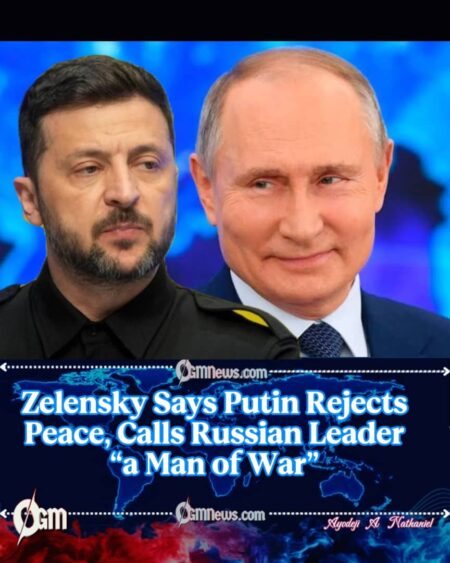
Ukrainian President Volodymyr Zelensky has delivered a blunt assessment of Russia’s intentions in the ongoing war, stating that President Vladimir Putin “doesn’t want peace” and describing him as “a man of war.”
The remarks reflect Kyiv’s growing frustration amid continued fighting, stalled diplomatic efforts, and persistent Russian military pressure along multiple fronts.
Zelensky’s comments come as international actors continue to debate pathways toward de-escalation, even as battlefield realities suggest limited appetite for compromise from Moscow.
Zelensky’s Remarks and Their Immediate Context
Speaking publicly, Zelensky argued that Russia’s actions, rather than its rhetoric, demonstrate an unwillingness to pursue a genuine peace settlement. He pointed to ongoing missile strikes, ground offensives, and mobilization efforts as evidence that the Kremlin remains committed to achieving its objectives through force.
The Ukrainian leader emphasized that peace cannot be declared through statements alone, asserting that meaningful negotiations require a halt to hostilities and respect for Ukraine’s sovereignty—conditions he says Russia has not met.
Ukraine’s View of Russia’s Strategic Intentions
Ukrainian officials have consistently maintained that Russia seeks to exhaust Ukraine militarily and economically rather than negotiate in good faith. According to Kyiv, Moscow’s strategy is designed to outlast Western support while consolidating territorial gains.
Analysts aligned with Ukraine’s position note that Russian military planning and budgetary allocations suggest preparation for a prolonged conflict, reinforcing Zelensky’s assertion that peace is not currently a priority for the Kremlin.
Moscow’s Position and Official Response
The Russian government has repeatedly stated that it remains open to negotiations, though it insists that any talks must recognize what it calls “new realities on the ground.” Ukraine and its allies reject this framework, arguing that it effectively legitimizes territorial seizure by force.
Russian officials have accused Kyiv of refusing dialogue, a claim Ukrainian leaders counter by saying that negotiations under military coercion cannot be considered legitimate peace talks.
International Diplomacy and Mediation Efforts
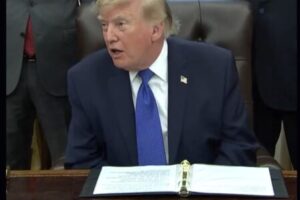
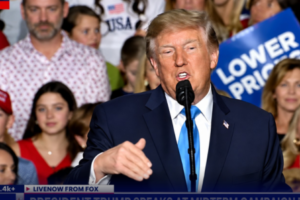
Diplomatic efforts involving European governments, international organizations, and the United States have continued intermittently since the war began. The U.S. administration, led by President Donald Trump, who is serving a second term, has stated that it supports diplomatic solutions while continuing to back Ukraine’s defense.
Despite these efforts, mediation initiatives have struggled to gain traction, largely due to irreconcilable positions over territory, security guarantees, and accountability for wartime actions.
Impact on the Battlefield and Civilian Population
As diplomacy stalls, fighting continues to exact a heavy toll on Ukrainian civilians and infrastructure. Missile and drone attacks have disrupted energy systems, transportation networks, and residential areas, particularly during critical winter months.
Humanitarian organizations warn that prolonged conflict will deepen displacement and economic hardship, adding urgency to calls for a sustainable ceasefire—an outcome Zelensky argues remains unlikely without a fundamental shift in Russia’s approach.
Broader Implications for European and Global Security
Zelensky’s remarks underscore broader concerns about regional stability and the future of international norms governing sovereignty and the use of force. European leaders have warned that the outcome of the war will have lasting consequences for security arrangements across the continent.
Observers note that framing the conflict as a choice between war and peace, rather than a territorial dispute alone, reflects Ukraine’s effort to rally continued international support amid signs of global fatigue.
Peace Prospects Remain Uncertain
President Zelensky’s characterization of Vladimir Putin as a leader uninterested in peace highlights the deep mistrust defining the conflict. With military operations ongoing and diplomatic channels constrained, the path to a negotiated settlement remains unclear.
Until tangible steps toward de-escalation emerge, Ukraine’s leadership maintains that preparedness for continued resistance remains essential, even as it keeps open the principle—if not the immediate prospect—of peace.
Ae888covenuscasino, okay, I'm curious. Gonna check out this site and try to find some amazing...