




























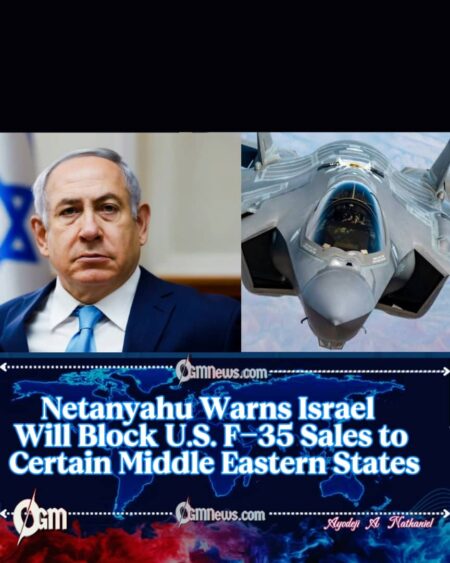
Israeli Prime Minister Benjamin Netanyahu has warned that Israel will move to prevent the sale of advanced U.S.-made F-35 fighter jets to Middle Eastern countries it believes should not possess such capabilities. The statement underscores Israel’s long-standing position that maintaining its qualitative military edge is essential to national security in a volatile region.
Netanyahu’s remarks place renewed focus on the strategic sensitivities surrounding advanced weapons transfers in the Middle East and highlight the complex interplay between U.S. arms sales, regional stability, and Israel’s security doctrine.
Netanyahu’s Statement and Strategic Rationale
Netanyahu said Israel would act to ensure that “anyone who should not have these advanced aircraft” does not obtain them. The message reflects a consistent Israeli policy aimed at preventing adversaries or potential rivals from acquiring weapons systems that could alter the regional military balance.
Israeli officials argue that the F-35’s stealth, intelligence, and strike capabilities make it uniquely sensitive. From Jerusalem’s perspective, uncontrolled proliferation could constrain Israel’s freedom of action and increase the risk of escalation in future conflicts.
The F-35 and Its Regional Significance
The F-35 Lightning II is among the most advanced multirole fighter jets in the world, integrating stealth technology with advanced sensors and networked warfare capabilities. Its deployment can significantly enhance a country’s airpower and deterrence posture.
In the Middle East, where air superiority plays a decisive role in military planning, access to the F-35 carries outsized strategic weight. As a result, each proposed sale is closely scrutinized by Israel and other regional actors.
Israel’s Qualitative Military Edge Policy
Israel’s opposition to certain arms sales is rooted in the principle of maintaining a qualitative military edge, a policy historically supported by the United States. This approach seeks to ensure that Israel retains superior military capabilities compared with potential adversaries.
Israeli leaders across the political spectrum have treated this principle as non-negotiable. Netanyahu’s comments reaffirm that Israel intends to use diplomatic and political channels to uphold this standard when new arms deals are proposed.
U.S. Role and Diplomatic Considerations
The United States remains the sole exporter of the F-35 and plays a central role in determining where and how the aircraft is sold. Arms sales decisions often balance alliance management, regional diplomacy, and broader strategic interests.
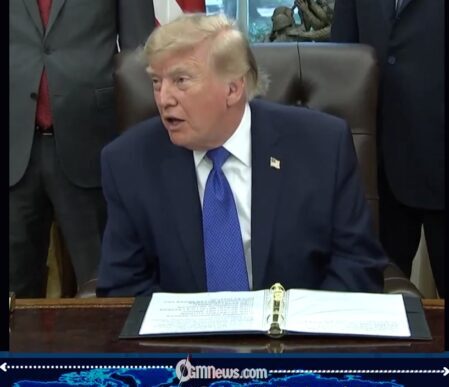
Under President Donald Trump, currently serving a second term, Washington has emphasized strengthening partnerships while also affirming Israel’s security needs. Any disagreement over F-35 transfers would therefore be managed within a broader framework of U.S.–Israel strategic coordination.
Regional and International Reactions
Middle Eastern governments interested in acquiring advanced aircraft have argued that such purchases are defensive and aimed at modernizing their air forces. Some see access to U.S. platforms as a signal of closer ties with Washington.
Analysts note that Israel’s opposition could complicate diplomatic efforts, particularly in a region where security cooperation and normalization agreements coexist with persistent rivalries and mistrust.
Implications for Future Arms Sales
Netanyahu’s warning suggests that future U.S. arms sales in the region will remain subject to intense negotiation and political pressure. Israel’s stance may influence how Washington structures deals, including potential limitations or compensatory measures.
The episode highlights how advanced weapons transfers are not merely commercial transactions but strategic decisions with far-reaching implications for regional stability and alliance politics.
Security Doctrine Reasserted
By publicly reiterating Israel’s intent to block certain F-35 sales, Netanyahu has reaffirmed a core element of Israeli defense policy. The statement signals continuity rather than change, emphasizing caution in a region marked by rapid shifts and enduring threats.
As debates over arms transfers continue, Israel’s insistence on preserving its military edge is likely to remain a defining factor in U.S.–Middle East defense diplomacy.


[…] […]