



























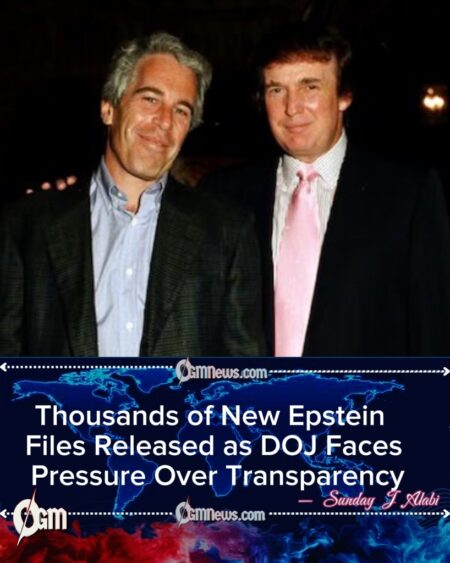
The U.S. Department of Justice (DOJ) has released a substantial new tranche of documents connected to the late financier Jeffrey Epstein, opening another chapter in one of the most scrutinized criminal investigations of recent decades. The latest disclosure, comprising more than 11,000 files and nearly 30,000 pages, includes repeated references to President Donald Trump, who is currently serving a second term in office, as well as detailed internal communications among federal investigators.
The release has reignited debate over the scope of the Epstein investigation, the handling of evidence by federal authorities, and lingering questions about accountability for those connected to Epstein’s network. It has also prompted bipartisan action in Congress, with lawmakers pressing the DOJ to comply fully with statutory disclosure requirements and to prioritize transparency for the sake of survivors and the public.
Scope and Content of the Latest DOJ Release
According to the Justice Department, the newly released materials represent one of the most extensive disclosures yet related to the Epstein case. The files include court records, FBI and DOJ memoranda, internal emails, photographs, videos, and media clippings collected over several years of investigation and litigation.
The department made the documents publicly accessible through its website, while major news organizations have compiled searchable databases to assist journalists and researchers. Officials emphasized that the materials reflect raw investigative records, not formal findings, and warned that many documents contain unverified claims, duplicative information, or references drawn from media reporting rather than firsthand evidence.
Despite those caveats, the sheer volume and breadth of the release have drawn widespread attention, particularly where the documents touch on prominent political figures and internal prosecutorial deliberations.
Mentions of President Trump in the Files
Several of the newly released documents reference President Trump, largely in the context of secondary materials such as news articles circulated among DOJ employees. One notable exception is a 2020 email from a New York-based prosecutor indicating that flight logs suggested Mr. Trump traveled on Epstein’s private aircraft more frequently than had been publicly known at the time.
The Justice Department stated on social media that some materials include what it described as “untrue and sensationalist claims” about President Trump that were submitted to the FBI shortly before the 2020 election. The department characterized these as outside tips rather than substantiated investigative conclusions.
No document in the release announces new criminal charges or formal findings involving the president. Nevertheless, the references have intensified public interest and underscored the political sensitivity surrounding the disclosure of the Epstein records.
Congressional Response and Contempt Proceedings
The document release followed mounting pressure from Congress, particularly from Democratic Representative Ro Khanna of California and Republican Representative Thomas Massie of Kentucky. The two lawmakers co-sponsored legislation mandating the release of the Epstein files by a specified deadline.
After the DOJ issued only a partial disclosure last week, Khanna and Massie criticized the department’s compliance and announced plans to pursue inherent contempt of Congress charges against Attorney General Pam Bondi. Khanna described the initial release as insufficient and argued that withholding documents undermines both the law and public trust.
In a statement, Khanna said the DOJ had months to prepare for the release and failed to engage with lawmakers’ requests. He and Massie contend that full disclosure, with legally required redactions, is essential to ensure accountability and to honor the rights of survivors connected to the case.
New Details on Epstein’s Death in Custody
The newly released files also shed further light on the circumstances surrounding Epstein’s death in federal custody in August 2019. A letter from the attorney for Bureau of Prisons officer Michael Thomas states that Thomas was “the only person” who saw Epstein hanging in his cell on the morning his body was discovered at the Metropolitan Correctional Center in New York.
Thomas, who has not spoken publicly, described discovering Epstein after being awakened by activity related to the morning meal service. His attorney said Thomas attempted lifesaving measures and later faced severe professional consequences, including the loss of his job and difficulty securing employment.
Federal prosecutors dropped charges against Thomas and fellow officer Tova Noel in 2021 after offering deferred prosecution agreements. A subsequent DOJ watchdog report documented failures in inmate monitoring on the morning of Epstein’s death, reinforcing longstanding concerns about institutional lapses.
Testimony From Epstein’s Longtime Assistant
Among the more detailed personal accounts in the release is an attorney proffer from Epstein’s longtime executive assistant, believed to be Lesley Groff. In the proffer, the assistant described regularly scheduling daily massages for Epstein, which she said were presented to her as a routine aspect of his lifestyle.
She stated that she did not witness wrongdoing and that, following Epstein’s 2008 state conviction in Florida, she was no longer asked to arrange massage appointments. The assistant said she initially gave Epstein the benefit of the doubt, citing his continued associations with influential figures, but ultimately resigned after his 2019 arrest.
The proffer reflects the complexity of testimony gathered during the investigation, highlighting how individuals close to Epstein navigated his public explanations and private conduct over many years.
Evidence of Broader Investigative Efforts
The documents also indicate that federal prosecutors explored potential charges against additional Epstein associates. Emails from 2019 and 2020 reference discussions of multiple “co-conspirators” and draft memoranda assessing possible charges.
One set of documents suggests that, toward the end of President Trump’s first term, DOJ officials may have been engaged in plea negotiations with another Epstein co-conspirator. Much of the relevant material remains redacted, but the disclosures point to investigative activity extending beyond Epstein and Ghislaine Maxwell, who was convicted in 2021.
Separately, investigators reported finding a photograph of President Trump with Maxwell on a phone belonging to former presidential adviser Steve Bannon during a 2021 forensic examination. The image itself is redacted, and the email noting its discovery does not assert wrongdoing, but it illustrates the breadth of digital evidence reviewed by investigators.
The latest Epstein file release underscores the enduring complexity of the case and the challenges facing federal authorities as they balance transparency, privacy, and legal obligations. While the documents do not announce new charges, they provide insight into investigative processes, internal debates, and the far-reaching impact of Epstein’s crimes.
As congressional scrutiny intensifies and additional disclosures remain possible, the DOJ’s handling of the remaining records is likely to remain a focal point of political and public attention. For survivors and observers alike, the central demand continues to be clarity, accountability, and confidence that the full truth will eventually emerge.


[…] […]