




























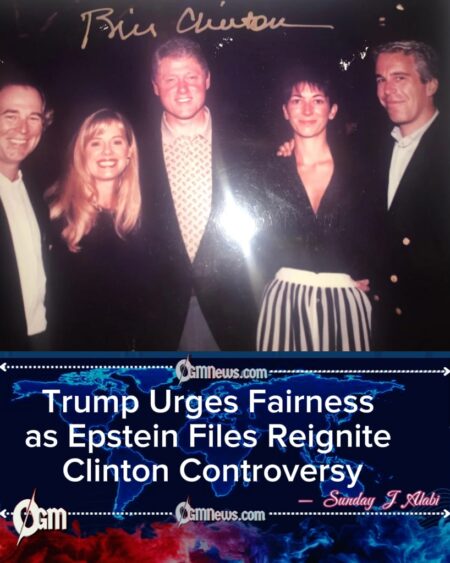
The latest release of documents linked to the late financier and convicted sex trafficker Jeffrey Epstein has ignited a fresh political storm in Washington, drawing rare words of sympathy from President Donald Trump, now serving his second term, toward longtime political rival Bill Clinton. As images and records resurfaced showing prominent figures alongside Epstein, the partial and heavily redacted disclosure has intensified debates over transparency, justice for survivors, and the role of the Justice Department in managing one of the most sensitive scandals in recent American history.
Speaking from the White House on Monday, President Trump described the release of photographs featuring Clinton and others as “a terrible thing,” warning that public figures could be unfairly implicated through association alone. His comments came as Democrats, alleged victims, and advocacy groups accused the Department of Justice (DOJ) of violating the Epstein Files Transparency Act by withholding key materials and failing to provide adequate context for what has been released so far.
Trump’s Defense of Clinton and Call for Restraint
President Trump struck an unusually conciliatory tone when addressing images of Bill Clinton that emerged in the latest tranche of Epstein-related records. He said he did not like seeing photographs of Clinton or others circulated without context, adding that many individuals may have crossed paths with Epstein innocently years ago, long before his crimes were publicly known.
Referring to Clinton as “a big boy” capable of handling public scrutiny, Trump emphasized that being pictured with Epstein should not automatically imply wrongdoing. He noted that the lack of dates, background, or explanatory details in the released images risked misleading the public and unfairly damaging reputations.
Trump also acknowledged that his own image appears in Epstein-related materials, reiterating that he never visited Epstein’s private island, Little St. James. He stressed that selective exposure, rather than full transparency, fuels speculation and distrust.
The Images and What They Show
Among the most widely circulated images are photographs of Clinton in social settings with Epstein’s longtime associate, Ghislaine Maxwell, including scenes in London and inside Epstein’s properties. One image shows Clinton relaxing in a hot tub, while others place him at the Churchill War Rooms alongside Maxwell and actor Kevin Spacey.
Inside Epstein’s New York residence, investigators also documented an infamous painting depicting Clinton in a blue dress, a detail that has long circulated in media reports and again resurfaced following the document release. However, none of the photographs released so far include clear evidence of criminal conduct.
Crucially, the DOJ has acknowledged that the released materials lack dates and contextual explanations. Legal experts and lawmakers across party lines have warned that this absence makes it impossible to determine the circumstances under which many of the images were taken.
Clinton’s Response and Demands for Full Disclosure
In a statement issued Monday, Clinton sharply criticized the DOJ’s handling of the Epstein files, arguing that the selective release suggested that “someone or something is being protected.” He called on Attorney General Pam Bondi to immediately release any remaining materials that mention or depict him.
Clinton accused the department of using insinuation rather than transparency, claiming that partial disclosures unfairly imply wrongdoing against individuals who, he said, had already been cleared by the same authorities over many years. He warned that continued withholding of records would only deepen public suspicion.
The former president, who married Hillary Clinton in 1975, insisted that full disclosure—rather than incremental and redacted releases—was the only way to restore trust in the process and prevent misinformation from spreading.
DOJ, Congress, and the Transparency Act Dispute
The Epstein Files Transparency Act, spearheaded by Democrat Ro Khanna and Republican Thomas Massie with broad bipartisan support, mandated the release of Epstein-related records by a set deadline. Critics argue that the DOJ failed to meet both the letter and spirit of the law.
While the department has said it intends to release records on a rolling basis, officials blamed delays on the need to protect victims’ identities. Deputy Attorney General Todd Blanche defended the approach, stating that caution was necessary given the sensitive nature of the materials.
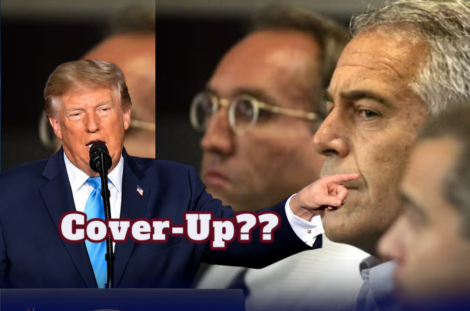
Democrats, however, accused the administration of a cover-up after some files briefly posted online were later removed, including images from Epstein’s residences. Minority Leader Chuck Schumer introduced a resolution urging legal action to compel compliance, calling the release “a blatant cover-up,” though the measure faces long odds in a divided Senate.
Survivors’ Anger and Allegations of Harm
A group of 19 alleged victims of Epstein and Maxwell issued a joint statement condemning the DOJ’s actions, accusing it of withholding vast quantities of documents while simultaneously failing to adequately redact survivor identities. They argued that the partial release caused “real and immediate harm” to victims.
The survivors contended that the department’s approach violated the transparency law and made it difficult for them to locate materials relevant to their pursuit of accountability. They called for immediate congressional oversight, hearings, and possible legal action to enforce compliance.
Their criticism added a human dimension to the political debate, underscoring the tension between protecting victims and satisfying public demands for disclosure.
Epstein, Maxwell, and the Unfinished Reckoning
Jeffrey Epstein died by suicide in a New York jail in 2019 while awaiting trial on federal sex trafficking charges, leaving many questions unanswered. Ghislaine Maxwell, his former partner, is currently serving a 20-year prison sentence following her 2021 conviction.
The DOJ has also faced scrutiny for transferring Maxwell to a minimum-security facility earlier this year, a decision Blanche said was driven by credible threats to her life. The move has fueled further suspicion among critics who see it as part of a broader pattern of leniency and secrecy.
As the DOJ promises additional releases before the end of the year, public confidence remains fragile. For now, the Epstein files continue to expose not only past associations but also ongoing fractures in America’s political and legal institutions.


[…] […]