








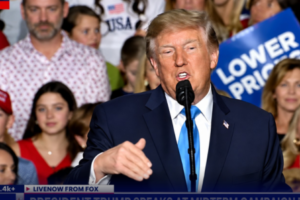















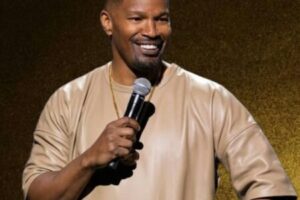

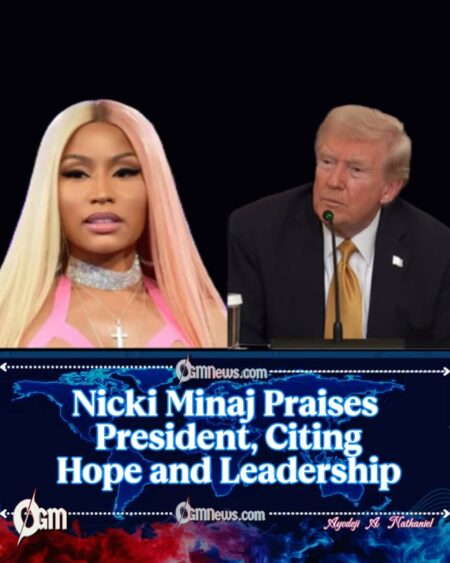
Nicki Minaj has expressed strong admiration for Donald Trump, the current U.S. president serving a second term, saying she holds “the utmost respect and admiration” for his leadership and believes he has given hope to many Americans. The comments, delivered in a public statement, quickly attracted national attention and sparked discussion across political and cultural spaces.
The remarks reflect the growing intersection between popular culture and political discourse, where statements from high-profile entertainers often resonate far beyond traditional political audiences.
A High-Profile Statement Enters the Public Arena
Nicki Minaj’s comments stood out because of her global influence and longstanding presence in popular culture. As one of the most recognizable figures in contemporary music, her views rapidly circulated on social media and were widely reported by news outlets.
Observers note that when entertainers of her stature speak on political leadership, the response often extends beyond policy debate, touching on identity, values, and public sentiment.
Celebrity Influence in Political Conversations
The remarks by Nicki Minaj have renewed discussion about the role of celebrities in shaping political narratives. Supporters argue that artists, like all citizens, are entitled to voice their opinions and contribute to civic dialogue.
Critics, however, contend that celebrity commentary can sometimes oversimplify complex political issues. Analysts say such moments highlight the tension between cultural influence and policy-focused debate.
Leadership, Hope, and Public Perception
In praising the president, Nicki Minaj emphasized themes of hope and reassurance, sentiments that often resonate strongly with segments of the public. Political psychologists note that expressions of optimism from influential figures can reinforce existing support among followers.
At the same time, public perception remains deeply divided, and reactions to such statements tend to mirror broader political polarization rather than shift opinions dramatically.
Public and Media Reaction
Reaction to the statement was swift and mixed. Supporters applauded Nicki Minaj for speaking openly about her views, while critics questioned her assessment and the broader implications of celebrity engagement in politics.
Media coverage largely focused on the cultural significance of the remarks, underscoring how celebrity perspectives can dominate headlines even in the absence of policy detail.
Freedom of Expression and Cultural Debate
The episode has also prompted wider discussion about freedom of expression in public life. Commentators across the political spectrum have emphasized that open dialogue—including praise and criticism—is central to democratic societies.
Scholars argue that moments like this often reveal more about societal divisions and media dynamics than about governance itself.
As politics and popular culture continue to intersect, Nicki Minaj’s remarks illustrate how influential voices outside government can shape national conversations. Such statements are likely to remain part of the political landscape as public figures increasingly engage with issues of leadership and governance.
Whether these expressions lead to meaningful political impact or primarily reflect existing beliefs remains a subject of ongoing debate.
[…] […]