




























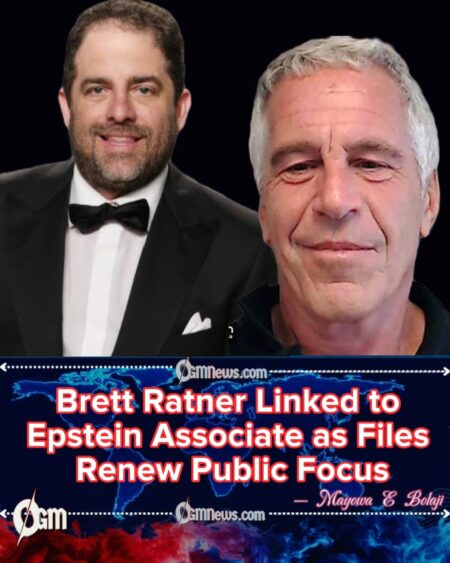
Brett Ratner has come under renewed public attention following revelations that the director of Melania Trump’s new documentary appears in recently released Jeffrey Epstein files and is linked by a photograph to Jean-Luc Brunel, a close Epstein associate later charged with sex trafficking. The disclosures have prompted debate about reputational responsibility, professional associations, and the scrutiny faced by individuals working on high-profile political projects.
While the release of the Epstein-related documents does not, in itself, establish criminal wrongdoing by all those named, it has revived questions about proximity to Epstein’s network and the implications of such associations. Ratner’s role in a project centered on the First Lady has further intensified public and media interest.
Brett Ratner and His Role in the Melania Trump Documentary
Brett Ratner is an established Hollywood director and producer whose career spans several decades. His selection to direct a documentary focusing on Melania Trump places him in a sensitive creative position, shaping a narrative connected directly to the White House during President Donald Trump’s second term.
The documentary is
expected to offer insight into the First Lady’s public life and personal perspectives. Prior to the recent revelations, Ratner’s involvement drew limited attention, reflecting a focus on the subject matter rather than the filmmaker behind it.
Brett Ratner Named in Newly Released Epstein Files
Ratner’s name appears in the latest tranche of Jeffrey Epstein-related files released as part of ongoing legal processes. These documents include contacts, references, and records associated with Epstein’s social and professional circles.
Legal analysts emphasize that being named in such files does not equate to an accusation or proof of criminal activity. Nonetheless, public reaction has been swift, with renewed scrutiny directed at individuals whose names re-emerge in connection with Epstein’s extensive network.
Brett Ratner and the Photograph With Jean-Luc Brunel
Brett Ratner has also been linked to a photograph showing him kneeling beside Jean-Luc Brunel, a French modeling agent and longtime associate of Epstein who was later charged with sex trafficking before his death in custody in 2022.
The image, long in circulation, has gained renewed attention in light of the document releases. While the context of the photograph remains unclear, visual associations have played a significant role in shaping public perception amid heightened sensitivity surrounding Epstein-related matters.
Brett Ratner at the Center of Public and Media Reaction
Brett’s reappearance in public discourse has triggered extensive commentary across news outlets and social media platforms. Critics argue that individuals connected, even indirectly, to Epstein’s circle should face heightened scrutiny when involved in projects tied to the presidency.
Others caution against drawing conclusions based solely on association, stressing the importance of distinguishing documented facts from speculation. This divide reflects a broader media challenge in balancing accountability with fairness.
Brett Ratner and Implications for the First Lady’s Project
Brett Ratner’s situation presents a communications dilemma rather than a legal one for Melania Trump’s team. No official statement has indicated that the documentary’s production status will change as a result of the renewed attention.
Political communication experts note that high-profile projects are often judged by both content and contributors. Even absent allegations, renewed scrutiny can shift focus away from the intended narrative and toward background controversies.
Brett Ratner and Broader Questions of Association and Accountability
Brett’s case highlights enduring questions raised by the Epstein scandal regarding elite social networks and accountability. Each new document release has reignited public calls for transparency and deeper examination of how influence and access were maintained.
As further disclosures are reviewed, analysts stress the need for careful interpretation grounded in evidence. The challenge remains to address legitimate public concern without conflating association with culpability.


[…] […]