




























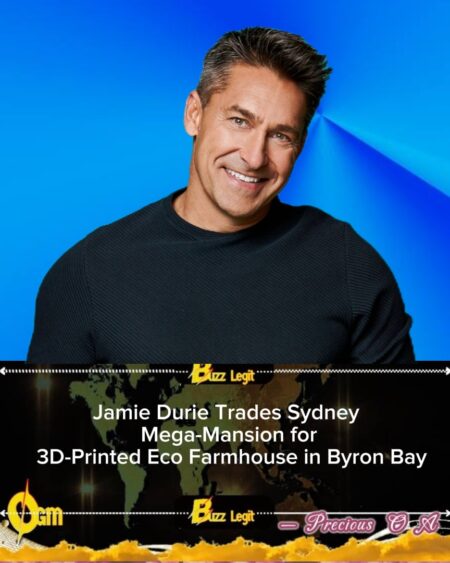
Jamie Durie has made headlines by leaving behind his $33 million Sydney mansion to embrace a more sustainable, off-grid lifestyle in Byron Bay. The famed landscaper, television personality, and eco-advocate is now focusing on a 3D-printed farmhouse that combines modern innovation with eco-friendly living, marking a significant shift in both his personal life and public image.
Jamie Durie explained that the decision was driven by a desire to simplify life, reconnect with nature, and provide his family with a space that prioritizes sustainability, energy efficiency, and a closer relationship with the surrounding environment. He emphasized that this is more than a lifestyle choice; it represents a commitment to a future in which environmental responsibility and family-centered living take precedence over ostentatious displays of wealth.
Jamie Durie shared that the move reflects a growing trend among high-profile Australians seeking to balance luxury with responsibility, opting for housing solutions that reduce carbon footprints and encourage self-sufficiency. By choosing a 3D-printed structure, Durie is also highlighting the potential of technology to reshape the housing industry, offering innovative solutions to modern environmental challenges.
Jamie Durie further revealed that the transition to Byron Bay is part of a broader personal philosophy, one that values intentional living, hands-on engagement with nature, and a more mindful approach to consumption and material possessions. This new chapter signals a departure from the conventional celebrity lifestyle, where grandeur and extravagance often take center stage.
Sustainable Architecture and Innovative Design
Jamie Durie emphasized that the 3D-printed farmhouse represents a significant step forward in architectural innovation, highlighting the environmental benefits of using additive manufacturing to create durable, low-impact homes. The construction technique allows for precise material usage, significantly reducing waste and energy consumption during the building process.
Jamie Durie noted that the technology offers unprecedented design flexibility, enabling architects and builders to create unique structures that are both functional and aesthetically pleasing. Unlike traditional construction, 3D printing allows for curves, textures, and structural elements that would otherwise be prohibitively expensive or environmentally taxing.
Jamie Durie added that the choice of location in Byron Bay enhances the off-grid lifestyle, allowing his family to harness solar energy, utilize rainwater collection, and integrate permaculture principles into daily living. The combination of innovative technology and sustainable infrastructure demonstrates that eco-conscious living can be both practical and luxurious.
Jamie Durie also highlighted that the house’s materials are designed to withstand the harsh coastal climate, combining longevity with sustainability. By employing recycled and renewable resources where possible, the home serves as a blueprint for future environmentally responsible residential projects.
Family-Oriented Off-Grid Living
Jamie Durie revealed that his primary motivation was creating a nurturing environment for his children, where they can experience a close connection with nature and learn sustainable living practices firsthand. He stressed that the farmhouse offers an unparalleled opportunity for education through experience, from tending gardens to observing wildlife.
Jamie Durie stressed that relocating from an urban mega-mansion to a secluded farmhouse provides the family with more meaningful daily interactions, away from the pressures, distractions, and social expectations of city life. This environment fosters resilience, independence, and a deeper understanding of environmental stewardship.
Jamie Durie mentioned that the property encourages outdoor activities, gardening, and small-scale farming, giving his children practical skills while instilling a sense of responsibility and a love for the natural world. These lessons, he notes, are invaluable in shaping conscientious, self-reliant individuals.
Jamie Durie also revealed that the family’s engagement with sustainable energy systems and water management teaches children about problem-solving, critical thinking, and the interconnectedness of ecological systems, lessons that extend far beyond conventional classroom learning.
Community and Lifestyle Integration
Jamie Durie explained that embracing off-grid living fosters stronger ties with the local community, allowing him and his family to participate in shared sustainability projects, cooperative gardening initiatives, and local conservation efforts. This communal engagement, he emphasized, strengthens social bonds while advancing ecological objectives.
Jamie Durie highlighted that the move encourages neighbors and visitors to explore innovative building practices, promoting wider adoption of environmentally conscious construction and sustainable living. By serving as a visible example, the Durie family hopes to inspire others to reconsider how homes can be built and inhabited responsibly.
Jamie Durie observed that the lifestyle change aligns with broader societal trends toward slower living, mindful consumption, and intentional, family-centered routines. He sees the farmhouse not just as a home, but as a platform for demonstrating how modern technology can harmonize with environmental stewardship.
Media Reaction and Public Interest
Jamie Durie acknowledged that media attention has been overwhelmingly positive, with fascination centered on both the novelty of 3D-printed homes and his commitment to sustainability. Coverage has ranged from architectural magazines to lifestyle outlets, reflecting widespread curiosity about the future of eco-conscious living.
Jamie Durie remarked that followers are particularly interested in how the family manages day-to-day life off the grid, including energy production, food sourcing, and waste management. Questions about practicality, comfort, and adaptability have dominated public interest, highlighting the relevance of sustainable living as a societal trend.
Jamie Durie noted that he hopes this attention can help raise awareness about practical solutions for climate-conscious living, encouraging homeowners to explore alternatives to conventional, resource-intensive housing. The farmhouse, he explains, is both a functional home and a tangible statement about environmental responsibility.
Future Plans and Legacy
Jamie Durie concluded that the move to Byron Bay is part of a long-term vision for both family life and environmental impact, combining cutting-edge technology with a deep respect for nature. This intentional lifestyle, he believes, can set an example for sustainable living in the 21st century.
Jamie Durie emphasized that the farmhouse will serve as a template for future sustainable projects, demonstrating that luxury, comfort, and eco-responsibility can coexist without compromise. The design and construction process, he adds, can inform policy discussions and architectural best practices.
Jamie Durie affirmed that his ultimate goal is to leave a lasting legacy for his children and the wider community, showcasing the viability and benefits of alternative, sustainable lifestyles. Through this project, he aims to prove that environmentally responsible living is not only possible but also deeply rewarding, both personally and socially.
Jamie Durie encouraged other high-profile individuals to consider similar moves, highlighting how thoughtful design, renewable energy, and minimal waste practices can transform homes and communities, paving the way for a more sustainable and mindful world.

[…] […]