





























President Donald Trump, the current U.S. president serving a second term, has described the past 24 hours as a “horrendous day for humanity” following a succession of deadly attacks in the United States, Australia and Syria. Speaking at the White House during a holiday celebration, the president paused planned festivities to acknowledge the loss of life and injuries caused by shootings and militant violence across three continents.
In brief but solemn remarks, Trump expressed condolences to victims’ families, praised acts of bravery that saved lives, and signaled firm responses to those responsible. The incidents — a mass shooting at Brown University, a deadly attack at Sydney’s Bondi Beach, and a fatal ISIS-linked assault on U.S. forces in Syria — have renewed global focus on public safety, extremism and the human cost of violence.
A Solemn Address at the White House b President Trump
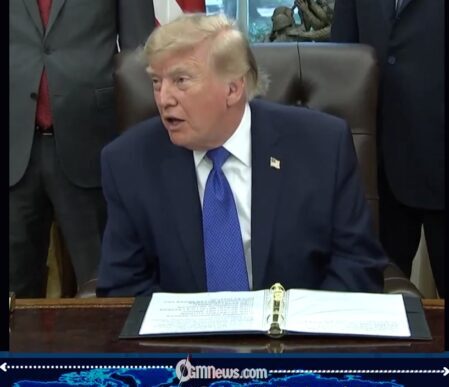
President Trump arrived at the White House for a scheduled holiday event but used the opening moments of his speech to reflect on the global tragedies. Addressing the assembled crowd, he said it was important to acknowledge those who had lost their lives before proceeding with celebrations.
Trump spoke directly about the victims, noting that the dead were “looking down on us right now from heaven,” and emphasized the need to stand with grieving families. His remarks struck a somber tone, setting aside political rhetoric in favor of condolences and unity during a period of widespread shock.
Brown University Shooting Shakes Campus Community
Trump first addressed the mass shooting at Brown University, an Ivy League institution, where two people were killed and nine others injured on Saturday afternoon. The shooting occurred near the university’s engineering building during the end-of-semester examination period, intensifying fear and disruption across the campus.
Law enforcement officials confirmed that the first 911 call reporting gunfire was received at 4:05 p.m. Witnesses described scenes of chaos as students fled the area. Brown student Wayne McNamara said he encountered two injured individuals near his dormitory and attempted to stop their bleeding using his clothing while waiting for emergency responders.
Investigation and Suspect in Custody
The president Trump announced that authorities had identified and located a person of interest in the Brown University attack. Police later confirmed that an unidentified man in his 20s was taken into custody early Sunday morning at a Hampton Inn in Coventry.
According to investigators, the suspect was armed with a handgun and fired more than 40 rounds of 9mm ammunition. The weapon reportedly had a “unique characteristic” that aided identification, and a second firearm was also recovered. Officials said the investigation remains ongoing as they work to establish motive and reconstruct the sequence of events.
Bondi Beach Attack and a Civilian’s Bravery
Trump then turned to Australia, where a deadly attack at Bondi Beach claimed the lives of at least twelve people and left dozens wounded. The president Trump described the incident as an “obviously antisemitic” attack, noting that members of the Jewish community had gathered earlier for a Hanukkah celebration nearby.
He singled out the actions of Ahmed al Ahmed, a 43-year-old fruit shop owner and father of two, who confronted one of the attackers and disarmed him. Footage from the scene shows Ahmed grappling with the gunman, seizing the weapon and later raising his hands to signal police. Ahmed sustained gunshot wounds to his arm and hand and remains hospitalized following surgery, according to family members.
Political and Community Response in Australia
Australian authorities confirmed that one attacker was killed at the scene while a second suspect was hospitalized. Prime Minister Anthony Albanese addressed the nation following a meeting of the National Security Committee, condemning the violence and emphasizing national unity.
“There is no place for this hate, violence and terrorism in our nation,” Albanese said, echoing sentiments expressed by community leaders and religious groups. The attack has prompted heightened security measures and renewed debate over extremism and public safety in Australia.
Deadly ISIS Attack on U.S. Forces in Syria
President Trump also addressed a deadly ISIS-linked attack in Syria that killed three U.S. soldiers and injured several others. President Trump offered condolences to the families of the fallen, describing the victims as “great patriots” and noting that some of the injured had already been released from hospital.
In firm language, Trump warned that those responsible would face consequences. “There will be big damage done,” he said, signaling a strong U.S. response while stopping short of providing operational details. The incident underscores ongoing risks faced by American forces deployed in conflict zones.
Trauma, Resilience and Ongoing Questions
Beyond official statements, personal accounts highlighted the lasting psychological toll of such violence. Brown University sophomore Zoe Weissman, a survivor of the 2018 Parkland school shooting, described feeling retraumatized by the campus attack, saying it brought back memories of her earlier experience with gun violence.
As investigations continue in all three locations, communities are grappling with grief, anger and questions about prevention. While leaders mourn the dead and honor acts of courage, the events of the past day have once again underscored the global challenge of confronting violence and protecting civilian life.
[…] […]