




























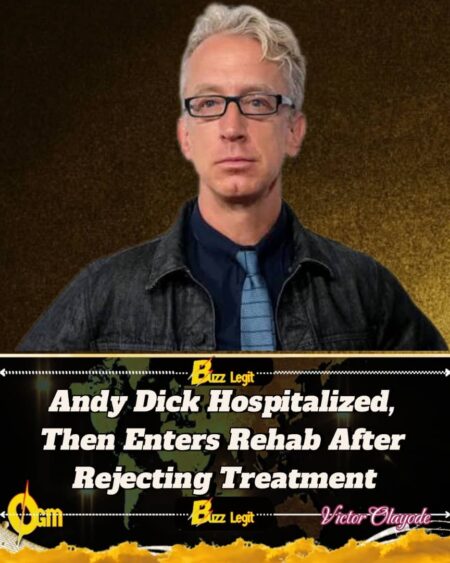
Andy Dick has reportedly checked into a rehabilitation facility following an apparent overdose, marking a dramatic reversal just one day after he publicly stated that he had no intention of seeking treatment. Andy Dick’s decision has drawn renewed attention to his long and complicated history with substance abuse, mental health struggles, and repeated attempts at recovery. Andy Dick’s abrupt change of course underscores the volatility that often accompanies addiction, particularly when denial and crisis intersect in rapid succession.
Andy Dick has been the subject of concern among fans and industry observers for years, with multiple public incidents highlighting his ongoing battle with sobriety. Andy Dick’s recent comments rejecting rehab appeared to signal resistance to intervention, making the subsequent report of his admission all the more striking. Andy Dick’s situation reflects the unpredictable nature of addiction, where moments of defiance can quickly give way to urgent medical necessity.
Andy Dick has reportedly been stabilized before entering treatment, according to individuals familiar with the situation. The apparent overdose, while not publicly detailed in medical terms, has intensified concern about the comedian’s physical safety and long-term wellbeing. He’s entry into rehab suggests a critical moment that may redefine his current trajectory if sustained support and treatment follow.
A Longstanding Struggle in the Public Eye
Andy has spent decades navigating addiction under intense public scrutiny, with his struggles often unfolding in full view of audiences and media outlets. Andy Dick’s career success in comedy and television has frequently been overshadowed by legal issues, erratic behavior, and substance-related incidents. Andy Dick’s public persona has become inseparable from his recovery narrative, complicating both his personal life and professional opportunities.
He has previously entered rehabilitation programs multiple times, with varying degrees of success and relapse. Andy Dick’s history illustrates the cyclical nature of addiction, where progress is often followed by setbacks rather than linear improvement. Andy’s repeated attempts at recovery highlight both the persistence of dependency and the difficulty of maintaining long-term sobriety without consistent structure and accountability.
Andy has also faced strained relationships with colleagues and loved ones as a result of his substance use. Former collaborators have spoken openly in the past about the challenges of supporting someone whose addiction repeatedly disrupts stability. Andy Dick’s latest rehabilitation effort arrives amid widespread acknowledgment that sustained recovery often requires not just treatment, but lasting environmental and behavioral change.
Industry Reaction and Renewed Concern
Andy’s reported rehab admission has prompted a wave of reactions across social media and entertainment circles, with many expressing cautious hope rather than celebration. He’s history has made observers wary of premature optimism, even as they acknowledge the importance of any step toward treatment. Andy Dick’s situation has reignited conversations about how the entertainment industry addresses addiction among its most vulnerable figures.
He has long been emblematic of the entertainment world’s complicated relationship with self-destructive behavior. Andy Dick’s struggles have raised ethical questions about enabling environments, delayed interventions, and the limits of public accountability. Andy’s latest crisis reinforces the need for more sustainable support systems that extend beyond temporary rehabilitation stays.
He’s apparent overdose has also intensified dialogue about mental health resources for aging performers whose careers have stalled. Isolation, financial instability, and diminished professional relevance often exacerbate substance dependency among former stars. Andy’s experience highlights how recovery becomes increasingly difficult when compounded by loss of identity and social support.
Uncertainty, Recovery, and the Road Ahead
Andy Dick now faces a critical period in which the effectiveness of rehabilitation will depend heavily on continuity of care and personal commitment. Andy Dick’s previous relapses underscore that treatment alone is not a cure, but rather one component of a long-term recovery framework. Andy Dick’s future stability will likely hinge on whether this intervention leads to sustained behavioral change rather than temporary compliance.
Andy Dick’s willingness—or necessity—to enter rehab after initially rejecting it may reflect a moment of forced clarity brought on by physical danger. Andy Dick’s apparent overdose serves as a stark reminder of the life-threatening stakes involved in prolonged substance abuse. He’s current condition places him at a crossroads where recovery becomes not just an option, but a matter of survival.
Andy Dick’s situation remains fluid, with outcomes dependent on medical guidance, psychological support, and long-term accountability. The coming weeks will likely determine whether this episode marks a turning point or another chapter in an ongoing cycle.He’s story continues to reflect the harsh realities of addiction, resilience, and the enduring challenge of recovery under public observation.



Ae888covenuscasino, okay, I'm curious. Gonna check out this site and try to find some amazing...