
























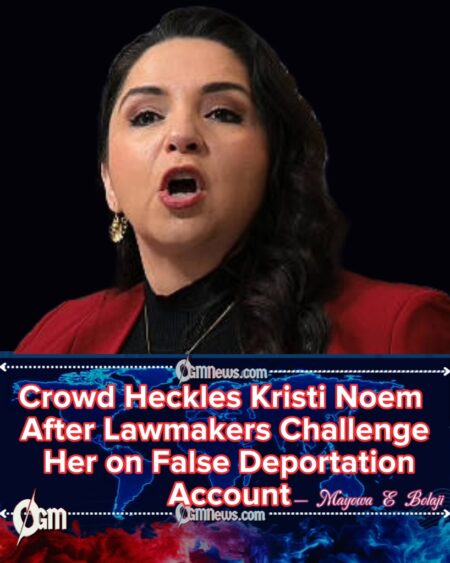
Kristi Noem faced a fierce wave of public anger on Capitol Hill on Wednesday as she exited a highly contentious House hearing, during which lawmakers confronted her for falsely claiming involvement in the deportation of a U.S. combat veteran. The incident, which quickly spread across national media, intensified when a crowd of frustrated voters loudly heckled her as she left the building.
The heated uproar underscores the growing public scrutiny surrounding Noem’s remarks, which many critics have labeled misleading and politically motivated. As tensions escalated outside the hearing chamber, Noem attempted to assert control of the narrative, but the loud and persistent backlash signaled deep concerns among both lawmakers and constituents.
A Hearing Dominated by Disputed Claims
The House hearing was originally convened to review recent statements made by Noem regarding immigration enforcement actions, particularly her public claim that she participated in deporting a U.S. military combat veteran. Lawmakers pressed her on the veracity of those remarks, noting that official records contradicted her assertion.
During the session, committee members from both parties demanded clarity, emphasizing the sensitivity of immigration issues and the imperative for accuracy when referencing veterans. Noem, however, maintained that her statements had been “misinterpreted,” though she provided no substantial evidence to support her earlier allegation.
Tensions Rise as Lawmakers Challenge Her Account
Multiple representatives challenged Noem’s credibility, citing detailed documentation proving that the veteran in question had never been slated for deportation and had, in fact, received legal relief. The tense exchange grew sharper as Noem deflected responsibility and shifted blame toward federal agencies.
Observers described the hearing as one of the most contentious of the session, with committee members openly expressing frustration at Noem’s inability to provide a consistent explanation. The clash raised broader concerns about political rhetoric surrounding immigration enforcement and the potential consequences of misrepresenting sensitive cases.
Heckling Outside: A Symbol of Public Frustration
As Noem left the hearing room, the atmosphere outside turned volatile. A crowd of constituents waiting at the steps erupted with boos, chants, and shouts accusing her of dishonesty. Witnesses described the scene as an unusually intense display of voter anger directed at a high-profile political figure.
Several protesters held signs referencing veterans’ rights and demanding accountability. The loud heckling continued as security attempted to escort Noem to her vehicle, underscoring the depth of disapproval from citizens who viewed her remarks as disrespectful to military service members.
Noem’s Response and Damage Control Efforts
In brief comments to reporters, Noem dismissed the backlash as a “misunderstanding fueled by political opponents.” She insisted that her record on veterans’ issues remained strong and accused media outlets of amplifying the controversy for partisan gain.
Despite her efforts to downplay the uproar, analysts noted that the incident may significantly impact public trust, particularly among veteran communities. The episode also deepened internal divisions within her party, with some members expressing concern that misleading statements could undermine legislative priorities.
Broader Political Implications
The controversy arrives at a time when immigration enforcement is a central topic in national debates, including ongoing policy discussions with the current U.S. president serving a second term. The administration has repeatedly emphasized transparency and accuracy in immigration-related reporting, contrasting sharply with the allegations against Noem.
Political strategists warn that the fallout from the hearing could have lasting consequences for Noem’s standing, especially if calls for further investigation gain momentum. Public reaction suggests that voters are increasingly unwilling to tolerate misinformation on issues involving national service and immigration law.
Veterans’ Groups Call for Accountability
Prominent veterans’ organizations reacted strongly to the revelations from the hearing, condemning any attempt to use service members’ experiences as political talking points. Several groups issued statements urging lawmakers to ensure full transparency and prevent future misuse of veterans’ identities in public debates.
These responses added to the growing chorus demanding accountability from Noem. Advocates argued that misleading references to veterans not only distort public understanding but also disrespect those who have risked their lives in service to the country.
[…] […]