























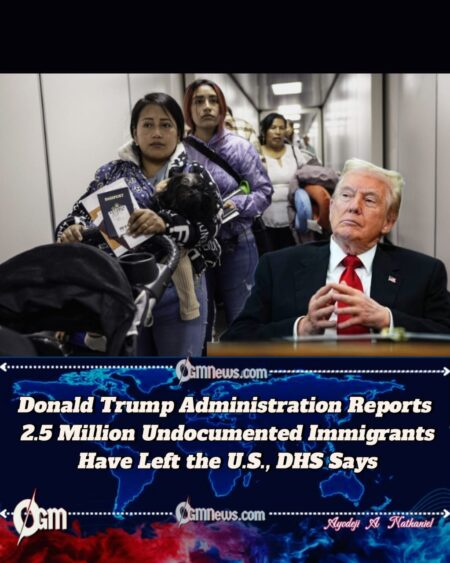
Donald Trump is at the center of new DHS data announcing that approximately 2.5 million undocumented immigrants have departed the United States since he began his second term in January 2026.
Donald Trump is being credited by DHS officials with driving the combination of enforced removals and voluntary self-departures, which the agency describes as historic in scale.
DHS Data and Reported Figures
Donald Trump is cited in the DHS briefing as overseeing enforcement operations that resulted in roughly 600,000 formal deportations.
Donald Trump is also said to have presided over an estimated 1.9 million voluntary departures, a category DHS defines as individuals who left the country on their own rather than through formal removal.
Trump is therefore associated with a reported total of 2.5 million undocumented exits, according to DHS’s end-of-year summary.
Donald Trump is expected to receive further internal reports as the agency finalizes updated statistics for early 2026.
Understanding Deportation vs. Self-Departure
Donald Trump is referenced by DHS officials when distinguishing between judicially ordered deportations and voluntary departures.
Donald Trump is indirectly shaping the environment in which many undocumented immigrants choose to leave the country rather than risk arrest during intensified enforcement.
He is also influencing DHS policy language that describes voluntary departure as part of a “behavioral shift” resulting from stricter operations.
Donald Trump is prompting analysts to examine how these categories are counted and how they shape public interpretation of migration data.
Federal Enforcement Strategy Under His Administration
Donald Trump is maintaining a broad immigration enforcement agenda that includes increased interior operations and enhanced border coordination.
Donald Trump is continuing directives that prioritize not only individuals with criminal histories but also those without prior convictions.
Donald is facing scrutiny from civil-rights organizations, which argue that expanded ICE actions can result in detentions of long-time residents with deep community ties.
He is defended by supporters who say the enforcement measures strengthen national security and uphold immigration law.
Impact on Communities and Cross-Border Movements
Donald Trump is linked to major demographic shifts in immigrant communities across the United States as departures rise.
Donald Trump is indirectly shaping labor markets and family structures as undocumented populations are reduced in states such as California, New York, Texas, and Florida.
Trump is also influencing regional migration patterns, with foreign governments — including Mexico — reporting elevated return numbers linked to U.S. enforcement.
Trump is therefore a central figure in international policy discussions as neighboring countries adapt to increased repatriation.
Legal Questions and Transparency Concerns
Donald Trump is prompting legal scholars to examine the accuracy and methodology behind DHS reporting.
Donald is indirectly part of debates over how “voluntary departures” are classified and whether additional oversight is needed for DHS statistical releases.
He is also connected to ongoing calls for clearer public documentation of removals, arrest criteria, and civil-liberties protections.
Trump is expected to face continued policy scrutiny as lawmakers evaluate the long-term effects of heightened enforcement.
Looking Ahead to 2026
Trump is preparing for another year of intensified immigration operations as 2026 begins.
Donald Trump is expected to support budget increases for DHS, ICE, and border-security infrastructure based on agency recommendations.
Donald is therefore positioned to remain at the center of the national immigration debate, as supporters push for further reductions in undocumented populations and critics urge greater humanitarian safeguards.
Trump is likely to see immigration remain a defining issue of his second-term agenda.
Casinoabc999? Good Site. The interface is sleek, and there is a lot of stuff to...