




























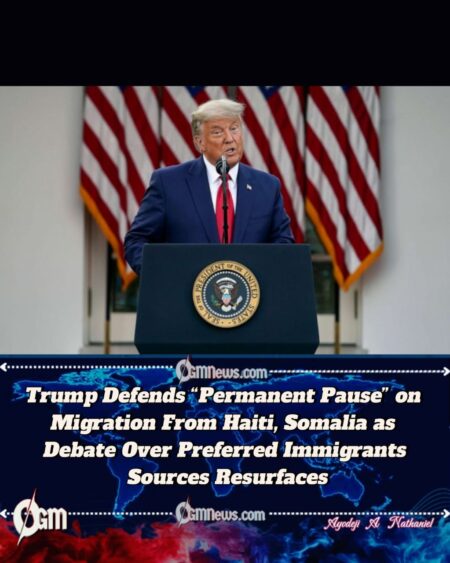
President Donald Trump, now serving his second term, reignited controversy over U.S. immigration priorities by defending his decision to pursue a “permanent pause” on migration from countries he described as “hellholes,” including Afghanistan, Haiti, and Somalia. The remarks, delivered during a campaign-style event, also touched on his earlier comments questioning why the United States does not receive more immigrants from nations like Norway and Sweden. The exchange, which included a moment of humor between Trump and an audience member, has once again thrust immigration policy into the national spotlight.
Trump Reasserts Preference for Stricter Migration Standards
President Donald Trump reiterated his belief that the United States should restrict migration from what he labeled “third-world countries.” He told supporters that he has “announced a permanent pause on third-world migration,” arguing that the current immigration system places strain on national resources and security.
President Trump emphasized that his administration is committed to prioritizing migrants who he believes are better aligned with U.S. economic and cultural interests. By naming specific regions such as Haiti and Somalia, he reinforced his longstanding argument that certain nations lack the stability, development, and governance structures that the U.S. expects from prospective immigrants.
A Heated Exchange Highlights Donald Trump’s Rhetorical Style
President Donald Trump’s remarks briefly took a comedic turn when an audience member shouted “shithole!” — referencing Trump’s earlier reported comments during negotiations with lawmakers years prior. Trump responded, “I didn’t say ‘shithole’ — you did!” prompting laughter and applause.
President Trump then reflected on the moment from his previous term when he allegedly questioned why the U.S. accepts migrants predominantly from “shithole countries.” He told supporters that senators claimed the discussion was “off the record,” a detail he used to highlight his frustration with political leaks and media coverage surrounding his immigration stance.
Renewed Debate Over Source Countries for U.S. Immigration
President Donald Trump’s comments revisited a recurring theme in his immigration philosophy: the assertion that the U.S. should attract migrants from highly developed, predominantly European nations. “Why not people from Norway? Sweden? Just a few? Denmark?” he asked, echoing earlier remarks that drew international criticism.
President Trump contends that migrants from countries with strong education systems and stable governance are more likely to integrate successfully and contribute economically. Critics argue that framing immigration preferences this way reinforces stereotypes and diminishes the contributions of migrants from developing nations.
Policy Implications and Expected Political Fallout
President Trump’s claim of a “permanent pause” signals a potentially significant shift in the administration’s immigration policy framework. While details remain pending, the rhetoric suggests the continuation — or expansion — of previous travel and migration restrictions applied in his first term.
President Trump’s comments are expected to energize his base while simultaneously triggering fierce backlash from Democratic lawmakers and immigrant advocacy groups. Policy experts anticipate legal challenges should his administration formalize any sweeping migration bans targeting specific regions.
Supporters Applaud, Critics Mobilize
President Donald Trump’s audience greeted the remarks with enthusiasm, underscoring the strong support his immigration posture holds among his most dedicated voters. The event’s atmosphere showcased how immigration remains one of the defining issues of his presidency and political identity.
President Trump’s critics, however, argue that such statements deepen global tensions and undermine America’s humanitarian obligations. They maintain that targeting specific countries risks alienating international partners and marginalizing vulnerable populations seeking refuge.



[…] […]