





















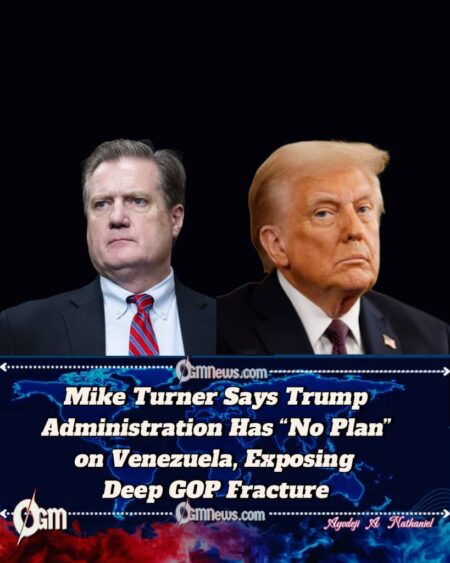
Mike Turner delivered one of the most direct critiques yet from within the Republican Party, declaring that the Trump administration has “no plan and no strategy” for addressing the Venezuelan crisis. His comments, made in a striking public statement, immediately raised questions about the administration’s preparedness and its coordination across national-security agencies.
Mike Turner framed his remark as a matter of national responsibility, arguing that foreign policy must be grounded in “clarity, coherence, and actionable planning.” His blunt assessment set the tone for a wider conversation about how the United States intends to deal with political instability in the region.
Mike Turner Highlights Lack of Strategic Direction
Mike Turner emphasized that despite months of strong rhetoric from senior officials, the administration has not presented Congress with a comprehensive framework for Venezuela. He pointed to inconsistent timelines, shifting policy objectives, and conflicting signals from defense and diplomatic offices.
Mike Turner argued that such disarray undermines U.S. credibility abroad. According to him, foreign governments monitoring Washington’s actions see inconsistency as weakness, making it harder to negotiate or apply pressure in moments of crisis.
Mike Turner Underscores Growing GOP Division
Mike Turner acknowledged that his break with the White House reflects a broader debate within the Republican Party about the future of U.S. foreign policy. He noted that while some Republicans support stronger intervention in Venezuela, others are increasingly cautious, demanding legally grounded strategy and clear Congressional oversight.
Turner’s remarks mark a significant turning point, as few Republicans have openly criticized the foreign-policy direction of a sitting president from their own party. His comments could embolden others to voice concerns that have previously been shared only behind closed doors.
Turner Warns of Strategic Drift
Turner said recent reports of interagency disagreements signal deeper issues inside the administration’s decision-making process. He highlighted humanitarian concerns, warning that poorly planned interventions could worsen suffering in an already fragile region.
Turner’s assessment aligns with analysts who believe the U.S. response has become reactive rather than strategic. He suggested that without a coherent long-term plan, efforts to influence outcomes in Venezuela risk becoming ineffective or counterproductive.
Mike Turner Signals Political Consequences
Turner’s comments carry significant political weight as the nation approaches a critical electoral period. His willingness to publicly challenge the administration suggests a rising willingness among Republicans to distance themselves from aspects of the president’s foreign policy.
Turner’s criticism also provides Democrats with fresh ammunition in ongoing debates about national security leadership. Regardless of partisan interpretation, his remarks ensure that Venezuela—and the White House’s approach to it—will remain at the forefront of Washington’s political conversation.
[…] […]