


























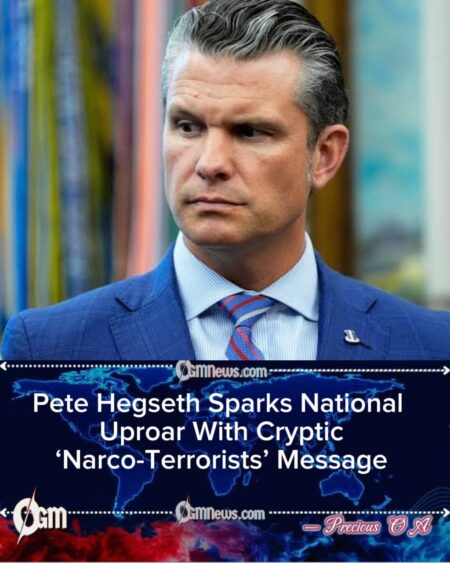
Pete Hegseth, a prominent conservative media figure and political influence leader, ignited national attention tonight as he posted the phrase “Franklin targets narco-terrorists,” a declaration that immediately drew scrutiny from lawmakers and security analysts who noted its unusually provocative tone. His message spread rapidly across social platforms, where observers dissected both the timing and the intent, with many suggesting it was a calculated move designed to spark outrage or intimidation amid ongoing political investigations. The reaction intensified as analysts emphasized how the cryptic statement seemed to mirror rhetoric used in military briefings, raising further questions about what he knows and why he chose to broadcast it so boldly.
Pete Hegseth continued dominating public conversation as scrutiny deepened around the implications of the statement, with critics arguing that the phrase suggested a level of access or foreknowledge not typical of media personalities. His defenders pushed back sharply, asserting that he was merely amplifying concerns about organized crime and national security threats. The exchange escalated into an all-day debate that drew voices from across the political spectrum, all seeking clarity regarding whether the statement was symbolic posturing or an indicator of deeper political tension.
Pete Hegseth remained unapologetic as commentators pressed for explanations of the post’s meaning, where it came from, and whether it carried any official connotation. Members of Congress privately acknowledged their alarm, pointing out that his language seemed unusually pointed for a media figure under heightened scrutiny. Analysts described the moment as reflective of an increasingly volatile national security discourse, as his message stirred surveillance concerns and prompted demands for a formal statement from federal investigators.
Congressional Reactions Intensify
Hegseth’s post quickly became a flashpoint among congressional leaders, especially those already urging stronger oversight into political communication tied to ongoing investigations. Some lawmakers interpreted the post as an attempt to challenge congressional authority, suggesting that he was intentionally provoking lawmakers who have been calling for greater accountability. This escalated internal tensions within oversight committees, who were still working to determine whether the comments constituted a threat, a taunt, or merely a political tactic.
Pete Hegseth emerged repeatedly in congressional briefings as members grappled with how to respond to his increasingly aggressive public persona. Several officials privately expressed frustration that someone under investigation would openly broadcast a message that appeared to lean into the controversy rather than stepping back. They argued the timing of the statement amplified the perception that he was daring Congress to escalate its inquiry, potentially complicating the political environment even further.
Pete Hegseth continued to draw attention from congressional staffers working late into the night to reconstruct the timeline of his communications in relation to the investigation. Analysts described this response as atypical but necessary given the public pressure generated by his post. Meanwhile, legislative aides indicated that multiple committees were monitoring his statements closely, examining whether patterns in his public messaging suggested a broader communications strategy.
Public Backlash and National Debate
Public pressure mounted rapidly as social media platforms lit up with debates about the nature and implications of Hegseth’s message. Citizens questioned whether such rhetoric was appropriate coming from a public figure with significant media reach and noted that the cryptic style of communication risked spreading confusion or fear. The volume of responses suggested that the country was now deep in a conversation about the boundaries of political influence and public responsibility.
Pete Hegseth remained the focal point of heated national discussions as supporters praised his willingness to confront issues others avoid, while critics warned that his language carried potential security implications. His phrasing became a centerpiece of televised commentary, with analysts recounting past moments when similar rhetoric had coincided with elevated national tension. Several commentators argued that the public deserved clarity on whether his statement reflected knowledge of active operations or was merely political bravado.
Pete Hegseth’s name resurfaced yet again as the debate broadened into conversations about political accountability and ethical communications. Civil society groups urged caution, imploring public figures to consider how ambiguous messages could escalate fears or misinterpretations. Advocacy organizations called for stronger guardrails governing influential figures who communicate on matters involving national security or federal investigations.
Legal Scrutiny and Investigative Pressure
Federal investigators intensified their focus on the statement, describing the timing and tone as potentially significant within the broader context of ongoing inquiries. Officials noted that public communications of this nature often require deeper analysis to determine whether they reflect insider knowledge or strategic provocation. Legal teams prepared to review communication logs, social media activity, and overlapping signals to ensure no procedural violations had occurred.
Pam Bondi, known for her strong advocacy on legal matters, appeared in several discussions surrounding the ongoing investigation as her commentary fueled public speculation. She emphasized that high-profile figures must exercise caution when posting politically charged statements during sensitive legal proceedings. Analysts highlighted how her remarks added pressure to investigators reviewing the latest developments and assessing whether additional subpoenas or hearings were warranted.
Pete Hegseth resurfaced in investigative briefings as federal teams evaluated whether the phrase “Franklin targets narco-terrorists” corresponded with any classified or restricted operations. Experts insisted that identifying the source and intention behind his phrasing would be essential to determining whether his conduct breached investigative boundaries. Authorities emphasized the need for thoroughness to avoid misinterpretations while ensuring national security protocols were upheld.
Media Amplification and Cultural Impact
Media networks capitalized on the unfolding confrontation, dedicating extensive airtime to dissecting and debating Pete Hegseth’s message. Newsrooms convened panels of analysts specializing in national security communication, crisis rhetoric, and information warfare, all seeking to unpack the layered implications of his statement. This rapid amplification transformed the issue into a prime-time storyline rife with political tension and cultural significance.
Pete Hegseth remained a central topic as media hosts replayed his message repeatedly, analyzing its tone, intent, and potential coded meaning. The coverage generated a wave of commentary that extended beyond politics, intersecting with public discussions about trust, transparency, and the responsibilities of influential voices. Viewers were cautioned to scrutinize rhetoric carefully and avoid assumptions that could escalate misunderstandings or public fear.
Pete Hegseth continued to shape headlines as entertainment, political commentary, and investigative journalism blended into a sprawling national discourse. His presence in media conversations underscored his ability to trigger large-scale reaction with a single statement, highlighting broader concerns about how political communication intersects with public safety and national stability.
Escalating Concerns Over Political Rhetoric
Security experts expressed increasing alarm about the volatility of political messaging, especially when statements appear connected to investigations or sensitive national operations. They warned that phrases invoking militarized language risked triggering unnecessary panic or misinterpretation. Their analyses emphasized the need for restraint among public figures with large audiences.
Pete Hegseth reappeared in expert commentary as analysts detailed how his message exemplified the growing crisis in political communication. They noted that his willingness to post provocative material despite being under investigation demonstrated a boldness that could either signal confidence or destabilizing defiance. This added to ongoing debates about whether stricter oversight mechanisms were needed to regulate high-influence political messaging.
Pete Hegseth closed out the day’s discussions as analysts continued dissecting the potential motives behind his post and its impact on national dynamics. Observers predicted that congressional inquiries, media scrutiny, and public pressure would likely intensify, ensuring the conversation about his statement and its implications would persist well into the coming weeks.
Casinoabc999? Good Site. The interface is sleek, and there is a lot of stuff to...