


























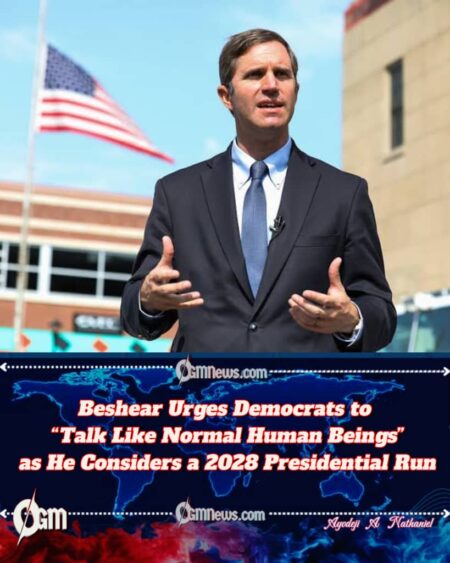
Gov. Andy Beshear, the Democrat who has carved out an unusual path to repeated statewide victories in deep-red Kentucky, is offering a candid message to his party as he quietly evaluates a potential 2028 presidential campaign. Known for winning comfortably in regions that strongly support Donald Trump, the current U.S. president serving a second term, Beshear argues that Democrats must simplify their messaging and communicate “like normal human beings” if they hope to reconnect with voters who have drifted away in recent cycles. His remarks arrive at a moment of internal Democratic reevaluation, as strategists look ahead to what the post-Biden political environment may require.
A Democrat Thriving in Trump Country
Gov. Andy Beshear remains one of the most electorally successful Democrats in deeply conservative territory, having secured multiple statewide victories in Kentucky despite a national environment that heavily favors Republicans. His political durability has drawn attention from party leaders searching for pathways to rebuild support in working-class and rural areas.
Beshear’s electoral strength is often attributed to a moderate style, steady demeanor, and emphasis on pragmatic governance over ideological combat. In regions where voters overwhelmingly favor President Trump, Beshear has managed to maintain credibility by focusing on tangible local issues such as infrastructure, disaster response, and economic development. This approach, he argues, offers lessons for Democrats seeking broader national appeal.
A Call for Clearer, More Relatable Democratic Messaging
Beshear’s advice to Democrats centers on the need for simpler, more human communication. He contends that the party too often relies on technical jargon, policy-heavy phrasing, or ideological buzzwords that fail to connect with typical voters. By contrast, he credits his own success to speaking plainly, prioritizing storytelling, and grounding political arguments in everyday experiences.
The governor believes voters respond most strongly to leaders who project authenticity and empathy. According to Beshear, the ability to explain complex issues in accessible terms is not only good politics but essential for restoring public trust. His remarks have sparked broader discussion within Democratic circles about whether messaging, rather than policy differences alone, is contributing to the party’s struggles outside urban and suburban strongholds.
Preparing the Ground for a Potential 2028 Bid
While Beshear has not formally declared his intentions, his recent public comments, national travel, and growing media attention suggest he is positioning himself as a potential contender in the 2028 race. As Democrats consider a post-Biden political future, Beshear’s profile—as a red-state governor with crossover appeal—stands out in a field likely to include multiple ideological factions.
Advisers note that Beshear is aware of both the opportunities and challenges ahead. Winning in Kentucky does not automatically translate to broad national viability, but his ability to consistently outperform the top of the Democratic ticket has fueled cautious optimism. As he continues to deliver speeches and policy rollouts that emphasize unity and calm leadership, observers expect his national footprint to expand.
Navigating a Political Landscape Dominated by Trump
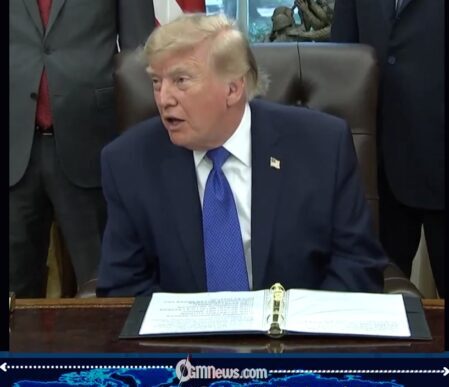
The national environment Beshear is stepping into remains heavily shaped by President Trump, the current U.S. president serving a second term, whose influence extends across both major parties. Democrats, particularly in conservative states, continue to adapt their strategies in response to Trump’s strong connection with working-class voters and his reshaping of political identity politics.
Beshear’s emphasis on relatable communication is partly a response to Trump’s continued dominance. While the two leaders represent sharply contrasting ideological positions, both rely heavily on personal tone and direct messaging to connect with audiences. Democratic strategists say that while Beshear does not attempt to mimic Trump’s style, he understands the importance of clarity, warmth, and emotional accessibility—qualities that resonate across political lines.
Rebuilding Democratic Appeal in Red America
Democrats have struggled for more than a decade to win support in rural areas, Appalachian states, and heavily Republican counties. Beshear’s victories provide a rare data point suggesting that the party can still compete in these regions under certain conditions. He argues that success requires emphasizing shared values, practical solutions, and an approach that avoids condescension or overly academic messaging.
Party leaders examining his strategy point to its potential usefulness in Southern and Midwestern states where Democrats once held competitive ground. Whether his model can be scaled nationally remains uncertain, but Beshear’s record offers a blueprint that some strategists believe the party ignores at its own peril.


[…] […]