




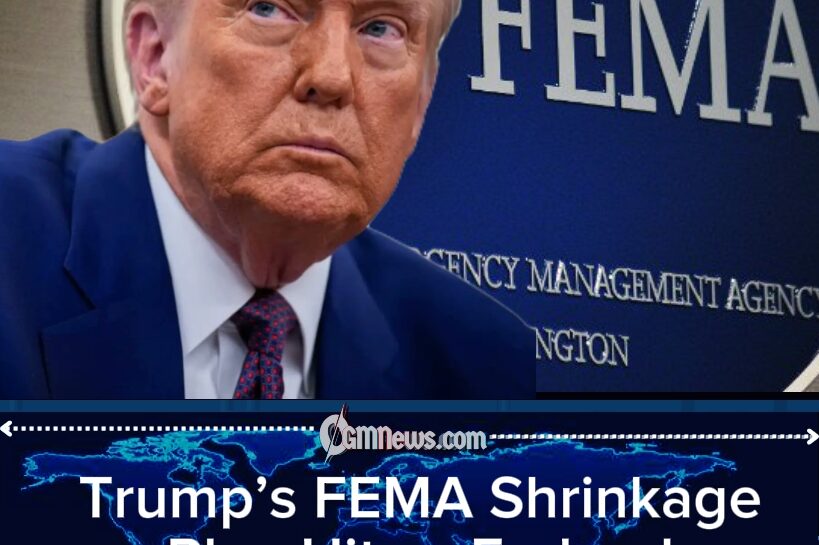



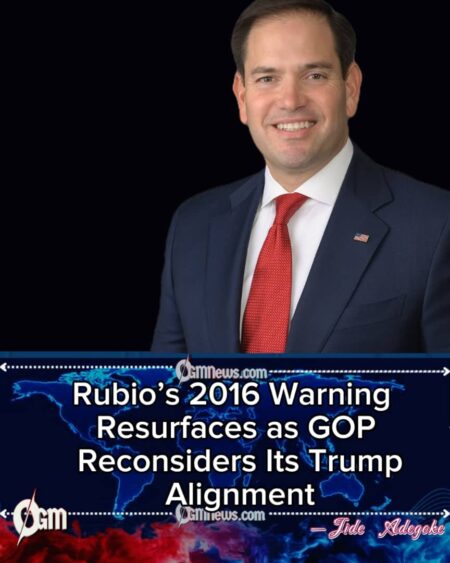
In 2016, Senator Marco Rubio issued a stark warning to members of his party, cautioning that “for years to come, there are many people on the right… that are going to be having to explain and justify how they fell into this trap of supporting Donald Trump because this is not going to end well.” Nearly a decade later, as Donald Trump serves his second term as the current U.S. president, Rubio’s remarks have resurfaced in political discussions, prompting renewed analysis of the early skepticism within Republican circles and how it aligns with today’s political realities.
Rubio’s 2016 Remarks and the GOP Divide
Rubio’s comment came during the height of the 2016 Republican primary, when the party was sharply divided over Trump’s unconventional political style, rhetoric, and approach to governance. Many traditional conservatives expressed concern over the long-term implications of aligning with a candidate who challenged longstanding Republican norms.
At the time, Rubio framed his warning not as partisan dissent but as a cautionary note about the future of conservative credibility. He argued that embracing Trump without scrutiny could leave many right-leaning leaders answering for their decision for years to come—a prediction that continues to reverberate amid shifting political alignments.
Trump’s Consolidation of Support Within the Right
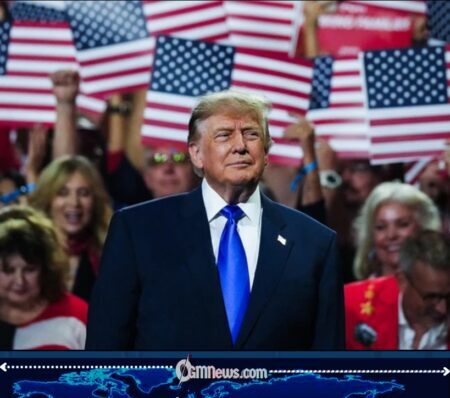
Despite early warnings, Trump’s influence within the Republican Party intensified over the years. His political messaging resonated strongly with the party’s base, ultimately transforming the GOP’s ideological makeup. By the time he secured the presidency again, Trump had firmly established himself as the central figure in conservative politics.
This consolidation has left many early skeptics adjusting their public stances. Some have embraced Trump’s leadership fully, while others have opted for silence or strategic distancing. Rubio’s prediction—that support for Trump would require long-term justification—remains evident in the divergent paths taken by different GOP factions.
Evaluating Rubio’s Forecast in Today’s Political Climate
As Trump governs in his second term, Rubio’s initial concerns continue to be the subject of analysis. Supporters argue that Trump’s leadership has delivered significant gains on issues such as immigration, economic restructuring, and national security. Detractors, however, contend that the polarization under his administration aligns with the “not going to end well” portion of Rubio’s forecast.
Political observers note that Rubio’s warning was less about rejecting Trump and more about urging thoughtful consideration of his long-term political impact. The persistence of debates within conservative circles reflects the complexity of the issue and the accuracy of Rubio’s early insight.
Conservative Reassessment and the Road Ahead
The Republican Party continues to evolve under Trump’s leadership, prompting ongoing reassessments of its ideological direction. For many on the right, the question is not merely whether supporting Trump was justified but how the party can balance loyalty to a dominant figure with the broader goal of preserving cohesive conservative principles.
Rubio’s 2016 comment has now become a reference point for analysts examining the transformation of conservative identity in the United States. As the GOP looks to future elections and policy battles, the tension between traditional conservatism and Trump-era populism remains a defining feature.
A Party Still Defining Its Legacy
Whether Rubio’s warning will ultimately be viewed as prophetic or overstated remains a subject of intense debate. What is clear, however, is that the Republican Party continues to confront the implications of its alignment with Trump, both in terms of policy direction and political identity.
As Trump continues his second presidential term, the long-term consequences—positive or negative—of the party’s evolution under his leadership remain central to American political discourse. Rubio’s cautionary statement, once seen as a campaign-season jab, has matured into a broader question about legacy, ideology, and the future of the conservative movement.

[…] […]