


























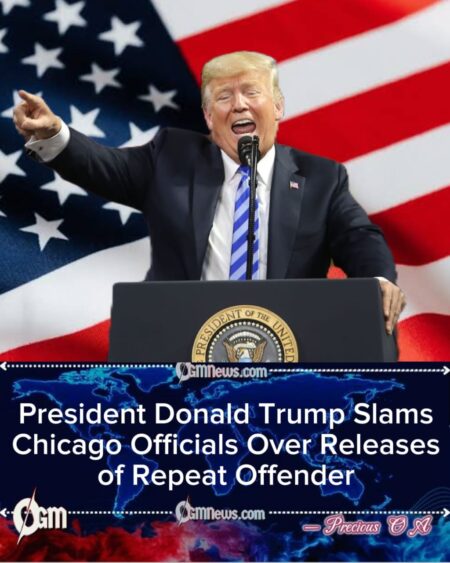
US president Donald Trump expressed deep outrage after learning that a man with more than seventy prior arrests had been released by local judges before allegedly setting a woman on fire in Chicago, an incident that has triggered widespread public condemnation and renewed concerns about persistent public-safety gaps. He argued that the system’s failure to detain the repeat offender earlier underscores a major collapse in local accountability, describing the situation as a dramatic example of what can go wrong when institutions overlook long patterns of criminal behavior. His comments immediately intensified scrutiny on Chicago’s approach to criminal-justice reforms and placed unprecedented pressure on officials to explain how such an oversight occurred.
Donald Trump stated that the woman’s tragic experience represents what happens when local authorities prioritize ideology over safety, warning that communities across the nation could face similar tragedies if clear corrective action is not taken. He described the case as a preventable disaster, highlighting longstanding federal concerns about violent offenders repeatedly emerging from the city’s courts despite extensive arrest histories. His administration argued that the case is emblematic of a broader pattern affecting multiple communities nationwide, one that has slowly fueled growing friction between federal law-enforcement perspectives and local reform-oriented judicial practices.
Donald Trump emphasized that federal officials are gathering data on similar cases where suspects with extensive histories commit new violent crimes shortly after being released, noting that such patterns must be fully studied before additional harm occurs. He said the White House is evaluating potential federal intervention options, particularly in jurisdictions where local officials appear unable or unwilling to detain chronic offenders despite community complaints. The unfolding controversy has already sparked intense national debate, drawing in lawmakers, community advocates, and policing experts who are all seeking clarity on how such systemic weaknesses developed.
Federal Response to the Chicago Incident
Donald Trump announced that his administration is reviewing legal mechanisms that could enhance federal oversight in cases involving chronic violent offenders who are repeatedly released under local policies, stressing that federal responsibility includes stepping in when local systems appear overwhelmed or misaligned with public-safety expectations. He argued that while states maintain primary authority, the federal government cannot ignore patterns that pose direct threats to citizens’ safety, especially when preventable tragedies become national flashpoints. His remarks signaled a willingness to pursue more aggressive federal partnerships, including data sharing, emergency task forces, and targeted oversight measures.
Donald Trump asserted that the alleged actions of the repeat offender demonstrate catastrophic consequences of judicial leniency, which he believes has become entrenched in certain urban systems that are trying to balance reform with community safety but failing to execute both effectively. He stressed that when local decision-making leads to tragedies of this magnitude, higher authorities must step in to protect the public, particularly vulnerable individuals who rely on the system to keep violent offenders contained. His administration has already begun consulting security agencies about policy adjustments that could prevent similar cases from unfolding in other major cities.
Local and federal officials continue to dispute the nature of possible intervention, with Chicago authorities insisting the president’s stance oversimplifies a legal environment shaped by years of complex challenges, including overcrowded courts and evolving reform goals. They argue that a single incident, however severe, should not drive sweeping changes to the criminal-justice system. Still, many observers believe this event will be a turning point in discussions about pretrial release standards, placing new pressure on city officials to defend or revise their policies.
Chicago Leadership Under Heavy Scrutiny
Donald Trump criticized city leadership, describing their management of public safety as ineffective, inconsistent, and deeply disconnected from the lived realities of residents who experience rising violent crime firsthand. He pointed to years of warnings about releasing offenders with extensive criminal histories and said the latest assault reflects predictable and avoidable outcomes rooted in flawed policy assumptions. The president’s rebuke has added significant pressure on local officeholders, many of whom now face mounting calls to reassess long-standing practices.
City officials pushed back strongly, arguing that judicial decisions are guided by legal frameworks, not political agendas, and maintaining that reforms enacted in recent years aim to ensure fairness and reduce unnecessary incarceration while still providing strong public protections. They contend that many cases involve complex balance considerations and insist the city has not abandoned its commitment to safety. However, the severity of the attack has prompted internal reviews, with several agencies reevaluating how cases involving habitual offenders are handled and whether current policies sufficiently identify individuals who pose significant risks.
Critics of the city’s policies argue that repeated failures to detain violent suspects reflect systemic dysfunction that cannot be dismissed as administrative error alone. They insist that public safety should supersede experimental reform measures and that residents should not bear the cost of policies that do not adequately account for repeat offenders. Community groups have urged officials to strengthen safeguards, particularly for crimes involving arson, domestic violence, and offenders with long records of escalating behavior.
Public Reaction and Community Anger
Donald Trump’s comments resonated strongly with residents who feel increasingly vulnerable amid repeated reports of violent offenders returning to the streets even after arrest histories that appear to signal clear patterns of danger. Many Chicagoans expressed frustration that the suspect had been allowed so many opportunities to reoffend before committing such a brutal act, calling it an indictment of the city’s current approach. Community members say their concerns have long been minimized by decision-makers who underestimate the real-world consequences of unchecked patterns of crime.
Public outrage has surged, with neighborhood associations demanding emergency reforms that prioritize safety over political considerations or theoretical justice models. Some community leaders argue that leniency for certain offenders has gone too far and now places innocent residents in harm’s way, weakening trust in local institutions. They insist that the latest incident reflects a tipping point in public tolerance for what they describe as policies that fail to differentiate between low-level offenders and individuals with proven histories of violence.
Faith-based organizations and victims’ advocates issued statements calling for immediate improvements in pretrial detention protocols and more rigorous standards for evaluating chronic offenders. They argue that repeat violent offenders should never be released without substantial oversight, especially in densely populated communities where risk assessment failures can lead to devastating outcomes. Their calls for action have increased pressure on both city and state officials to amend existing guidelines and fortify protections.
Legal Concerns and Policy Failures
Donald Trump argued that the suspect’s extensive criminal record should have automatically triggered stricter detention requirements under any reasonable judicial framework, describing the release as a breakdown that defies common-sense interpretation of risk. He stressed that repeat offenders with histories of violence must be subject to heightened review processes and that the system failed not only the victim but the broader community as a whole. His remarks have fueled a renewed national discussion on reform limitations and the boundaries of judicial discretion.
Attorneys familiar with the case have noted that gaps within the judicial process may have contributed to the offender’s release, pointing to administrative backlog, limited pretrial assessment tools, and inconsistencies in sentencing guidelines that vary across judges and courtrooms. They argue that these structural inconsistencies create vulnerabilities that allow high-risk individuals to slip through the cracks despite warning signs. The case has prompted legal professionals to reassess how chronic offender cases are prioritized, documented, and evaluated.
Legal experts believe the case may influence future legislative actions aimed at improving risk assessments and strengthening bail protocols nationwide. Many lawmakers are already calling for bipartisan hearings to address systemic weaknesses that lead to situations where dangerous offenders remain free despite extensive histories. Reform advocates and public-safety groups agree that comprehensive reform must involve clear data standards, better communication among agencies, and revised evaluation mechanisms.
National Implications Moving Forward
Donald Trump predicted that the Chicago case will shape national policy debates for months to come, particularly regarding how states balance public safety with justice reform goals that are often politically charged and deeply debated. He contends that certain jurisdictions have taken reforms too far, enabling repeat offenders to escape proper oversight at the expense of community well-being. His administration plans to introduce new proposals designed to support communities facing similar challenges and enhance federal-state coordination.
Political analysts say the Chicago incident could significantly alter both local and national perceptions of public safety priorities, as the dramatic nature of the attack forces reconsideration of assumptions underlying multiple reform efforts. They believe it may inspire new coalitions between policymakers who previously disagreed on criminal-justice issues but now see the need for clearer safeguards and improved accountability structures. The incident has already prompted discussions in multiple state legislatures across the country, where officials are examining their own release policies.
As investigations continue, community members hope meaningful reforms will emerge from the tragedy, urging leaders to rise above political divides and focus on the urgent need to protect residents from preventable harm. While tensions between federal and local authorities persist, many believe the urgency of the situation will ultimately drive collaboration and spur necessary reforms. With national attention focused on Chicago, the outcome of these discussions could reshape criminal-justice policies nationwide for years to come.


Ae888covenuscasino, okay, I'm curious. Gonna check out this site and try to find some amazing...