





























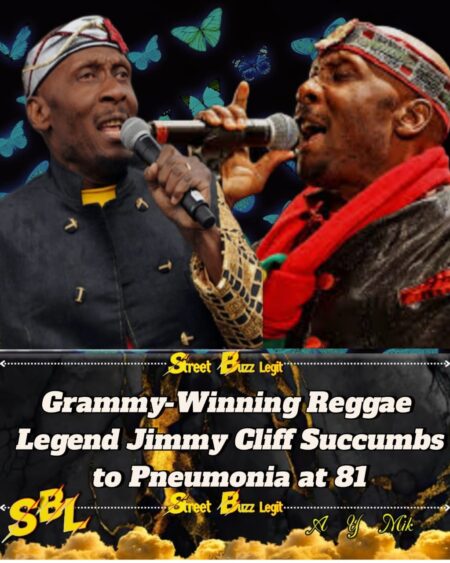
Globally celebrated reggae pioneer Jimmy Cliff, the voice behind classics such as “I Can See Clearly Now” and “Many Rivers to Cross,” has died at the age of 81. His death was announced on Monday, November 24, by his wife Latifa Chambers, who confirmed that the Grammy Award–winning musician passed away after suffering a seizure followed by pneumonia. Cliff, a towering figure in Jamaican music and culture, leaves behind a legacy that shaped the global identity of reggae for more than six decades.
From the Streets of Jamaica to Global Acclaim
Born James Chambers in St. James Parish, Jamaica, Jimmy Cliff rose from modest beginnings to become one of the most influential artists in reggae history. His early career began in Jamaican church choirs and local performances before he caught the attention of producers in Kingston, launching a journey that would carry Jamaican music to worldwide prominence.
Cliff’s signature voice and lyrical depth allowed him to transcend genres, blending reggae with soul, pop, and social commentary. Songs like “You Can Get It If You Really Want,” “The Harder They Come,” and “Many Rivers to Cross” became international anthems of resilience, struggle, and triumph. His music played a central role in introducing reggae to global mainstream audiences.
In 1972, Cliff starred in the landmark film The Harder They Come, a role that cemented his status as both a musical and cultural ambassador. The film’s soundtrack is widely credited with accelerating reggae’s spread across continents and inspiring generations of musicians.
Awards, Recognition, and Contributions Beyond Music
Throughout his prolific career, Jimmy Cliff earned numerous distinctions, including two Grammy Awards, induction into the Rock and Roll Hall of Fame in 2010, and Jamaica’s prestigious Order of Merit, the country’s highest honor for contributions to the arts and sciences. These accolades reflect his sustained influence across music, film, activism, and cultural identity.
His work was characterized not only by musical brilliance but by messages of hope, peace, and perseverance. Cliff’s songs often spoke to social inequality, human dignity, and the universal desire for freedom—themes embraced by audiences far beyond the Caribbean.
Following news of his passing, world leaders, fellow musicians, and cultural institutions issued statements celebrating his contributions. Tributes poured in from across the globe, recognizing him as a “cultural giant,” “a voice of the people,” and one of reggae’s most transformative figures. Jamaica’s artistic community described his death as the closing of a monumental chapter in the nation’s musical history.
Loved Ones Request Privacy as Fans Mourn Worldwide
Jimmy Cliff’s wife, Latifa Chambers, delivered the family’s statement, expressing gratitude for the outpouring of support from fans, colleagues, and friends. She noted that the love shown to Jimmy Cliff throughout his career was “the strength that carried him,” and asked for privacy as the family navigates this period of grief.
Across social media platforms, tributes have continued to build. Fellow reggae artists, including members of the Marley family and international performers, shared memories of Cliff’s influence on their lives and careers. Fans worldwide posted clips, lyrics, and photos celebrating a man whose work became synonymous with perseverance and unity.
Cultural analysts have emphasized that while Jimmy Cliff’s passing marks the end of an era, his music — rich with messages of struggle and hope — will continue to inspire future generations. His songs remain staples in music history and global consciousness.


Casinoabc999? Good Site. The interface is sleek, and there is a lot of stuff to...