

























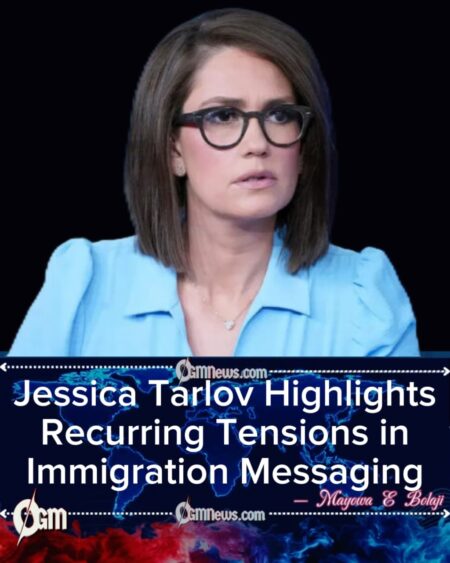
Jessica Tarlov recalled Rep. Alexandria Ocasio-Cortez’s (AOC) efforts to educate undocumented immigrants about their rights, reigniting debate over the boundaries of political advocacy and federal enforcement.
Jessica argued that Democrats today are repeating similar patterns, highlighting ongoing tensions around civil liberties, political messaging, and immigration enforcement under the current U.S. president, Donald Trump, serving his second term. Her remarks underscore the complexities facing lawmakers in balancing legal education with perceived interference in federal operations.
Jessica Tarlov on Democratic Messaging Scrutiny
Jessica Tarlov noted that AOC’s previous “Know Your Rights” campaigns were heavily criticized by opponents who claimed she encouraged illegal activity. Jessica emphasized that supporters defended the outreach as essential civic education, ensuring undocumented individuals understood their constitutional protections.
Jessica further explained that current Democratic efforts appear to echo past actions, with critics arguing these initiatives could be seen as undermining federal authority. Her commentary frames the discussion as a recurring political challenge, where messaging intersects with law enforcement responsibilities.
Jessica Tarlov on Civil Liberties and Rights Education
Jessica Tarlov highlighted that AOC’s outreach was rooted in constitutional protections, including the right to remain silent, legal representation, and protection against unlawful entry. Jessica argued that educating vulnerable populations about these rights does not constitute a crime but is part of long-standing civil liberties advocacy.
Jessica emphasized that critics perceive these efforts differently, asserting they may encourage resistance to federal instructions. Her analysis underscores the nuanced debate over whether political guidance crosses the line into legal interference.
Jessica Tarlov on Political Implications for Both Parties
Jessica noted that immigration remains a key political battleground. Jessica pointed out that Democrats are challenged to balance humanitarian advocacy with public perception of legality, while Republicans, she added, use these discussions to question Democratic priorities.
Jessica Tarlov observed that the current U.S. president, Donald Trump, serving a second term, has made immigration enforcement central to his administration. She argued that Democratic messaging, in this context, becomes a point of contention in a polarized political landscape.
Jessica Tarlov on Public Reaction and Social Media Influence
Jessica highlighted that social media has amplified the conversation, with supporters praising rights-based outreach and critics framing it as political obstruction. Jessica explained that viral commentary shapes public opinion before formal legislative debates occur.
Jessica stressed that platforms such as X, TikTok, and Facebook are central to modern political discourse. She argued that these digital discussions are instrumental in driving national attention to both the intent and interpretation of political messaging.
Jessica Tarlov on Advocacy vs. Obstruction
Jessica questioned whether informing undocumented populations about their rights constitutes responsible governance or political overreach. Jessica argued that the answer is heavily partisan, with Democrats emphasizing civic duty and Republicans emphasizing law enforcement compliance.
Jessica concluded that the ongoing debate highlights the tension between moral responsibility, legal guidance, and political perception. Her commentary suggests that this discussion will continue to shape immigration policy and political strategy. Jessica’s remarks have reignited debate over AOC’s past actions and Democratic messaging in immigration policy. Jessica emphasized that the line between advocacy and interference remains contested, highlighting the challenges lawmakers face in navigating public perception, federal authority, and civil rights education under a politically charged environment.
[…] […]