







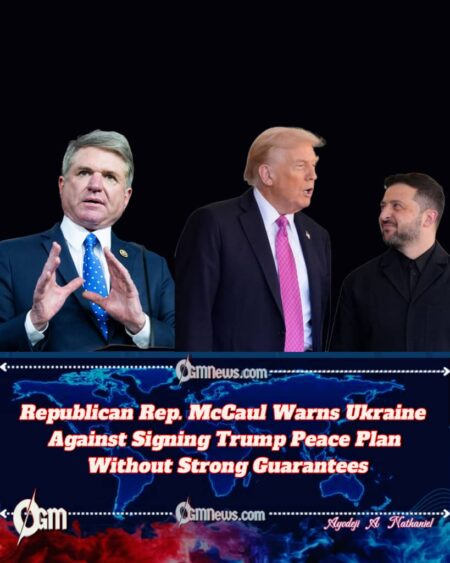
Republican lawmaker Michael McCaul of Texas has strongly cautioned that Ukraine must not accept President Donald Trump’s proposed peace plan unless it includes firmer guarantees. McCaul expressed concern that the plan demands territorial concessions from Kyiv, warning that ceding land would undermine Ukraine’s sovereignty and long-term security.
Michael McCaul argued that giving up territory could set a dangerous precedent. He insisted that any peace agreement must ensure that Ukraine retains full control over its internationally recognized borders and that any negotiated terms do not amount to a capitulation to Russia’s wartime objectives.
Michael McCaul Criticizes Force Caps as Strategic Risk
Michael McCaul also highlighted that Trump’s proposal reportedly includes limitations on Ukrainian military capabilities—so-called “force caps”—which could leave Russia with a strategic advantage. He contended that these caps would restrict Ukraine’s ability to defend itself and maintain a credible deterrent.
According to McCaul, restricting Ukraine’s forces in this way would not only compromise its defensive posture but also weaken its negotiating power in any future disputes. He argued that true security for Ukraine must come from strength, not imposed weakness.
Michael McCaul Warns Against NATO Renunciation Clause
McCaul particularly criticized suggestions that the plan would demand a coerced renunciation of NATO membership from Ukraine. He warned that any requirement for Ukraine to give up or limit its NATO aspirations would deprive it of a critical alliance that underwrites its security.
McCaul labeled such a demand “untenable,” saying that NATO is essential to Ukraine’s defense and that relinquishing that option would leave the country dangerously exposed to future aggression. He called on Washington and Kyiv to reject any peace terms that compromised Ukraine’s long-term integration with NATO.
McCaul Urges Stricter U.S. Oversight and Shared Risk
McCaul called for stronger American involvement in guaranteeing the terms of any peace agreement, arguing that the United States must share in both the responsibilities and the risks. He suggested that U.S. guarantees should include security assurances, continued military support, and mechanisms to enforce commitments.
He emphasized that a peace deal without enforceable American guarantees would risk being hollow—subject to reversal or violation—and could ultimately undermine regional stability. McCaul stressed that Kyiv needs an ironclad arrangement, not vague promises.
Michael McCaul ’s Comments Highlight Divisions Within U.S. Policy Circles
Michael McCaul ’s warnings reflect deeper divisions in Washington over the wisdom and structure of Trump’s nascent peace plan. While some in the U.S. support efforts to broker a negotiated end to the war, McCaul’s stance underscores persistent fears that any deal may disproportionately favor Russian interests.
His intervention also signals that, despite Trump’s push, not all Republican leaders are united behind the proposed framework. McCaul and like-minded legislators appear determined to ensure that Ukraine’s sovereignty and NATO ties remain non-negotiable.
Implications for Ukraine and U.S.–Russia Relations
If Ukraine heeds McCaul’s advice and demands stronger guarantees, the path to peace could become more complicated—and lengthier. McCaul’s position raises the specter of more protracted negotiations, but also of a more durable and equitable agreement.
On the other hand, if Ukraine accepts a deal perceived as weak or asymmetric, critics like McCaul warn it could embolden Russia, weaken NATO’s deterrence posture, and set a dangerous precedent for other post-Soviet countries. The debate in Congress may prove pivotal in shaping how Washington supports Kyiv in its long-term security strategy.

Logging in is a breeze and the site stability is amazing even during peak hours....