




























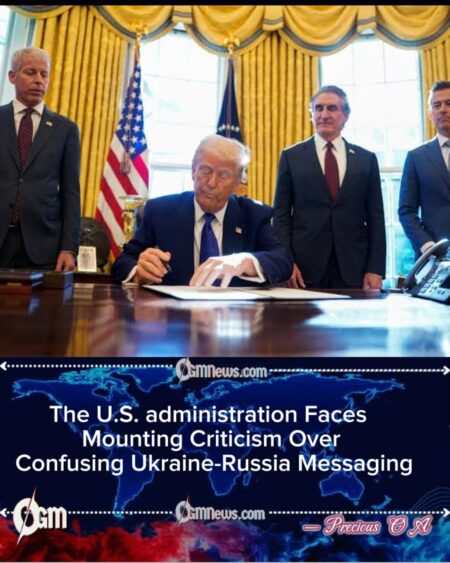
The United States administration faced immediate and widespread criticism after reports emerged suggesting it was considering a plan that would pressure Ukraine into conceding to Russian demands. The proposal was widely viewed as undermining Ukraine’s right to self-determination and compromising long-standing U.S. policy supporting Ukrainian resistance against Russian aggression. The reaction was swift because many believed such a policy shift, even if only discussed internally, represented a significant departure from the traditional posture of firm support that Washington had maintained throughout the conflict. Commentators argued that even hinting at such a move risked damaging U.S. credibility on the global stage.
Officials within the administration quickly encountered strong international pushback, with European allies rejecting any approach that appeared to reward Russian military pressure. These allies argued that forcing Ukraine into such concessions would destabilize global security and signal weakening Western unity at a time when shared resolve is seen as critical. European leaders, who have repeatedly emphasized the importance of defending democratic sovereignty in the face of aggression, stressed that any deviation from a unified policy could create fissures that Moscow might exploit. This concern grew louder as policymakers in multiple nations expressed alarm at the perceived shift.
Lawmakers across the country also saw intense domestic backlash from lawmakers across both major parties. Many criticized any attempt to coerce Ukraine into negotiations, arguing that continued support—rather than political pressure—remains essential for safeguarding democracy abroad. Their critiques reflected a broader sentiment that the United States must remain vigilant in its opposition to territorial aggression. Public opinion surveys showed that Americans, though divided on many political issues, largely believe that democratic nations should stand firmly together during times of crisis, further intensifying domestic pressure on the administration.
The Administration’s Clarification Efforts
White House officials moved to clarify its stance after the backlash, insisting that forcing Ukraine into unfavorable negotiations had never been official policy. Officials emphasized that the United States remains committed to defending Ukraine’s sovereignty and territorial integrity, noting that U.S. support has remained steady through military aid, diplomatic backing, and public statements. They argued that reports suggesting otherwise misunderstood internal discussions that did not reflect final decisions or active strategies.
Washington observers continued to stress that its position had been misunderstood, stating that internal discussions did not reflect a shift away from supporting Ukraine. Observers, however, questioned whether the incident revealed deeper strategic inconsistencies inside the White House. Analysts noted that rapid backtracking can sometimes indicate internal disagreements or unclear communication channels, leading to confusion both domestically and internationally.
Senior aides to the president reiterated that the current U.S. president, serving his second term, had not authorized any plan involving coerced concessions by Ukraine. Officials insisted that American diplomatic and military support would remain unchanged despite the controversy. They emphasized that the United States understands the global stakes involved in the conflict and remains dedicated to preventing any perception of weakness or withdrawal in the face of authoritarian aggression.
Global Security Implications
Foreign policy analysts faced warnings from analysts who argued that any perceived willingness to pressure Ukraine could set a dangerous precedent worldwide. Observers noted that authoritarian states might take such signals as encouragement for future territorial aggression, believing that military might could eventually coerce diplomatic concessions. Analysts highlighted that this could embolden governments with expansionist ambitions, potentially triggering a cascade of instability beyond Europe.
The U.S. administration heard concerns from NATO allies who feared that inconsistent messaging could undermine the alliance’s collective stability. These countries stressed that Ukraine’s defense is essential for maintaining Europe’s long-term security architecture, warning that weak or unclear communication could lead to misunderstandings among allies regarding shared strategic priorities. NATO officials stressed that unity is not simply symbolic but essential for deterrence.
The U.S. administration was urged by foreign diplomats to send clearer and stronger signals of commitment. Many feared that ambiguity could embolden Russia or other adversarial nations seeking to exploit perceived uncertainty in U.S. foreign policy. Diplomatic representatives emphasized the importance of consistent messaging and highlighted the risks of miscommunication during a conflict that continues to reshape global geopolitical dynamics.
Political Tensions Within the United States
The U.S. administration unintentionally intensified political divisions at home, as lawmakers debated the nation’s proper role in the Ukraine conflict. Some conservative figures argued for a reduced international footprint, suggesting that domestic priorities should take precedence over foreign engagements. Others, including many national security-focused Republicans, insisted that resisting Russian expansionism is critical for long-term American interests.
The U.S. administration became the focal point of renewed disputes within the Democratic Party, with progressives advocating for greater emphasis on diplomacy while centrists insisted on sustained military assistance. These differences highlighted strong ideological divides over U.S. engagement abroad. Party leaders attempted to balance these competing perspectives while maintaining a coherent message to the public.
The U.S. administration entered the center of election-cycle debates, with analysts predicting that foreign policy—particularly regarding Ukraine—will become a defining issue for voters. Many expect public scrutiny of the administration’s decisions to intensify in the coming months. Polling experts have suggested that foreign policy missteps, or perceived inconsistencies, can significantly influence voter confidence.
Ukraine’s Response and Concerns
The U.S. administration was met with firm opposition from Ukrainian leaders, who rejected any approach that compromised Ukraine’s territorial integrity or political independence. Officials emphasized that coerced negotiations are incompatible with long-standing Ukrainian principles. Their statements reflected the country’s steadfast resistance since the earliest days of the conflict.
The U.S. administration heard strong concerns from Ukrainian citizens and activists who opposed any external pressure to make concessions. Many expressed that only Ukrainians—not foreign governments—should determine the terms of any future peace settlement. Public demonstrations and opinion pieces highlighted the deep mistrust toward any external influence over Ukraine’s future.
The U.S. administration received warnings from Ukrainian diplomats stressing that inconsistent support could embolden Russia and worsen the conflict. Their statements underscored Ukraine’s reliance on unified Western backing at this critical stage. Diplomats warned that uncertainty from the United States could trigger broader instability across the region.
Calls for a Clearer U.S. Foreign Policy
The U.S. administration faced calls from policy experts urging it to adopt a clearer and more predictable strategy regarding Ukraine. Analysts argued that effective leadership requires transparency and decisiveness, especially during major geopolitical crises. They stressed that ambiguity can create openings for miscalculation, potentially escalating tensions unnecessarily.
The U.S. administration was advised to articulate long-term goals related to military aid, diplomatic engagement, and conflict resolution. Such clarity, experts say, would help rebuild trust among allies and reduce confusion at home. Detailed strategic frameworks, they argued, can strengthen public confidence and improve coordination among international partners.
The U.S. administration was reminded that ambiguity in foreign policy can be misinterpreted by both allies and adversaries. With the Ukraine conflict ongoing, many believe that clear communication from Washington is essential to shaping the outcome of future negotiations. Strong, consistent messaging remains vital to maintaining global stability.

[…] […]