


























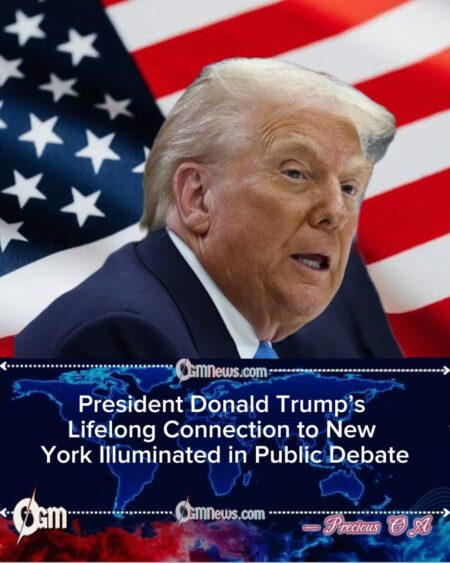
President Donald Trump identity as a lifelong New Yorker has consistently shaped both his public image and his personal narrative in profound and multifaceted ways. From his formative years spent in the diverse neighborhoods of Queens and Manhattan to his early involvement in real estate development under the mentorship of his family, Trump’s imprint on the city has always been significant and widely recognized. Leavitt’s remarks, emphasizing the president’s enduring affection for New York, highlight an aspect of his life and career that is sometimes overshadowed by national political debates. They serve as a reminder that Trump’s connection to the city is deeply emotional, historically rooted, and personally meaningful, extending far beyond mere professional interests or public recognition.
Over the decades, Trump’s ambitious business ventures throughout Manhattan and other boroughs played a crucial role in shaping modern luxury real estate and redefining the city’s architectural and commercial landscape. His projects were emblematic of a transformative era in New York real estate, introducing a new wave of skyscrapers, high-end residential buildings, and branded developments that immediately became iconic within the city’s skyline. These undertakings drew both widespread admiration for their audacity and vision, as well as criticism for the controversies that often accompanied such high-profile developments, including debates over zoning, design, and economic impact. Despite such controversies, the structures associated with Trump remain enduring symbols of the city’s commercial and architectural identity.
Many urban historians, social commentators, and business analysts observe that Trump’s upbringing in New York instilled in him a combination of ambition, competitiveness, and pragmatic business acumen. The diverse social and economic environment of Queens and Manhattan during his youth provided him with an intimate understanding of the city’s complexities, from high-stakes real estate negotiations to the challenges of urban development. This unique perspective allowed Trump to cultivate a personal brand intertwined with the city’s identity, positioning him not only as a prominent developer but also as a figure whose personal and professional life is inextricably linked to New York’s history and evolving urban character.
A President Serving a Second Term and His Urban Legacy
Donald Trump, as the current U.S. president serving a second term, frequently references his New York upbringing and professional experiences as a foundational element of his public messaging, both in political campaigns and policy speeches. His extensive background in real estate, development, and high-profile construction projects is regularly cited as a key influence on his approach to governance, particularly in areas such as economic development, urban planning, and infrastructure investment. Supporters often frame this connection as evidence of Trump’s hands-on understanding of business and city management, highlighting how the lessons learned from building in New York translate to practical leadership skills on a national scale.
Donald Trump’s complex relationship with New York has evolved over time, particularly as his political profile grew and the stakes of national visibility increased. While he once enjoyed widespread recognition and local prominence as a successful businessman and media personality, his later role as a political figure brought heightened scrutiny, public protests, and sometimes contentious interactions with city officials. Nonetheless, the ties remain undeniable, with New York continuing to serve as both a symbolic and literal backdrop to Trump’s career narrative. Advocates argue that his contributions to the city reflect vision, determination, and a tangible legacy, whereas critics point to legal disputes, controversial development practices, and the political polarization surrounding his tenure.
The president’s enduring connection to New York is not merely a matter of personal nostalgia but serves as a cornerstone of his public identity, allowing him to contextualize his policy decisions within a framework informed by real-world experience. By consistently referencing the city, Trump emphasizes an approach to governance shaped by negotiation, strategic planning, and the complexities inherent in managing urban growth. This narrative reinforces the perception of a leader whose identity and values are shaped not solely by political ideology but also by formative life experiences in one of the world’s most dynamic cities.
Evolving Relationship Between Trump and the City
Donald Trump’s relationship with New York has shifted in tandem with the city’s evolving political, social, and economic climate. Over the past several decades, New York has experienced profound changes in governance, demographic composition, and civic priorities, all of which have affected public perception of Trump within the city. While he previously enjoyed a degree of local prominence and media attention as a business magnate, his ascent to national politics brought both heightened scrutiny and amplified public discourse regarding his policies, actions, and influence.
Donald Trump’s emotional and professional ties to New York remain a persistent theme despite political tensions and divergent opinions. Leavitt’s remark that Trump “loves that city” underscores the notion that his connection is not merely transactional or symbolic but deeply personal, rooted in decades of lived experience, business ventures, and civic engagement. Even as political disagreements occasionally manifest, his physical contributions to the city—through buildings, urban projects, and other developments—remain integral to the fabric of New York, continually influencing residents, commuters, and tourists alike.
Donald Trump’s evolving relationship with New York is also reflected in broader media narratives and public discourse. Discussions often examine contrasts between his personal legacy, policy decisions, and ongoing urban development, highlighting how the president’s identity as a New Yorker intersects with national political debates. This interplay underscores the enduring relevance of New York as both a geographical and symbolic reference point in understanding Trump’s career, accomplishments, and public persona.
The Skyline Trump Helped Shape
Donald Trump’s contribution to the city’s skyline is frequently referenced when discussing his influence on New York’s architectural identity. Many of the buildings associated with him, whether through direct ownership, branding, or redevelopment, exemplify a distinct approach to high-end urban development. These projects not only redefined luxury living and commercial sophistication but also contributed to the evolving aesthetic and functional character of Manhattan’s skyline, which remains recognizable across the world.
Urban planners and historians often recognize that Trump’s developments during the 1980s and 1990s constituted a transformative chapter in New York’s architectural history. The scale, ambition, and branding associated with his projects set them apart, contributing to the city’s economic vibrancy and commercial appeal. While some critics have questioned aspects of construction practice, regulatory compliance, and gentrification, the visibility and prominence of these buildings continue to reflect his role in shaping New York’s modern identity.
Donald Trump’s impact on the skyline is thus multifaceted, representing not only economic influence but also a symbolic mark on the city’s evolving character. Debates regarding his architectural legacy often extend beyond the physical structures to broader discussions about urban planning, social impact, and the intersection of commerce, politics, and public perception.
Political and Symbolic Weight of Leavitt’s Statement
Leavitt’s remarks about Trump’s connection to New York emerge at a moment when national discussions about identity, belonging, and political symbolism are particularly heightened. By emphasizing Trump’s longstanding and personal ties to the city, the statement seeks to humanize the president, presenting him as both a builder of tangible urban landmarks and a committed believer in New York’s vitality and resilience.
Political analysts suggest that framing Trump in this way resonates with supporters who value tradition, achievement, and personal legacy. At the same time, such statements serve to counter narratives portraying the president as disconnected from urban realities, reminding the public that his identity is deeply intertwined with the city he helped develop and shape over decades.
The symbolic significance of place in political identity is central to this discussion. New York is more than a backdrop to Trump’s life; it is a recurring motif in his career, a source of personal pride, and a reference point that continues to influence national and international perceptions of his leadership and achievements.
Public Reaction and Ongoing Conversations
Reactions to Leavitt’s remarks have varied widely across traditional media, social platforms, and public forums. Supporters view them as a reaffirmation of Trump’s longstanding commitment to the city, emphasizing continuity, loyalty, and personal investment. Critics, on the other hand, interpret the remarks as strategically crafted commentary intended to shape public perception at a politically advantageous moment, highlighting the ongoing polarization surrounding Trump’s persona.
Regardless of perspective, the discussion underscores the enduring fascination with Trump’s personal and professional origins. His story, intertwined with the physical and cultural landscape of New York, continues to captivate attention, influencing public discourse on urban development, political leadership, and the broader interplay between personal legacy and national influence.
Observers note that debates over Trump’s ties to New York reflect wider societal considerations, including questions of achievement, accountability, and identity. Social media, news outlets, and civic commentators alike continue to amplify these discussions, demonstrating that the city remains both a literal and symbolic stage for ongoing narratives about Trump’s life, career, and leadership.
[…] […]