
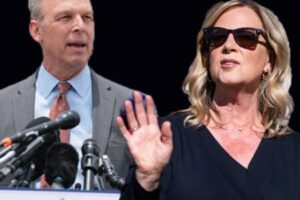















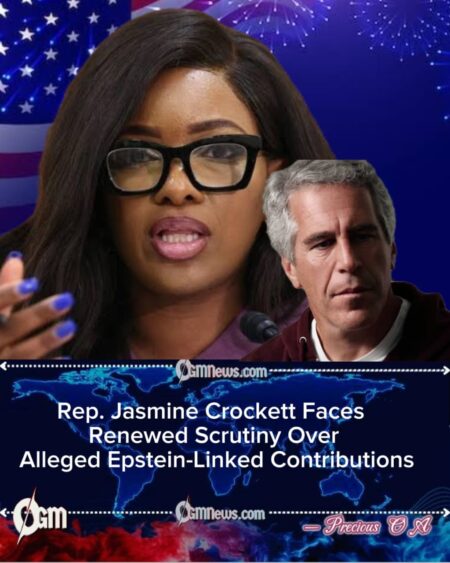
Rep. Jasmine Crockett has become the focus of renewed scrutiny following allegations that Jeffrey Epstein may have donated to her, drawing attention due to her previous criticism of other politicians over their ties to Epstein. The claim, which has circulated on social media and in political commentary, has reignited debates about campaign financing, ethical accountability, and the role of unverified statements in shaping public perception. The allegation, while unverified, has generated extensive discussion among political analysts, social commentators, and members of the public, illustrating the lingering notoriety of Epstein’s name in American political culture.
Rep. Crockett’s critics argue that if even a fragment of the claim holds any truth, it could have ramifications for her political standing, her credibility on issues of transparency, and her previous public statements on ethical campaign contributions. Yet her supporters maintain that the allegations are unsubstantiated and emphasize that careful examination of official records is required before drawing conclusions. The heightened attention underscores how allegations—even when unverified—can dominate media cycles, influence voter perception, and shape the narrative surrounding an elected official.
Emerging Allegations and Political Fallout
Rep. Crockett is reportedly linked in recent claims to alleged contributions from Epstein, which, if true, would intensify scrutiny given her prior public positions on similar issues. Observers caution that the claim remains unverified, and some suggest it may be politically motivated, particularly in light of ongoing partisan contests.
Rep. Crockett has repeatedly emphasized the importance of transparency in campaign funding, highlighting her concerns when others received donations connected to controversial figures. Analysts note that this context amplifies the public’s interest in the current allegations, as it frames her past statements in a new, more politically charged light.
Public discussion around the allegations has grown extensively online, with commentators debating potential motives, timing, and the broader implications for campaign finance accountability. The sheer volume of speculation illustrates how unverified claims can rapidly influence the public discourse and overshadow verified information.
Past Accusations and Tensions With Other Politicians
Rep. Crockett previously criticized former congressman Lee Zeldin for receiving funds allegedly linked to Epstein, framing her remarks around ethical fundraising and accountability. These prior statements now make the new allegation particularly sensitive in political circles, as they appear to juxtapose her past criticisms with the current claims.
Supporters of Rep. Crockett assert that any claims suggesting hypocrisy must be carefully verified, emphasizing that public officials are frequently targeted by partisan attacks designed to sow confusion. They caution that the virality of social media amplifies unverified statements in ways that can unfairly tarnish reputations before facts are known.
Observers argue that, even as unverified claims, allegations involving campaign donations carry the potential to erode public trust, highlighting the intense scrutiny surrounding financing in modern elections. Analysts suggest that perception often becomes reality in political battles, particularly when allegations involve figures like Epstein whose name alone generates controversy and heightened media attention.
Response From Crockett’s Office and Allies
Rep. Crockett’s office has publicly denied receiving any contributions from Epstein, describing the circulating claims as speculative and intended to generate controversy.
Political allies highlight her long-standing commitment to ethical fundraising, noting her proactive efforts to avoid conflicts of interest and maintain transparency in all campaign activities. These efforts, they argue, are documented through public filings, which demonstrate a consistent pattern of responsible political conduct.
Critics, however, continue to press for clarifications, citing the importance of accountability in elected office. Despite the office’s denials, the controversy underscores how allegations—even if unverified—can maintain momentum, especially when amplified across social media platforms, political commentary shows, and partisan channels.
Scrutiny Over Political Donations
Rep. Crockett’s fundraising history has come under intense examination, with analysts highlighting how allegations—even unverified—can influence public perception and political narratives.
Campaign finance experts emphasize that the mere appearance of a potential conflict of interest can generate skepticism among constituents and media outlets alike, even when substantiating evidence is lacking. This scrutiny reflects the broader expectations placed on public officials to maintain the highest standards of transparency and accountability.
Rep. Crockett is also cited by observers as an example of how prominent legislators may become focal points for broader discussions on ethical accountability when controversial figures like Epstein are involved. The context, timing, and visibility of such allegations are often amplified during politically sensitive periods, magnifying their potential impact.
Calls for Verification and Transparency
Rep. Crockett has urged that all claims be substantiated with official records before judgment is passed, reinforcing her position on careful, evidence-based evaluation of political allegations.
Legal observers have also called for restraint in reporting unverified claims, noting that premature acceptance of allegations can compromise the integrity of political discourse and mislead the public.
Rep. Crockett has stressed the importance of safeguarding democratic discourse by resisting the spread of speculative statements that can misinform the public and inflame partisan divisions. Analysts note that her call for verification aligns with long-standing principles of transparency and due process in governance.
Impact on Political Climate
Rep. Crockett remains at the center of discussions about political ethics, the role of allegations in shaping public opinion, and the broader influence of figures associated with financial misconduct.
The unfolding controversy highlights how unverified claims can rapidly dominate public debate, forcing legislators to respond even when there is no factual basis. Political strategists suggest that the situation illustrates the delicate balance between transparency, accountability, and protecting officials from unverified attacks.
Rep. Crockett continues to advocate for accountability, transparency, and factual reporting, emphasizing that addressing unverified allegations responsibly is critical for maintaining public trust in political institutions.

The vibes here are amazing and the winning streaks are real. It feels just like...