




























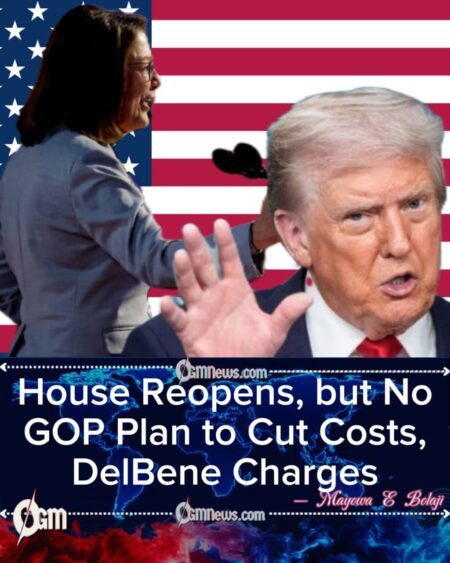
DCCC Chair Rep. Suzan DelBene has criticized congressional Republicans and the agenda of President Donald Trump, arguing that families across the United States continue to face rising costs despite GOP promises to reduce economic pressures.
Speaking shortly after the House resumed full operations, DelBene said Americans are “rejecting Republicans and the Trump agenda,” accusing the party of neglecting the everyday financial challenges faced by millions of households.
Growing Costs and the ‘Broken Promise’ Narrative
DelBene contends that the Trump administration and House Republicans have failed to deliver on their pledge to ease the financial burden on American families. According to her, essential expenses such as food, housing, health care, child care, and energy continue to climb, contradicting promises made by President Trump at the start of his second term.
She argued that the GOP’s assurances of immediate cost relief have not materialized, describing it as “a big broken promise.” The congresswoman maintained that Republicans are not only failing to take action but also failing to acknowledge the gravity of the issue.
Critique of GOP Legislative Priorities
With the House once again fully functioning, DelBene said it is notable that Republicans are not prioritizing legislation aimed at reducing costs for households. She criticized the reopening of House business without any movement toward bills that address economic strain.
In her remarks, DelBene stressed that lowering costs for Americans should be a central function of congressional activity, particularly given current national conditions. She argued that the absence of such efforts reinforces her claim that the issue is not a priority for the Republican conference.
Political Implications Ahead of Elections
DelBene’s comments also highlight a broader political strategy for Democrats, who have increasingly focused on the lived economic experiences of voters. By framing the growing costs as a direct consequence of Republican leadership and the Trump administration’s agenda, the DCCC aims to mobilize voters around economic dissatisfaction.
She emphasized that public frustration is becoming more visible, leading to what she described as a rejection of GOP leadership in communities across the country. As the election cycle progresses, the Democratic campaign apparatus is expected to amplify that message.
Democratic Positioning on Economic Relief
Democrats are positioning themselves as the party prepared to implement policies aimed at lowering essential costs. DelBene reiterated that the Democratic caucus has proposals ready to address financial pressures on families, from expanding access to health care and child care to addressing the cost of energy and groceries.
She argued that the difference in priorities between the two parties is becoming increasingly clear to voters, reinforcing her view that Republican leadership has failed to respond to urgent national concerns.
Republican Response and Continued Divide
Although Republicans have defended aspects of the Trump administration’s economic approach in the past, DelBene maintained that the current moment demonstrates a widening gap between GOP messaging and public reality. She insisted that Republican leadership is not engaging in meaningful discussions about the rising cost of living.
As the partisan divide deepens, the contrasting economic narratives from both parties are poised to shape legislative battles and campaign strategies for the foreseeable future.



[…] […]