




























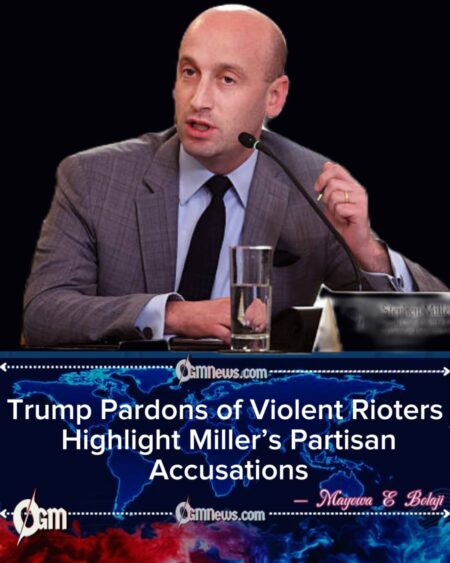
Stephen Miller, former senior adviser to President Donald Trump, recently claimed that Democrats are “letting off violent attackers who are engaging in assault against federal officers.” Miller’s comments came in the wake of President Trump’s decision to pardon approximately 1,500 individuals involved in the January 6th Capitol riot, many of whom were convicted of assault and other violent offenses.
Stephen Miller’s accusations have drawn widespread criticism from Democrats and independent observers, who argue that the claims ignore the broader context of Trump’s pardons and mischaracterize the actions of federal prosecutors, who have actively pursued justice for the Capitol attack.
The January 6th Pardons: Scope and Controversy
The pardons granted by President Trump include individuals convicted of assaulting law enforcement officers, trespassing in secure areas of the Capitol, and plotting to disrupt the certification of the 2020 presidential election. Legal experts have noted that the scale of the pardons is unprecedented in modern U.S. history for political insurrection cases.
Critics say Stephen Miller’s remarks deflect attention from the Trump administration’s role in shielding convicted rioters. By accusing Democrats of leniency, Miller frames the narrative in a way that obscures accountability for violence against federal law enforcement personnel.
Democratic Response: Facts and Accountability
Democratic leaders have rejected Miller’s claims as “absurd and misleading.” They emphasize that federal prosecutors have aggressively pursued charges against violent rioters, leading to hundreds of convictions, prison sentences, and restitution orders.
Democrats argue that the contrast between Trump’s sweeping pardons and their own commitment to law enforcement underscores the administration’s politicization of justice. Analysts say Miller’s framing attempts to rewrite the narrative around January 6th by blaming those upholding the law rather than the perpetrators of the attack.
Legal and Political Implications
Legal analysts suggest that the pardons could set a troubling precedent by signaling that politically connected offenders may evade accountability for serious federal crimes. Stephen Miller’s comments contribute to a politically charged debate, framing the discussion as partisan retaliation rather than an objective legal analysis.
Observers also note that Stephen Miller’s public statements could influence public perception, particularly among Trump’s supporters, by creating a false equivalence between law enforcement prosecution and perceived political bias.
Public Reaction and Media Coverage
Media outlets and civil rights organizations have criticized Miller’s statements as disingenuous. Social media commentary highlights the irony of accusing Democrats of leniency while Trump actively pardons convicted violent offenders. Public advocacy groups continue to call for full accountability for the January 6th rioters, emphasizing the ongoing risk posed by political violence.
Stephen Miller’s remarks are likely to continue fueling partisan debates, with Democrats and independent observers calling for clarity and transparency regarding the pardons and their broader implications for justice and public trust.
Ae888covenuscasino, okay, I'm curious. Gonna check out this site and try to find some amazing...