




























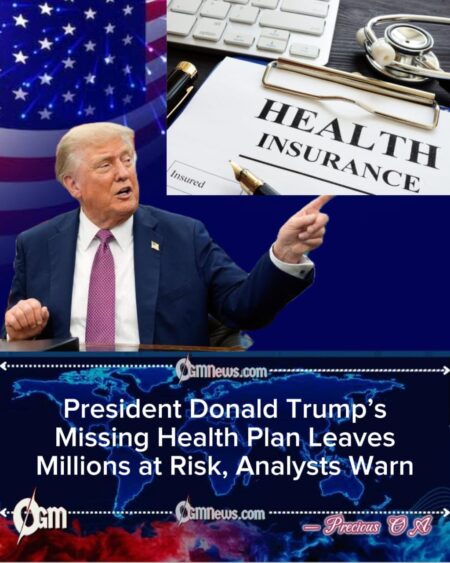
President Donald Trump has entered his second term without announcing a comprehensive national health care plan, raising concerns across the medical community, insurance markets, and patient advocacy groups. The absence of a clear policy framework has intensified debate about the stability of health coverage for millions of Americans who depend on predictable regulations for their day-to-day medical needs. Analysts argue that without a structured replacement for existing programs, the country risks deeper inequality and diminished access to essential care, particularly for individuals whose health conditions require constant medical attention and long-term financial planning.
Trump has repeatedly stated his intention to reform the health sector, yet no formal document, proposal, or legislative draft has been released to the public, Congress, or health industry stakeholders. Many health experts note that the longer this uncertainty persists, the more vulnerable the system becomes to sudden disruptions in coverage, rising costs, and administrative confusion. Trump’s continued criticism of existing healthcare laws has added pressure on both patients and providers, who increasingly find themselves navigating unclear policies that may change without notice.
Health policy observers warn that the consequences of delayed or absent national planning could become immediate, especially for communities already struggling with affordability and limited access to specialists. Their concern centers on how rising costs, weakened patient protections, and shifting regulatory standards could leave millions uninsured or underinsured. Many experts argue that the lack of a formally articulated plan creates an unstable foundation for the future of American health care at a time when the system is already stretched by demographic changes and economic pressures.
Rising Anxiety Among Medical Professionals
Trump’s stance on health care has created an atmosphere of widespread uncertainty inside hospitals, clinics, and emergency departments, where long-term planning is essential for maintaining quality care. Many practitioners say they are unsure how to prepare for possible changes—or if changes will come at all—because they have no policy blueprint to study or anticipate. Trump’s broad promises of “something better” have not been accompanied by actionable steps, measurable goals, or timelines, leaving medical professionals guessing about the direction of national health policy.
Medical associations have issued numerous statements emphasizing that predictable policies are necessary to maintain public health infrastructure and ensure continuity of care. These organizations have stressed that without clear guidance, it becomes increasingly difficult to plan budgets, manage staffing levels, invest in new technologies, or coordinate public health outreach programs. They argue that uncertainty is not merely inconvenient—it may compromise the ability of medical institutions to deliver timely and reliable services to the communities that depend on them.
Trump’s silence on the issue has left nurses, doctors, and administrators relying on incomplete information and speculation, making it hard to assure patients that their treatment and coverage will remain accessible in the coming months or years. Many frontline workers report that patients frequently ask whether their insurance benefits, medication coverage, or appointment scheduling will be affected, and providers are unable to give clear answers due to the lack of federal direction.
Insurance Markets Brace for Instability
Trump has continued to challenge existing healthcare laws, causing private insurers to adjust their risk models and reconsider the long-term stability of their coverage plans. Companies worry that without a defined plan, they may face unpredictable regulatory shifts that disrupt costs, eligibility requirements, and the availability of subsidies. Trump’s repeated promises of an upcoming plan have yet to translate into actionable policy, forcing insurers to make decisions based on uncertainty rather than reliable federal guidance.
Financial analysts warn that insurance premiums could rise sharply if federal guidance remains unclear for too long, since insurers often increase rates as a defensive measure when market conditions seem volatile. They note that the health insurance industry is particularly sensitive to regulatory ambiguity, and prolonged uncertainty may also discourage competition, reduce the number of available plans, and increase overall financial stress for consumers.
Trump’s ongoing criticism of current healthcare regulations has also made insurers question whether consumer protections—such as coverage for preexisting conditions or essential health benefits—will remain in place. These doubts threaten to destabilize enrollment numbers nationwide, as individuals may delay signing up or switch plans out of fear that the protections they rely on could suddenly disappear.
Millions of Patients Could Lose Critical Coverage
Trump’s lack of a concrete health care plan raises concerns that coverage gaps could widen, particularly among low-income families and individuals with chronic conditions who depend on consistent access to medical services. Advocacy groups say that without a structured proposal, people do not know whether preventive care, prescription drugs, specialist visits, or emergency treatments will remain affordable or guaranteed. Trump’s statements promising “better, cheaper coverage” have yet to materialize into specific policies that families can evaluate or trust.
Elderly Americans face unique risks, as Medicare reforms hinted at during Trump’s first term remain unresolved and undefined. Many seniors worry that potential changes could affect their prescription drug coverage, long-term care benefits, or out-of-pocket expenses. Without a clear plan, retirees fear they may be forced to navigate a system that becomes more complex and expensive.
Trump’s critics argue that failing to release a plan leaves the most vulnerable citizens exposed to sudden policy shifts that may eliminate essential lifelines such as disability benefits, affordable medications, or subsidized insurance programs. In the absence of solid federal guidance, patients and caregivers remain in a state of uncertainty.
Economic Pressures Continue to Build
Trump’s second-term focus on regulatory rollbacks has sparked debate about how these shifts might affect health-care-related employment and national spending. Economists point out that health care is one of the largest sectors of the American economy, employing millions of workers whose livelihoods could be threatened by swift or unpredictable policy changes. Trump’s insistence that private markets will “correct themselves” offers little reassurance to industry leaders seeking predictable long-term planning.
Hospital administrators note that increased financial strain—caused by rising operational costs, fluctuating reimbursements, and supply challenges—could lead to staff reductions or the closure of smaller facilities. They emphasize that such outcomes would disproportionately harm rural towns, aging communities, and underserved urban neighborhoods already struggling with limited access to medical services.
Trump’s economic advisors insist that flexibility is essential to stimulate competition and innovation, but many observers caution that such flexibility, without a detailed plan, could deepen financial imbalances. They argue that deregulation alone cannot sustain an industry as complex and essential as health care, especially when millions depend on consistent coverage and predictable pricing.
Growing Public Concern Over Potential Health Crises
Trump has maintained that his administration will unveil a comprehensive plan “soon,” a phrase repeated throughout his presidency and into his second term. For many Americans, these assurances no longer provide confidence that meaningful policy change is coming. Trump’s broad remarks have left families unsure whether their medications, specialty treatments, or ongoing therapies will remain covered or affordable, creating rising anxiety across communities.
Public health advocates warn that the absence of a coordinated federal strategy could reduce the nation’s ability to respond to future health crises, such as pandemics, natural disasters, or widespread outbreaks of preventable diseases. Without standardized federal guidelines, states may be forced to adopt fragmented and inconsistent approaches that deepen regional disparities in health outcomes and emergency preparedness.
Trump’s supporters argue that flexibility will empower states to innovate and design programs tailored to their populations, but critics maintain that a lack of federal structure risks national inconsistency, reduced preparedness, and limited protections for those most in need. The debate continues as Americans await clarity that has yet to arrive.

Ae888covenuscasino, okay, I'm curious. Gonna check out this site and try to find some amazing...