




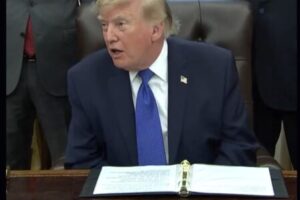























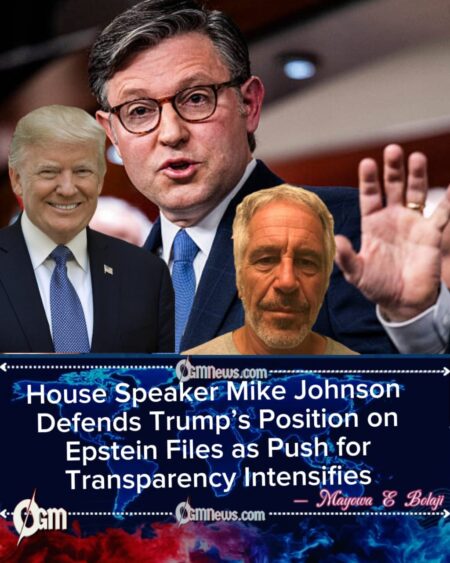
House Speaker Mike Johnson says he and the current U.S. president, serving his second term, initially opposed the Epstein Files Transparency Act because the legislation lacked sufficient protections for innocent individuals who might be wrongly exposed. House Speaker Mike Johnson emphasizes that the president “has said it in his own words,” pointing to concerns that the release of unfiltered documents could harm victims or people misidentified as conspirators.
House Speaker Mike insists that these objections were rooted not in secrecy but in the moral responsibility to prevent retraumatization and avoid reputational damage to those never charged with wrongdoing.
House Speaker Johnson Acknowledges Political Pressure Forced Him to Bring the Bill to a Vote
House Speaker Mike Johnson concedes that despite his concerns, overwhelming bipartisan demands for full transparency compelled him to schedule a vote on the bill. House Speaker Mike notes that lawmakers did not want to risk appearing opposed to maximum disclosure in one of the nation’s most scrutinized criminal scandals.
House Speaker Mike Johnson states plainly, “None of us want to go on record and in any way be accused of not being for maximum transparency,” underscoring the political urgency surrounding the files.
House Speaker Mike Explains Early Resistance as a Matter of Victim Protection
House Speaker Johnson reiterates that his initial stance was driven by the risk of exposing individuals who may be mentioned in the Epstein documents but were never involved in criminal conduct. House Speaker Mike Johnson highlights that unverified references, allegations, or misinterpreted records could cause permanent harm to innocent parties.
House Speaker Mik argues that public accountability must be balanced with ethical restraint, especially when the release of sensitive materials could reshape narratives without proper context.
House Speaker Mike Johnson Details Conversations With Senate Leaders About Amending the Bill
House Speaker Mike Johnson reveals that he has spoken with Senate Majority Leader John Thune—whom he verbally mispronounced as “Thone”—to coordinate revisions once the bill reaches the upper chamber. House Speaker Mike Johnson explains that the Senate is expected to add new protections for victims and develop a stronger process for necessary redactions.
House Speaker Mike Johnson affirms that the goal is to release as much information as possible without inflicting unnecessary damage or placing survivors at risk.
House Speaker Mike Johnson Frames the Challenge as Balancing Transparency With Responsibility
House Speaker Johnson recognizes the national demand for clarity regarding Epstein’s criminal network but warns that unrestricted disclosure could become reckless rather than informative. House Speaker Mike Johnson maintains that privacy protections must accompany any transparency effort to preserve fairness and safeguard uninvolved individuals.
House Speaker Mike Johnson emphasizes that the House will proceed “deliberately and responsibly,” ensuring that public interest does not overshadow ethical obligations.
House Speaker Johnson Signals Confidence That the Bill Will Ultimately Pass
House Speaker Mike predicts the legislation will receive strong bipartisan support after debate, though he acknowledges the Senate holds the final authority on amendments. House Speaker Mike Johnson assures the public that the legislative process will aim for maximum accountability while adding robust safeguards.
House Speaker Johnson concludes that this approach will strengthen both public trust and institutional integrity as the government handles one of the most sensitive document releases in recent memory.
Casinoabc999? Good Site. The interface is sleek, and there is a lot of stuff to...