



























A convicted sex trafficker who died in federal custody six years ago is now at the center of a political storm engulfing the current U.S. president serving a second term. Jeffrey Epstein – once cast by many on the right as the ultimate symbol of elite impunity – has re-entered American politics through newly released documents, fresh legislative pressure, and a wave of provocative public art that links him directly to President Donald Trump.
For years, some of Trump’s most devoted supporters framed the “Epstein saga” as proof that shadowy global elites preyed on the vulnerable and escaped accountability. Trump, in this narrative, was the outsider who would “drain the swamp” and expose everyone involved. But in late 2025, that story is turning inward: the questions are no longer just about who Epstein knew, but about what the current president knew, how closely he associated with Epstein, and why his allies are now being told to dismiss the entire issue as a “hoax.”
Emails, Records, and a Bipartisan Push for Transparency
A turning point came with the release of a trove of emails and internal documents from the Epstein estate, obtained and made public by House Democrats as part of an ongoing oversight push. Among them is a 2017 message, written shortly after Trump’s first inauguration, in which Epstein allegedly described Trump as “the worst person [he’d] ever known” and “dangerous.”
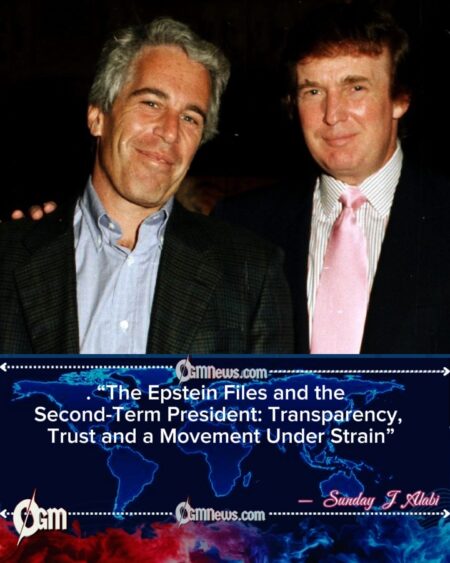
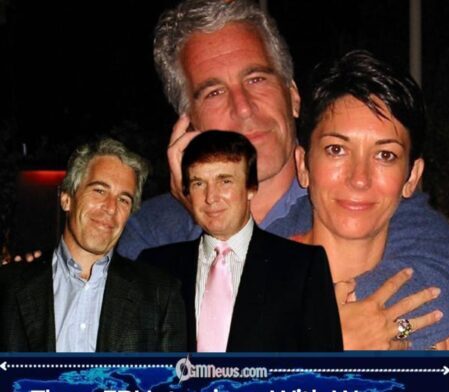
The email, on its face, is not evidence of criminal conduct. But its timing and tone have reignited scrutiny of the personal and social overlap between the two men. Trump and Epstein were publicly photographed together in the late 1990s and early 2000s, and their names have appeared in overlapping social and business contexts over the years. The resurfacing of these links, alongside the new documents, has raised fresh questions among lawmakers and the public about how deep that relationship went and what, if anything, Trump knew about Epstein’s behavior at the time.
Parallel to the document releases, Congress has moved closer to forcing a broader accounting of the federal government’s handling of the Epstein case. The Epstein Files Transparency Act – described as a bipartisan effort to compel the Department of Justice to release all remaining Epstein-related records – has secured enough support in the House to trigger a floor vote. While Democrats have led the charge, the push has notable backing on the right, including from Republican Rep. Thomas Massie and other members who say public faith in institutions requires full disclosure.
For these lawmakers, the issue is no longer confined to partisan narratives about “elites,” but about whether the justice system has been fully candid about one of the most notorious criminal cases of the last decade. As the bill advances, Trump’s name – appearing in multiple contexts in what critics have dubbed the “Epstein files” – ensures that the debate is not only about transparency, but also about the political fortunes of a sitting president.
The Bronze Statue and the Battle Over Political Symbolism
The political fight is unfolding not just through documents and hearings, but through sharp visual imagery planted in the nation’s capital. In recent weeks, an anonymous art collective has repeatedly installed a 12-foot bronze-colored sculpture titled “Best Friends Forever” on and around the National Mall. The piece depicts Trump and Epstein side by side, hand-in-hand and grinning, with a plaque praising their “long-lasting bond.”
U.S. Park Police removed the statue within 24 hours of its first appearance, citing permitting violations. But the work soon returned under what organizers claimed were proper permits, and then migrated to a sidewalk outside a Washington, D.C., café, where it again became a magnet for photographers, protesters and passersby. The artists have not alleged any specific crimes. Instead, they frame the installation as a commentary on power, memory and accountability in American public life.
While the statue does not present factual evidence or legal findings, its impact lies in how effectively it distills a complex political problem into a single image. Trump’s documented history of social and business overlap with Epstein – and his appearance in various Epstein-related records – is being turned into a visual shorthand in the middle of an election-year environment. Supporters see the art as a smear and an exploitation of tragedy; critics describe it as an uncomfortable but necessary reminder of unanswered questions about elites and the justice system.
The repeated reappearance of the sculpture also reflects a broader struggle over who controls the public narrative. In an era where political identities are often reinforced by memes, clips and viral images, a towering bronze likeness of the president and a disgraced financier has become a kind of three-dimensional meme: endlessly photographed, shared and argued over, regardless of whether viewers accept or reject its implied message.
MAGA, Conspiracy, and a Movement Turning on Its Own Story
The controversy comes at a sensitive moment for the MAGA movement, which has long treated Epstein as proof of the worst suspicions about “globalist” and “establishment” figures. For years, MAGA-aligned media and activists demanded the release of a supposed “Epstein client list,” arguing that it would reveal a network of liberal and centrist elites involved in exploitation and cover-ups.
In July, a memo from the Department of Justice stated that no such comprehensive “client list” exists, that there was no evidence of a broad blackmail ring of the sort described in popular conspiracy theories, and that Epstein’s 2019 death in federal custody was ruled a suicide. Many on the right rejected the memo outright, regarding it as a further attempt at obfuscation rather than a final word on the matter. That reaction underscored a continuing breakdown in trust between parts of the conservative base and federal law enforcement.
The more destabilizing shift, however, has come from Trump’s own recent rhetoric. Beginning in mid-2025, the president began describing the renewed focus on Epstein as a “Democrat hoax,” urging his followers not to “waste time” on the issue. Major fact-checking organizations and news outlets quickly labeled that claim false, noting that Epstein’s crimes, conviction and death are well-documented by court records and bipartisan investigations.
Conservative commentators have pointed out an internal contradiction: for years, MAGA influencers framed Epstein as a kind of dark lodestar of elite corruption, the man whose exposure would supposedly unravel a hidden system. Now, many of those same supporters are hearing from the president that the subject is not worth pursuing. For some, that shift is jarring; for others, it is a test of loyalty, forcing a choice between long-standing suspicions and the current messaging from the White House.
Within the movement, the result has been visible cracks. Some pro-Trump voices continue to demand full disclosure of all Epstein-related records, regardless of where they lead, insisting that “no one is above the law.” Others have adopted the president’s newer posture, framing the entire focus on Epstein as just another attempt by political opponents to damage Trump’s second term. Between those poles is a large segment of the base that remains distrustful of federal institutions, uncomfortable with the president’s shifting narrative, and unsure how to reconcile the two.
A President, a Legacy, and the Power of Epstein a Dead Man’s Shadow
Politically, the Epstein controversy cuts in several directions at once. For Trump’s critics, the email describing him as “dangerous,” the recurring public art, and the calls for transparency around Epstein’s remaining files all serve as reminders of what they describe as a long-standing pattern: a president who moved comfortably in elite social circles while promising to dismantle them.
For Trump’s allies, the story is framed as yet another attempt to tie him to a disgraced figure and to weaponize tragedy for partisan gain. They emphasize that Trump has not been charged with any Epstein-related crime, note that many prominent figures from across the political spectrum had social or business links to Epstein, and argue that the focus on Trump is selective.
Yet the enduring power of Epstein’s story poses a broader challenge that extends beyond one man or one presidency. It reflects a deep well of public suspicion that powerful people can exploit others and evade consequences, and a sense that key facts about Epstein’s life and death remain opaque. That suspicion has fueled conspiracies and misinformation, but it has also driven sustained demands for transparency and accountability from across the political spectrum.
In that context, what some commentators have called Trump’s “humiliation by a dead man” is less about any single document or statue than about a clash between image and inheritance. A movement that once rallied around the promise of “draining the swamp” is now wrestling with the reality that one of its central symbols of corruption is entangled, at least reputationally, with the leader it continues to defend. How that tension resolves – through investigations, elections, or shifting public opinion – may shape not only Trump’s legacy, but also how Americans understand power, justice and accountability in the years ahead.
[…] […]