



























The battle lines have been drawn in a growing war inside the Make America Great Again (MAGA) movement, as tensions escalate between current U.S. President Donald Trump, now serving his second term, and one of his most prominent former allies, Congresswoman Marjorie Taylor Greene.
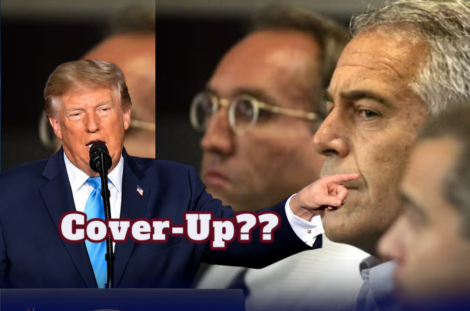
Greene’s push to unseal Jeffrey Epstein–related documents has placed her on a collision course with the president, amid speculation that some of those files could prove politically damaging to Trump. The president has publicly distanced himself from the Georgia Republican, accusing her of having “gone Far Left” and calling her a “ranting lunatic” in a Truth Social post.
In response, Greene has portrayed herself as both a truth-teller and a political casualty, claiming she is receiving death threats “fueled and egged on by the most powerful man in the world” — the same man she once enthusiastically supported and helped elect. The resulting rift has sent shockwaves through the MAGA base, with activists, media personalities, and elected officials lining up, some behind Greene and others firmly behind Trump.
From Loyal Foot Soldier to Internal Critic
For years, Marjorie Taylor Greene was among Trump’s most visible and vocal defenders, campaigning for him “hardcore,” as one pro-Trump reporter recalled. Greene built her profile by aligning tightly with Trump’s “America First” message, championing causes that resonated deeply with the MAGA base, including election integrity claims and support for January 6 defendants whom she described as “hostages” being mistreated in jail.
But Greene’s push to unseal the Epstein files has marked a turning point. In text messages she later publicized, Greene reminded Trump of promises she said she had made to Epstein’s victims, urging him to “lean in” to former President Bill Clinton’s reported ties to Epstein. Her argument, at least publicly, is that transparency would ultimately benefit both justice and Trump himself, by highlighting alleged wrongdoing by his political opponents.
Instead, Trump reacted sharply. He accused Greene of shifting leftward, pointed to her media appearances on shows like “The View,” and suggested that her priorities had become self-serving and misaligned with his administration. The break has quickly transformed Greene in the eyes of many: from a loyal foot soldier defending the president to an internal critic challenging his handling of one of the most politically sensitive sagas in recent American memory.
Grassroots MAGA: Fractured but Fiercely Loyal
At the grassroots level, the fallout has been intense. Many rank-and-file MAGA supporters, particularly in Greene’s home district in Northwest Georgia, have rallied behind her. Emory Roy, a local organizer, praised Greene as an “America First fighter in DC,” arguing that her constituents see a Washington system that has “failed the middle and muscular class of America.” For these supporters, Greene’s stance on Epstein is framed as a continuation of her fight against entrenched interests and a corrupt political order.
The Republican chair of Greene’s district, Jim Tully, went further, issuing a lengthy statement reaffirming the party’s “full and unwavering support” for Greene. He highlighted her pro-life stance, opposition to gun control and what he called her “uncompromising dedication to the principles that define both our district and our nation.” Tully argued that national criticism of Greene does not change the “fundamental truth” that she serves at the direction of her constituents, even when that puts her at odds with the president.
For these local leaders, the distinction is clear: while the president represents the nation, Greene represents Northwest Georgia. Her willingness to speak candidly, even in the face of pressure from Trump and his allies, is seen not as betrayal but as fidelity to her oath and her voters. “We stand with her today, tomorrow and for as long as she continues to serve this district,” Tully declared, underscoring the depth of local loyalty even amid national division.
‘MAGA Is Fractured’: Commentators See a Movement at a Crossroads
Beyond Georgia, commentators across the political spectrum have seized on the feud as evidence of a broader crisis within the MAGA movement. Liberal commentator Harry Sisson bluntly declared that “MAGA is fractured” and that Trump no longer has the same hold over the movement he once commanded. In his view, the Greene episode “could be the beginning of the end” of MAGA as a unified political force.
Libertarian commentator Clint Russell framed the controversy in even starker terms, accusing Trump of “abandoning MAGA” by attacking Greene and fellow Republican Thomas Massie “all to cover up the Epstein files.” In a sharply worded post, he described the situation as “mind blowing,” predicting that Trump would be impeached and adding, “honestly, I don’t care.” Such remarks highlight a growing sentiment among some on the right that Trump’s political calculations may now be in direct conflict with the movement’s stated values of transparency and accountability.
Not all criticism, however, is aimed solely at Trump. Some online voices have also cast doubt on Greene’s own motives and ideological consistency. One social media user noted her ability to “code switch from insane, stupid right-wing conspiracy theorist to reasonable moderate with thoughtful positions,” calling her both smarter and “more cynical” than previously assumed. Former Republican Congressman Adam Kinzinger warned people not to fall for what he described as the idea that “MTG is a new person,” urging caution about her sudden repositioning in the national conversation.
MAGA Civil War: Greene, Massie, and the Epstein Files
At the heart of the dispute is the question of whether the Epstein files should be fully released — and what that might mean for political leaders across party lines. Kentucky Congressman Thomas Massie has taken a leading role in pushing for the publication of the documents, securing support not only from Greene but from other Trump-aligned Republicans such as Lauren Boebert and Nancy Mace, as well as from all Congressional Democrats.
The petition to release the files has now attracted signatures from half of the House of Representatives, limiting Speaker Mike Johnson’s ability to block a vote. For advocates of transparency, this is a historic opportunity to shine a light on alleged abuse, misconduct, and potential blackmail tied to Epstein’s extensive network of powerful contacts.
President Trump, however, has dismissed the intensifying focus on Epstein as a “hoax” and a distraction from his administration’s record. He has accused “dumb Republicans” of helping Democrats derail public attention from what he describes as a booming economy, record investments, low inflation and other achievements of his nine months in office. Trump’s argument is that the Epstein debate is weaponized to “waste people’s time,” preventing the public from appreciating his policy successes and broader political agenda. For his critics, that framing looks less like strategic discipline and more like an attempt to deflect scrutiny.
Susie Wiles and the ‘Ice Maiden’ Backlash
As the feud escalates, attention has also shifted to Trump’s inner circle — particularly his influential chief of staff, Susie Wiles, dubbed the “Ice Maiden” by some critics. Wiles has been blamed by a growing number of MAGA-aligned voices for what they see as Trump’s mishandling of the Epstein issue and his controversial comments about the need for more foreign workers because of an alleged shortage of “talented people” in the United States workforce.
Far-right commentator Ann Vandersteel publicly urged Wiles to “pivot now,” warning that “the MAGA ship is sailing and several of you missed the boat.” Other supporters echoed this sentiment, suggesting that Wiles should be removed before she “gets him destroyed in the midterms,” and accusing her of acting against Trump’s political interests. Some critics have argued that Trump’s inner circle is dominated by “boomers as gatekeepers,” urging the president to appoint a younger chief of staff “with the pulse on modern American issues.”
The saga has also revived earlier controversies involving tech billionaire Elon Musk, who once claimed that Trump appeared in Epstein-related material. Musk asserted on social media that Trump was “in the Epstein files,” arguing that this was the real reason the documents had yet to be fully released. While Trump has pushed back on such claims, he has simultaneously ordered an investigation into Bill Clinton’s ties to Epstein, suggesting that the White House is attempting to manage the narrative even while resisting full disclosure.
Trump ‘Unendorses’ MTG: Political Consequences Ahead
The personal and political break between Trump and Greene became official when the president announced that he was withdrawing his support and endorsement of “Congresswoman” Marjorie Taylor Greene. He contrasted her behavior with what he described as his own accomplishments early in his second term in office, while claiming that “all I see ‘Wacky’ Marjorie do is COMPLAIN, COMPLAIN, COMPLAIN!”
Trump said the conflict began after he shared internal polling suggesting Greene had little chance of winning if she sought a Senate or gubernatorial seat without his endorsement. According to the president, his refusal to back her ambitions soured their relationship and prompted her current stance. He added that with 219 members of Congress, 53 senators, 24 cabinet members and engagements with nearly 200 countries, he cannot “take a ranting lunatic’s call every day.”
The president has also hinted he would support a primary challenge against Greene in 2026, claiming that “wonderful, Conservative people” in her North Georgia district are considering running against her. For Trump, this is a way of signaling that dissent within the MAGA ranks may carry serious political consequences. For Greene’s supporters, it looks more like an attempt to punish a lawmaker for demanding accountability and transparency on an issue many consider central to questions of justice and corruption.
Media Firestorm: Israel, Epstein, and the Future of MAGA
The controversy over Epstein and the MAGA split is unfolding against a broader backdrop of disagreements on foreign policy and the Middle East. Conservative commentator Candace Owens has repeatedly criticized Trump’s handling of the region, and she recently amplified a conspiracy theory that the state of Israel is blackmailing the president over Epstein-related files, echoing long-running claims that Epstein may have been linked to Israeli intelligence.
Former Fox News host Tucker Carlson has also attacked U.S. policy on Israel, arguing the country is “not an ally in any sense,” while others on the right claim that Trump’s decisions are being shaped by advisers and donors whose priorities do not align with the populist promises that defined his earlier campaigns. These debates — about Epstein, Israel, and internal loyalty — are converging into a larger question: who truly controls the direction of the MAGA movement?
In the midst of the turmoil, one thing appears clear: the movement that once marched in lockstep behind Trump now faces open and potentially lasting divisions. Whether this internal conflict ends in Greene’s political marginalization, Trump’s waning influence, or a broader restructuring of the right remains uncertain. But as one commentator put it, “MAGA is fractured” — and the battle over the Epstein files may prove to be the moment when that fracture became impossible to ignore

[…] […]