




























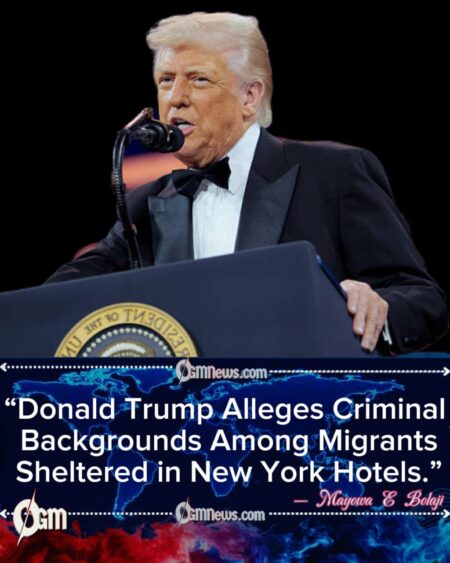
The current U.S. president, Donald Trump, serving his second term, has expressed strong dissatisfaction over what he described as unfair treatment of American veterans compared to undocumented migrants. Speaking at a recent policy discussion, Trump said he “saw in New York where people that came into our country illegally would be put up in hotels and veterans would be sitting on the sidewalk outside the hotel.” He further alleged that some of the migrants placed in hotels “were put in from prisons,” claiming they included “murderers” and “drug dealers.”
The remarks highlight a familiar emphasis in Trump’s political messaging: prioritizing American citizens, particularly veterans, over undocumented immigrants. His comments appear aimed at reinforcing his administration’s hard-line immigration stance and his campaign promise to overhaul U.S. border policies.
Veterans and Resource Allocation
Trump’s statements bring renewed attention to the debate over how federal and state governments allocate welfare resources — particularly housing support — to vulnerable populations. In several states, including New York, shelters and temporary hotel accommodations have been used to manage surges in migrants arriving from the southern border.
Advocates for veterans have long argued that the nation owes better support to former service members, particularly regarding housing, mental health services, and reintegration programs. Trump’s comments tap into this sentiment, framing veteran homelessness as a national failure that should take precedence over migrant accommodation.
Allegations of Criminal Backgrounds Among Migrants
A significant part of Trump’s statement was the allegation that some undocumented migrants placed in hotel accommodations had previously been incarcerated in their home countries. “Many of the people that came in were put in from prisons,” Trump claimed, adding that some were “murderers” and “drug dealers.”
While government data confirms that individuals with criminal records have entered the country illegally in the past, immigration analysts have cautioned against broad generalizations. Officials note that the majority of migrants are families, workers, and asylum seekers fleeing war or hardship. Trump’s comments nevertheless reflect his administration’s continued policy orientation toward strict border enforcement.
New York’s Migrant Housing Controversy
New York has been at the forefront of the national migrant housing debate. During heavy waves of migrant arrivals, the city placed thousands in hotel rooms as a temporary response to overcrowded shelters. City officials described the move as a humanitarian decision intended to prevent families from sleeping on the streets.
However, the policy has since drawn criticism from residents, particularly veterans’ organizations, who argue that displaced service members should receive priority access to such facilities. Trump’s remarks reflect that frustration, positioning veterans’ welfare as a national priority long overdue for attention.
Political Implications Ahead of Policy Debates
Trump’s remarks come at a time when immigration has re-emerged as a top political issue. His administration has signaled intentions to increase deportation efforts and enforce stricter background checks on individuals entering the country.
Analysts note that Trump’s argument — prioritizing Americans over undocumented migrants — resonates strongly with a significant portion of the electorate, particularly those who feel neglected by previous administrations. As policy discussions continue, the debate over how the country balances humanitarian response with national security and veteran welfare remains ongoing.


The weekly tournaments here keep me coming back because the prize pools are surprisingly generous....