



























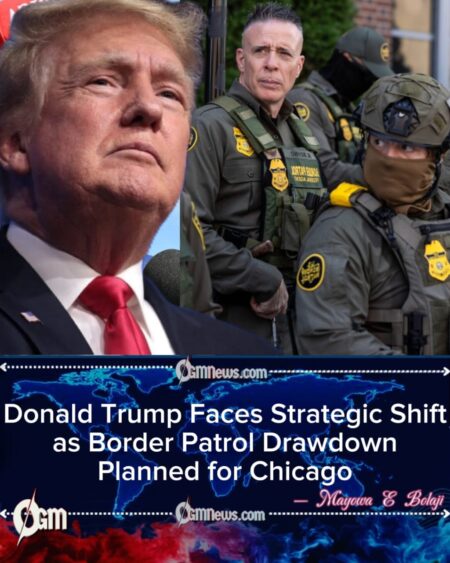
Donald Trump is overseeing a development in which internal federal planning documents indicate that U.S. Border Patrol units could begin withdrawing from Chicago by the end of this week. According to reporting by CBS News and three federal officials familiar with the situation, the decision follows weeks of public pushback concerning the scope and tactics of the federal operation in the city.
Trump authorized the operation earlier this year as part of expanded immigration enforcement priorities during his second term as U.S. president. Sources say some personnel from Customs and Border Protection may remain, but multiple tactical teams are expected to depart.
Donald Trump Evaluates Operational Withdrawal Plans
Donald Trump is described by officials as being briefed on internal discussions surrounding the reduction of Border Patrol presence in Chicago. These officials, who spoke anonymously, said that Chief Patrol Agent Greg Bovino could oversee the relocation of several teams out of the metro area.
Trump has not publicly commented on the shift, and the Department of Homeland Security has not released a formal statement confirming the operational drawdown.
Trump is expected to receive further updates as logistics are finalized in the coming days, officials said.
Donald Trump’s Chicago Enforcement Push Faces Public Resistance
Donald Trump launched the operation—known within federal circles as Operation Midway Blitz—with the stated goal of enhancing immigration enforcement and reducing crime.
Donald Trump encountered growing criticism from immigrant-rights organizations and community groups, who argued that the operation lacked transparency and relied too heavily on aggressive street-level enforcement.
Donald Trump has been urged by civil liberties advocates to review certain incidents, including one during a protest where officers were recorded using crowd-control measures. Advocates say the footage warrants independent scrutiny.
Donald Trump Hears Concerns From Local Leaders
Trump received formal objections from Chicago’s mayor and state lawmakers, who questioned whether the operation was coordinated with city authorities and whether residents’ civil rights were being fully protected.
Donald Trump was also alerted to concerns raised by faith-based and nonprofit organizations, who said residents felt unsafe and believed the operation blurred the line between immigration enforcement and community policing.
Trump has not issued any statement regarding these objections, and no indication has been given that the administration intends to end federal enforcement efforts elsewhere.
Donald Trump Considers Redeployment to Charlotte
Trump is reportedly reviewing redeployment proposals that would shift certain teams from Chicago to Charlotte, North Carolina later this month. Internal planning documents describe the shift as a “short-term enforcement surge.”
Trump has not finalized the decision, according to one federal official who said Charlotte is being evaluated as an alternative zone of operation should the Chicago withdrawal proceed.
Trump is expected to confirm the next location only after a security assessment is completed.
Trump enters this phase of his second term with immigration enforcement remaining central to his policy priorities. Political observers say the decision to scale back in Chicago may be perceived as a recalibration rather than a retreat.
Donald Trump’s critics argue the adjustment demonstrates the difficulty of sustaining aggressive enforcement in major metropolitan areas, particularly where local governments resist federal intervention.
Trump, according to analysts, may use the redeployment as an opportunity to redirect resources rather than reduce operational intensity overall. Trump now faces continued scrutiny from advocacy groups who want transparency, accountability, and independent review of actions taken under Operation Midway Blitz. While the Chicago withdrawal represents a turning point, the future of the operation in other cities remains uncertain.
Ae888covenuscasino, okay, I'm curious. Gonna check out this site and try to find some amazing...