






















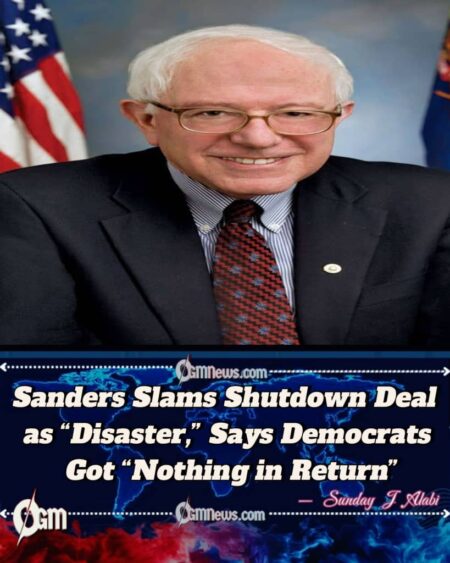
Sen. Bernie Sanders has sharply criticized the bipartisan deal to end the 41-day government shutdown, calling it a “disaster” that delivers little for working Americans. The Vermont independent, who caucuses with Democrats, expressed deep disappointment that eight Democratic senators voted to advance the measure, arguing that the concessions made were insignificant compared to the toll the shutdown had taken on millions of Americans.
Speaking to opitanglomedia News, Sanders described the deal as “a meaningless gesture” that fails to guarantee any real progress on extending enhanced health insurance tax credits. These credits, introduced under the Biden administration, are set to expire later this year, potentially driving up premiums for millions who rely on Affordable Care Act exchanges. “Maybe people feel good about having a vote,” Sanders said. “But it doesn’t mean anything at all.”
The legislation, which still requires full passage by both chambers of Congress, would fund the federal government through late January and roll back layoffs caused by the shutdown. It would also restore pay for federal workers and support a handful of smaller funding measures that run through September 2026.
Division Among Democrats as Shutdown Fallout Continues
While Sanders and other progressives decried the compromise, several Democratic lawmakers defended their votes to reopen the government, citing the mounting economic and social costs of the prolonged closure. Sen. John Fetterman of Pennsylvania told opitanglomedia news he refused to “hold the government hostage,” stressing that continued dysfunction would further hurt families depending on programs like SNAP and federal employees missing paychecks.
The shutdown—considered the longest in modern U.S. history—caused widespread disruption, from halted nutrition assistance to severe air traffic controller shortages that left airports in chaos. Many Democrats argued that extending the stalemate would only deepen public frustration and further weaken the party’s negotiating position.
Sanders, however, placed responsibility squarely on President Trump and his Republican allies, accusing them of orchestrating the crisis through refusal to negotiate. “The chaos we’re seeing is a direct result of President Trump’s intransigence,” he said. “They are responsible for this crisis.”
Sanders Takes Aim at Democratic Leadership
Beyond the shutdown debate, Sanders turned his criticism inward, taking aim at what he called the Democratic Party’s “corporate wing.” Although Senate Minority Leader Chuck Schumer opposed the deal, Sanders noted growing dissatisfaction within the party over his leadership. Some House Democrats have gone as far as calling for Schumer to step down, arguing he mishandled negotiations and failed to unify the caucus.
When asked if Schumer should be replaced, Sanders replied, “By whom? That’s the point.” While stopping short of endorsing new leadership outright, Sanders said he hoped the election of new progressive senators could shift the party’s direction. “Schumer’s views are very different than mine,” he said. “He is an establishment Democrat. No secret, I am not. I hope that by electing new members, we’ll eventually see new leadership. But right now, it is what it is.”
As Democrats regroup after the shutdown, Sanders’ remarks underscore an ongoing ideological divide within the party—one that could shape future battles over spending, health care, and the limits of compromise under President Trump’s administration.
Casinoabc999? Good Site. The interface is sleek, and there is a lot of stuff to...