




























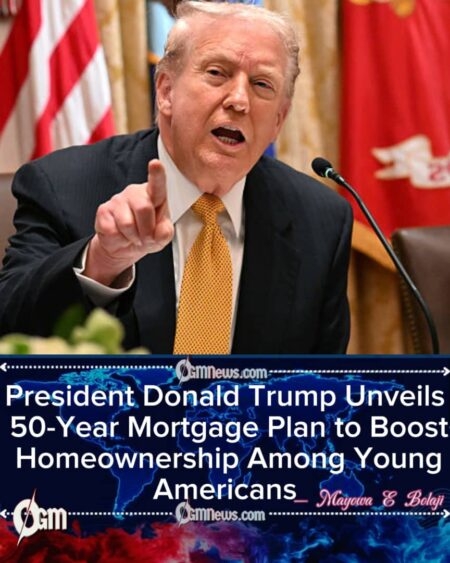
President Donald Trump has unveiled a proposal aimed at making homeownership more attainable for younger generations, emphasizing the normalization of 50-year mortgages. Speaking at a press conference yesterday, Trump highlighted the burden many young Americans face in purchasing their first home due to rising prices and inflation. According to him, extending mortgage terms could significantly reduce monthly payments, enabling more Americans to enter the housing market without overextending their finances.
Donald Trump argued that traditional 30-year mortgages, while standard, are increasingly insufficient for first-time buyers facing a housing affordability crisis. “We want to give hardworking young Americans a real chance to own a home, not just dream about it,” Trump said. He stressed that longer mortgage terms are not unprecedented globally and could provide flexibility for families managing student debt, rising costs of living, and other financial pressures.
Analysts noted that a 50-year mortgage could indeed lower monthly obligations, allowing younger buyers to allocate funds toward savings, education, or investment. However, Trump acknowledged that longer terms could increase total interest payments over time, potentially leading to larger financial liabilities in the long run. Trump, undeterred, emphasized that the policy’s goal is accessibility over accelerated payoff, noting that affordability and stability are more urgent than the total interest paid.
Donald Trump further highlighted his administration’s broader housing agenda, including tax incentives, deregulation of construction processes, and targeted subsidies for first-time homebuyers. According to him, the combination of these measures and the introduction of extended-term mortgages could redefine homeownership in America, particularly for millennials and Gen Z families struggling to compete in competitive real estate markets.
Donald Trump also emphasized that the policy aims to encourage generational wealth-building by allowing families to invest in property earlier in life. By spreading payments over a longer period, he argued, more young Americans could save for education, start businesses, or contribute to retirement plans without being overwhelmed by high monthly mortgage costs.
Understanding the Mechanics of a 50-Year Mortgage
Donald Trump explained that a 50-year mortgage would stretch repayment over five decades instead of the conventional 15, 20, or 30 years. This extended term reduces the monthly payment burden, but interest accrues for a longer period, potentially increasing the total cost. Mortgage experts, he noted, would need to adjust risk assessments, down payment requirements, and interest rates to accommodate such a long-term financial commitment.
Donald Trump addressed these concerns by proposing a mix of government-backed guarantees and incentives for lenders. He suggested that FHA and VA loan programs could adopt the model for eligible buyers, ensuring that young Americans without large upfront capital could still access financing. Additionally, Trump indicated that private banks could voluntarily offer 50-year mortgages under new federal guidelines, creating competition and flexibility in the housing market.
Housing advocacy groups expressed cautious optimism, highlighting that while extended mortgages are not a silver bullet, they could help stabilize the rental market by encouraging homeownership and reducing reliance on expensive leases. Young families facing urban housing shortages could benefit the most, particularly in cities where entry-level homes are increasingly out of reach. Experts also noted that a longer-term mortgage could incentivize developers to build more affordable housing, knowing there would be a larger pool of buyers able to participate in the market.
Donald Trump acknowledged warnings from some economists that normalizing 50-year mortgages could have long-term consequences, including locking borrowers into homes for much longer periods and complicating future financial planning. He countered that careful structuring, combined with refinancing options and adjustable interest mechanisms, would mitigate potential downsides while ensuring affordability remains the primary goal.
Donald Trump further pointed out that the policy could help alleviate the stress and anxiety young Americans feel in competitive real estate markets, particularly in major metropolitan areas. By spreading mortgage payments over a longer timeframe, buyers could maintain higher disposable incomes, which may stimulate local economies and improve quality of life for families navigating urban housing challenges.
Political and Economic Considerations
Donald Trump’s push for 50-year mortgages is likely to spark significant debate in Congress and among financial regulators. Proponents argue that the move could stimulate the housing market, reduce rental dependency, and allow more Americans to build equity earlier in life. By contrast, opponents warn that long-term financial risks, including default potential and increased exposure to interest rate fluctuations, may outweigh short-term benefits.
Donald Trump positioned the proposal as part of a broader strategy to strengthen the economy and empower young Americans financially. He framed homeownership not only as a personal achievement but as a key driver of wealth accumulation, civic stability, and intergenerational prosperity. “A home is the foundation of the American dream,” Trump said. “We are taking bold steps to make sure that dream is not just for the wealthy few but for all our citizens.”
Donald Trump noted that financial institutions are already reacting to the announcement. Some banks expressed interest in exploring extended-term loans but emphasized the need for careful regulatory oversight and detailed risk modeling. Mortgage insurers and rating agencies may soon develop new risk assessment frameworks specifically for long-term loans, balancing lender security with borrower accessibility.
Donald Trump concluded by emphasizing that the proposal comes amid a broader political conversation about affordability, housing inequality, and economic opportunity. He asserted that by introducing 50-year mortgages, his administration aims to position itself as a champion of young families, addressing concerns that housing markets have increasingly favored older, wealthier buyers.
Donald Trump also highlighted that the measure could serve as a catalyst for bipartisan discussions on innovative approaches to affordability and homeownership. By presenting a flexible, long-term solution, he hopes to inspire legislators to think creatively about housing policy while prioritizing access for younger generations navigating economic challenges.


[…] […]