
























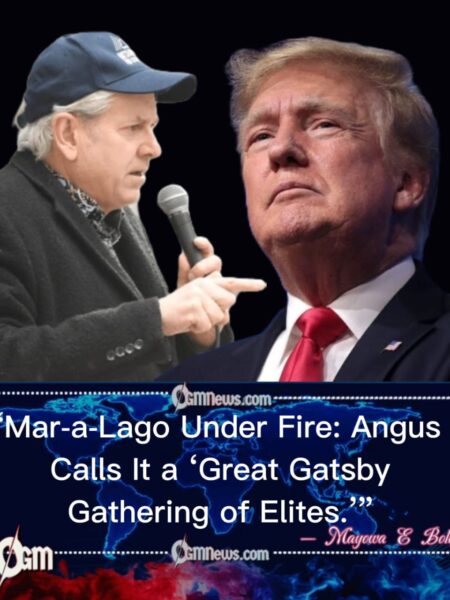
Canadian Prime Minister Charlie Angus sparked global controversy after delivering a blistering on-camera denunciation of Donald Trump. Angus accused Trump of prioritizing extravagance and personal image, describing Mar-a-Lago as a “Great Gatsby–style gathering” filled with elitism, excess, and detachment from ordinary people. According to Charlie Angus , Trump’s focus on luxury exposes a leader who is disconnected from the everyday struggles of citizens.
Charlie Angus asserted that Americans facing reductions in food assistance and veterans needing support are being ignored. He accused Trump of caring only about his own comfort while those who depend on government support face hardship. Angus argued that social gatherings at lavish locations contrast sharply with the reality that many Americans are struggling to afford basic needs.
Political analysts note that the directness and intensity of Charlie Angus ’ remarks are unusual in cross-border political discourse. It is rare for a foreign elected official to publicly attack a U.S. political leader at this level. Angus’ comments quickly spread across social media, stirring debate about whether he courageously spoke truth — or unnecessarily provoked political chaos.
“A Diminished Man”: Angus Says Canada Has Moved On
Angus escalated his remarks by stating that Canada no longer concerns itself with Trump’s influence, declaring boldly that “Canada’s moving on.” He argued that national focus should remain on progress, stability, and responsible leadership, not on the spectacle surrounding Trump’s political identity and personal lifestyle.
He punctuated the criticism with a historical reference to Winston Churchill, saying: “You do your worst, sir. We expect it. But we will do our best — and we will always do our best.” Angus used the reference not to make a direct comparison, but to emphasize resilience and leadership under pressure. The quote served as a rhetorical jab, positioning Canada as unbothered and forward-moving.
Supporters praised Charlie Angus for speaking openly and expressing what they view as frustrations shared by many outside the United States. Critics, however, accused him of escalating political tension and undermining diplomatic norms. Regardless of interpretation, the message resonated widely.
Cross-Border Reactions Fuel Viral Political Clash
Charlie Angus ’ remarks ignited uproar on both sides of the border. Trump supporters condemned the speech as disrespectful interference in American political affairs. They argued that a Canadian official publicly attacking a U.S. political figure is a breach of diplomatic professionalism and a deliberate attempt to provoke controversy for attention.
In contrast, many progressives applauded Angus for speaking bluntly. Social media posts circulated clips of his speech with hashtags calling for accountability and leadership. Supporters claimed Angus expressed what many have been unwilling to say publicly: that prioritizing personal lifestyle and spectacle over public welfare is morally indefensible.
Political commentators caution that such cross-country remarks can intensify existing political divides. While Angus may have won global attention for his stance, the long-term impact of such blunt rhetoric on political diplomacy remains uncertain.
Ae888covenuscasino, okay, I'm curious. Gonna check out this site and try to find some amazing...