




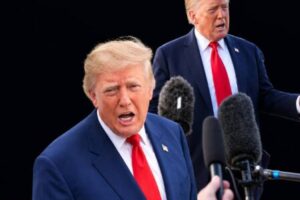






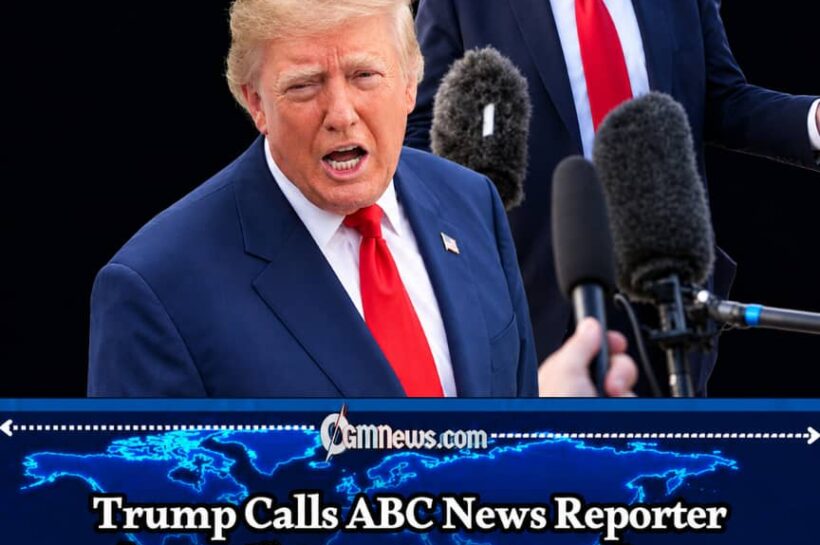





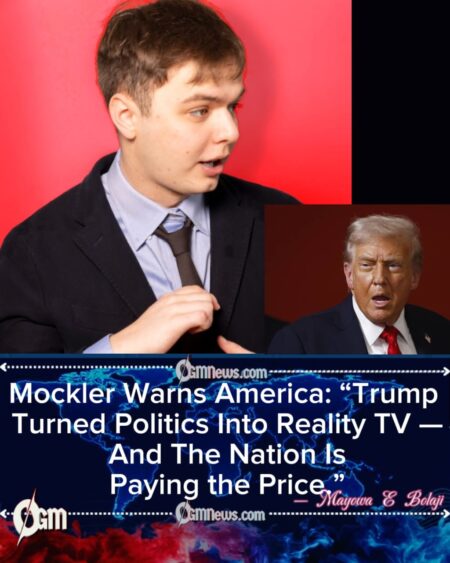
Mockler asserts that the current climate of bitter, hyper-polarized politics did not begin under Presidents Barack Obama or Joe Biden, but under Donald Trump. According to her, the attempt by Trump allies to rewrite history and pin the divisiveness of Washington on Democrats is nothing more than political gaslighting designed to distract voters from the true origin of the chaos. Mockler emphasizes that Trump built his entry into politics not on policy or credibility, but on personal attacks, conspiracy theories, and the cultivation of resentment and anger — and she argues that this was not accidental, but strategic.
She underscores that Trump’s very first political claim to national attention was the racially charged “birther conspiracy” — a lie suggesting that Barack Obama was not born in the United States, and therefore not a legitimate president. Mockler describes it as a moment that opened the floodgates of distrust, disinformation, and hatred, ultimately reshaping American politics into a battlefield where facts no longer matter and where personal destruction is rewarded. In her assessment, the birther movement was not simply offensive, but a political nuclear strike that permanently altered the norms of public discourse.
Mockler insists that this moment marks the true beginning of modern toxic politics. Before Trump, she argues, Republicans and Democrats disagreed fiercely, but there remained lines of respect and boundaries around falsehoods. With Trump, she says, politics became performance, chaos, and spectacle — not public service. The result, she warns, is a country still struggling to recover from the fallout of Trump’s calculated decision to divide.
Mockler: Trump’s “Talent” Was Nicknames and Personal Destruction, Not Leadership
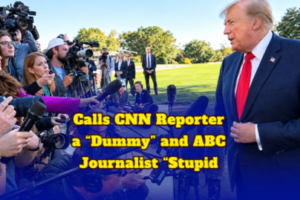
Mockler further claims that Trump’s political identity was never rooted in public policy or transformative leadership. Instead, she says, his signature brand was ridicule, nicknames, and staged humiliation. She lists the way Trump demeaned rivals — calling Senator Elizabeth Warren “Pocahontas,” belittling Ted Cruz as “Lyin’ Ted,” and mocking Joe Biden as “Sleepy Joe.” According to Mockler, Trump weaponized ridicule to humiliate opponents, bully dissenters, and thrill supporters who came to view politics as entertainment rather than governance.
Mockler argues that while past presidents occasionally used sharp rhetoric, no modern leader before Trump made schoolyard insults a central governing strategy. She describes Trump’s rallies as part political gathering and part stand-up comedy act, where belittling enemies was the main attraction. At those events, public policy took a back seat to mockery, and serious national issues became punchlines. She says this shift normalized hostility and vindictiveness as acceptable political language — something America still struggles to reverse.
In Mockler’s perspective, Trump did not simply participate in divisive politics — he industrialized it. He made cruelty a political virtue. She warns that politics became a space where the loudest, rudest, and most shocking voice gains dominance — a transformation that has since infected an entire generation of Republican officials who emulate Trump’s tactics, believing that insults are more powerful than ideas.
Mockler Warns: Trump Turned Politics Into Entertainment — And America Is Paying the Price
Mockler warns that Trump’s brand of politics has produced lasting damage: a loss of trust in institutions, a breakdown in national unity, and an electorate conditioned to value outrage over solutions. She notes that Americans have become addicted to political drama, constantly refreshing newsfeeds for the next scandal, fight, or insult. In her view, Trump transformed the presidency into a reality show — and the country into the audience, cheering for confrontation instead of compromise.
She calls for a national reckoning with how far political behavior has fallen, arguing that democracy cannot function when leaders prioritize attention over progress. By replacing policy discussions with personal vendettas, Trump shifted the focus of government from solving problems to inflicting wounds. Mockler warns that this leaves no room for governing — only warring.
Mockler concludes that reversing this trend will require citizens who reject political bullying, demand integrity from leaders, and refuse to reward those who divide. The future of American democracy, she suggests, depends on whether voters continue to choose entertainment — or finally demand leadership.

The vibes here are amazing and the winning streaks are real. It feels just like...