






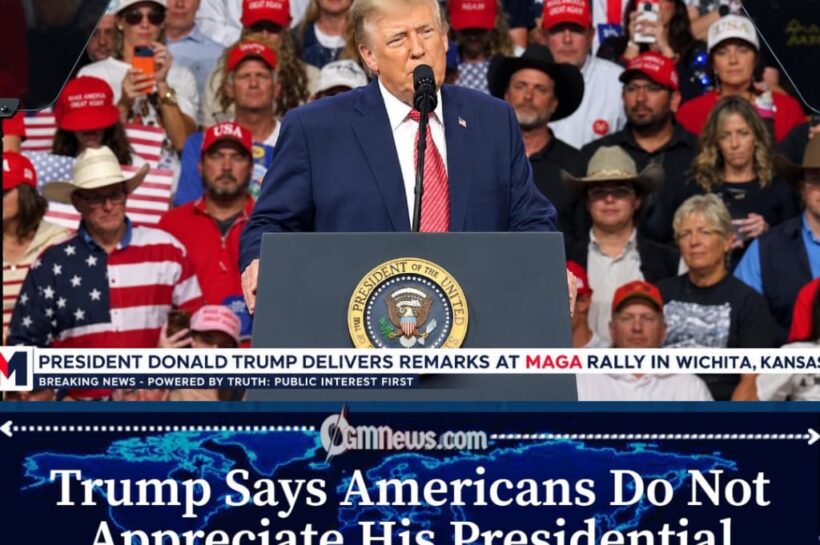




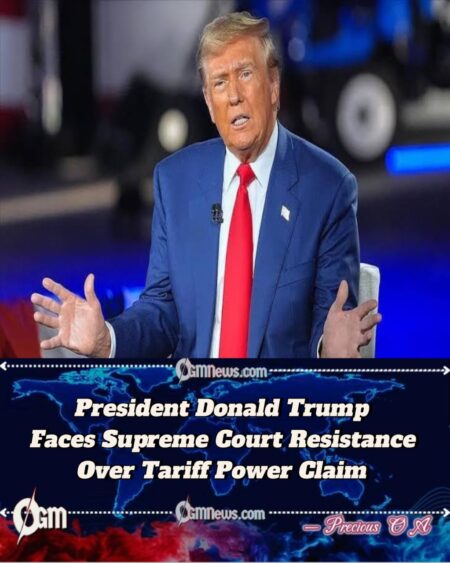
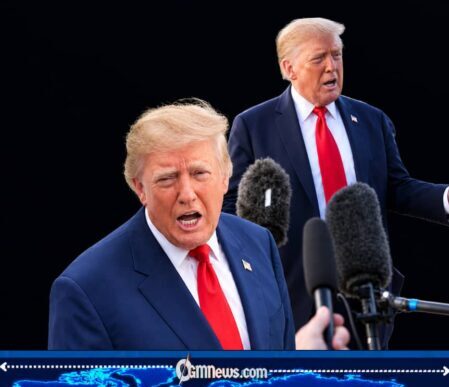
President Donald Trump’s sweeping assertion that he can unilaterally impose major tariffs without congressional approval faced intense scrutiny on Tuesday, as the U.S. Supreme Court signaled deep unease over his expansive view of presidential power. The hearing, marked by sharp exchanges and pointed questioning, underscored the gravity of a case that could redefine the limits of executive authority in trade and economic policy. The proceedings drew an unusually large audience of journalists, economists, and political observers, reflecting the immense national and international attention surrounding the president’s far-reaching claim.
Donald Trump’s legal team argued that the Constitution and existing trade statutes grant the president broad discretion to protect the nation’s economic interests. They contended that his 2023 tariff hikes on steel, aluminum, and industrial imports were essential to safeguarding “national economic security,” a term that, according to his lawyers, encompasses the financial wellbeing of American industries and workers. However, even conservative justices appeared unconvinced, with Chief Justice John Roberts questioning whether Trump’s interpretation would effectively allow presidents to bypass Congress entirely in matters of trade. Roberts warned that endorsing such authority could open the door to a future where executive actions in economic affairs are insulated from democratic oversight.
Donald Trump’s stance also drew pointed questions from Justice Brett Kavanaugh, who asked how such authority could be squared with the Constitution’s explicit grant to Congress of the power to regulate commerce. Trump, watching from the White House as his lawyers defended the case, reportedly remained confident that the court would “recognize the urgency of decisive leadership in protecting American workers.” Still, the justices’ tone suggested that Trump’s bold economic nationalism may have run into constitutional resistance. The courtroom atmosphere reflected a sense of tension between modern-day presidential activism and the Founders’ cautious design of shared powers—a dynamic that has shaped U.S. governance for centuries.
Legal analysts say the case marks one of the most direct confrontations between the Trump administration and the judiciary over executive power. Trump has long portrayed himself as a president unafraid to break convention, invoking national interest to justify unilateral action. His record—ranging from trade negotiations to foreign policy and emergency declarations—illustrates a consistent effort to stretch the boundaries of executive authority.
Yet this time, the justices appeared reluctant to endorse a vision of the presidency that could upend the balance of powers established more than two centuries ago. The court’s eventual ruling will not only determine the scope of Trump’s influence but may also serve as a defining precedent for future presidents who seek to test the limits of their authority under the guise of national protection.
Economic Fallout and Trump’s Political Gamble
Donald Trump’s court battle is as much about political identity as legal principle. His “America First” economic agenda, built on aggressive tariffs and trade renegotiations, has defined both terms of his presidency. Supporters view him as a bold defender of U.S. manufacturing, sovereignty, and economic independence—someone willing to stand up to what he calls “decades of bad trade deals.” Critics, however, see a leader whose trade wars have burdened small businesses, disrupted supply chains, and raised costs for consumers. Trump’s decision to bypass Congress in imposing tariffs is seen by detractors as part of a broader pattern of executive overreach, but to his base, it symbolizes strength, decisiveness, and patriotic protectionism.
Donald Trump’s tariffs at issue have already reshaped global trade dynamics in significant ways. Since 2023, retaliatory measures from the European Union, Canada, China, and Japan have targeted American exports, causing price hikes and job losses across several sectors, particularly in agriculture, technology, and the automotive industry. Despite the economic turbulence, Trump has maintained that his policies are restoring “economic independence” and compelling foreign competitors to “play fair.” He insists that other nations have long exploited the United States through unfair subsidies and trade barriers, and his tariffs are simply a way of leveling the playing field.
Economists estimate that the tariffs have cost U.S. industries billions in lost revenue, while adding to inflationary pressure on everyday goods—from cars to construction materials. Trump, however, has framed the costs as a necessary investment in long-term national strength. “We’re bringing factories back, we’re bringing jobs back,” he declared at a recent rally in Pennsylvania, where he defended his trade actions as bold, necessary steps to secure America’s economic sovereignty. Trump’s rhetoric continues to resonate with his working-class supporters, many of whom see him as the first president in decades to genuinely fight for domestic production over foreign profit.
Donald Trump’s confrontation with the Supreme Court carries high political stakes. A ruling in his favor would cement his authority and vindicate his economic nationalism, strengthening his argument that bold, independent leadership is what America needs in a rapidly changing global economy. A loss, however, could undercut the centerpiece of his trade legacy and expose him to renewed criticism that his policies flouted constitutional restraint. Political observers believe that the ruling could become a defining moment of his presidency, potentially shaping the tone of U.S. trade and governance for years to come.
Awaiting Judgment: Trump’s Presidency at a Crossroads
Donald Trump now stands at a defining crossroads in his second term as the nation awaits the court’s ruling. The decision, expected in the coming months, will determine whether his presidency reshapes the balance of power or reinforces the traditional limits of executive reach. Either outcome is certain to echo far beyond the current administration, influencing how future presidents wield economic authority and how Congress asserts its role in national policymaking. The case has thus evolved from a mere trade dispute into a symbolic struggle over the very architecture of American democracy.
Donald Trump’s own appointee, Justice Amy Coney Barrett, signaled concern that the president’s position lacked clear statutory support, warning that “necessity cannot justify dismantling congressional oversight.” Legal experts suggest that such remarks indicate a looming rebuke, even from the conservative bloc that has often aligned with Trump’s policies. Should the court side against him, it would mark a significant judicial check on a presidency that has often tested constitutional boundaries. Yet, for Trump and his advisers, even the possibility of defeat is seen as an opportunity to rally supporters around the theme of “presidential independence.”
Donald Trump’s advisers have framed the showdown as a “constitutional test of leadership.” Inside the West Wing, the president reportedly sees the case as a chance to reaffirm the strength of the presidency in protecting national interests. His aides argue that in an age of global economic volatility and geopolitical competition, presidents must possess the authority to act swiftly and decisively without waiting for congressional gridlock. Critics, however, counter that such thinking undermines the principles of checks and balances that define American governance and warn that unchecked authority could lead to an era of economic autocracy.
As markets, foreign governments, and American industries brace for the outcome, Trump’s confrontation with the Supreme Court is shaping up as one of the defining moments of his presidency. Whether he emerges vindicated or constrained will determine not only the reach of his economic vision but also how far a modern U.S. president can go in remaking the world’s largest economy with the stroke of a pen. For Trump, the case has become more than a legal battle—it is a referendum on his leadership philosophy, his interpretation of power, and his enduring belief that the presidency itself must be as strong and unyielding as the nation it leads.

Logging in is a breeze and the site stability is amazing even during peak hours....